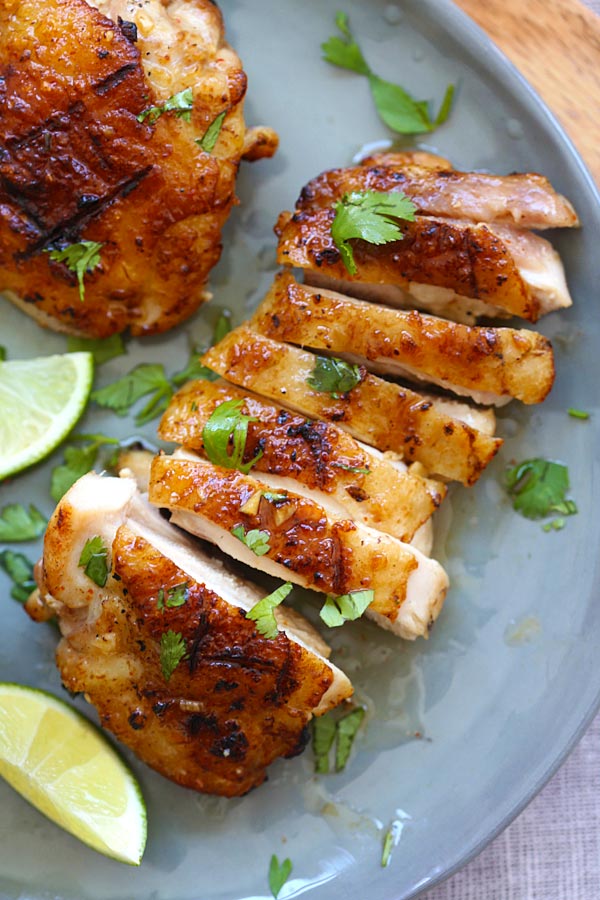
Haven't tried yet
- black pepper to taste
- cajun seasoning to taste
- 2 boneless skinless chicken breasts (up to 3), (whole or cut in strips)
- 1 shot tequila (shot glass is 1oz i think)
- 1 shot lime juice
- 1/2 teaspoon salt (or to taste, should be pretty salty though)
- 1 shot oil (i use olive oil, but vegetable oil works too)
- Carbohydrate 5.89915 g
- Cholesterol 273.76 mg
- Fat 47.9862 g
- Fiber 1.00630000275373 g
- Protein 109.51829 g
- Saturated Fat 4.326296 g
- Serving Size 1 1 recipe (591g)
- Sodium 309.366 mg
- Sugar 4.89284999724627 g
- Trans Fat 3.42426199999999 g
- Calories 974 calories
Step-by-step
- Mix all ingredients but chicken in a bowl.
- Pour marinade into freezer bag with chicken, seal with as little air in the bag as possible.
- Marinate in refrigerator for at least 30 minutes (if possible, you can do less if you are pressed for time).
- If you want to grill, that works nicely even on indoor grill.
- If you saute or don't like to grill, reserve the marinade while browning the chicken.
- Then once chicken is browned well, pour in marinade in pan to deglaze (scrape brown bits up), simmer until chicken is done through.
- Serve with rice, pilaf, tortillas, pasta, cornbread
Ingredient lists rarely account for the physical behavior of acids and alcohol on lean protein. Citrus juice and distilled spirits do not merely flavor poultry; they alter the surface structure of chicken breasts during a thirty-minute rest. Lime juice initiates denaturation on contact, turning the exterior opaque if left too long, whereas the alcohol in tequila acts as a solvent for fat-soluble aromatics. Olive oil provides the necessary barrier to prevent the lean meat from drying out prematurely over direct heat, though neutral vegetable oil yields a cleaner profile if high-heat searing is the chosen method. Cajun seasoning introduces salt, paprika, and capsicum compounds that interact directly with the residual surface moisture left after marinating.
Swapping standard lime juice for bottled alternatives introduces concentrated citric acid without the balancing volatile oils found in fresh fruit, altering the perceived sharpness of the marinade. When fresh limes are unavailable, balancing the acidity requires a pinch of sugar or grated zest to restore aromatic depth. Tequila can be omitted entirely in favor of an extra ounce of citrus juice mixed with a splash of water, though the spirit contributes specific congeners that brown differently under direct heat. Boneless chicken breasts vary significantly in thickness, often resulting in uneven cooking unless the thickest portion is pounded to an even three-quarter-inch thickness before hitting the pan or grill.
Managing the cooking phase determines whether the marinade acts as a surface glaze or a simmering braising liquid. Retaining the liquid for deglazing dissolves the fond stuck to the pan floor, incorporating caramelized proteins back into the sauce as it reduces. Simmering the liquid until it reaches a safe internal temperature of 165 degrees Fahrenheit ensures any raw poultry contact is neutralized, while simultaneously thickening the pan juices into a coherent coating.



