Authentic French Meringues
Authentic Meringue recipe that I got from a friend who worked in a pastry shop in France.
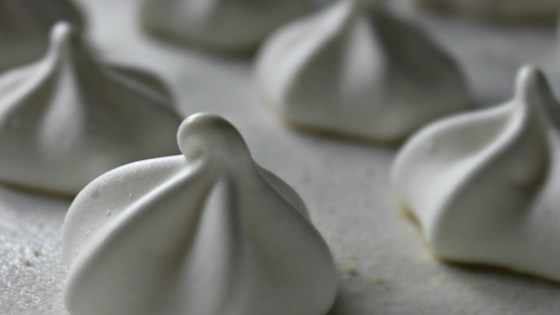
Authentic Meringue recipe that I got from a friend who worked in a pastry shop in France.
- Carbohydrate 0 g
- Cholesterol 0 mg
- Fat 0 g
- Fiber 0 g
- Protein 0 g
- Saturated Fat 0 g
- Serving Size 1 1 Serving (36g)
- Sodium 0 mg
- Sugar 0 g
- Trans Fat 0 g
- Calories 0 calories
Step-by-step
- Preheat the oven to 200 degrees F (95 degrees C). Butter and flour a baking sheet.
- In a glass or metal bowl, whip egg whites until foamy using an electric mixer. Sprinkle in sugar a little at a time, while continuing to whip at medium speed. When the mixture becomes stiff and shiny like satin, stop mixing and transfer the mixture to a large pastry bag. Pipe the meringue out onto the prepared baking sheet using a large round tip or star tip.
- Place the meringues in the oven and place a wooden spoon handle in the door to keep it from closing all the way. Bake for 3 hours, or until the meringues are dry, and can easily be removed from the pan. Allow cookies to cool completely before storing in an airtight container at room temperature.
Crisp, bright white confections shatter with a fragile resistance under gentle pressure, dissolving instantly on the tongue into pure sweetness. Achieving this specific brittle texture requires managing moisture removal over hours of low-temperature baking, rather than traditional browning. Glass and metal bowls should be completely free of oil residue before whipping begins, because even microscopic traces of fat prevent egg whites from holding entrapped air. Confectioners sugar contains a small percentage of cornstarch, which stabilizes the foam during the extended drying phase without requiring cream of tartar.
Baking at 200 degrees Fahrenheit ensures the sugar does not caramelize, preserving the stark white appearance characteristic of classic patisserie work. Trapping a wooden spoon handle in the oven door maintains a slight gap, allowing the steam released from the egg whites to escape the cooking chamber instead of softening the drying sugar crust. Three hours of low heat transforms the piped mixture into weightless shapes that release effortlessly from the baking sheet.
Humidity remains the primary enemy of finished meringues, causing the porous sugar structures to absorb ambient moisture and turn sticky within hours. Airtight storage containers lined with parchment paper protect the dry cookies at room temperature for up to two weeks. Freezing baked meringues is not recommended because thawing introduces condensation that rapidly dissolves the crisp exterior. When piping equipment is unavailable, two spoons dropped onto the baking sheet create rustic mounds with identical textural integrity.



