Pizza Dough
This dough is better when made with 00 flour. This will make up to 3 large regular crust pizzas.
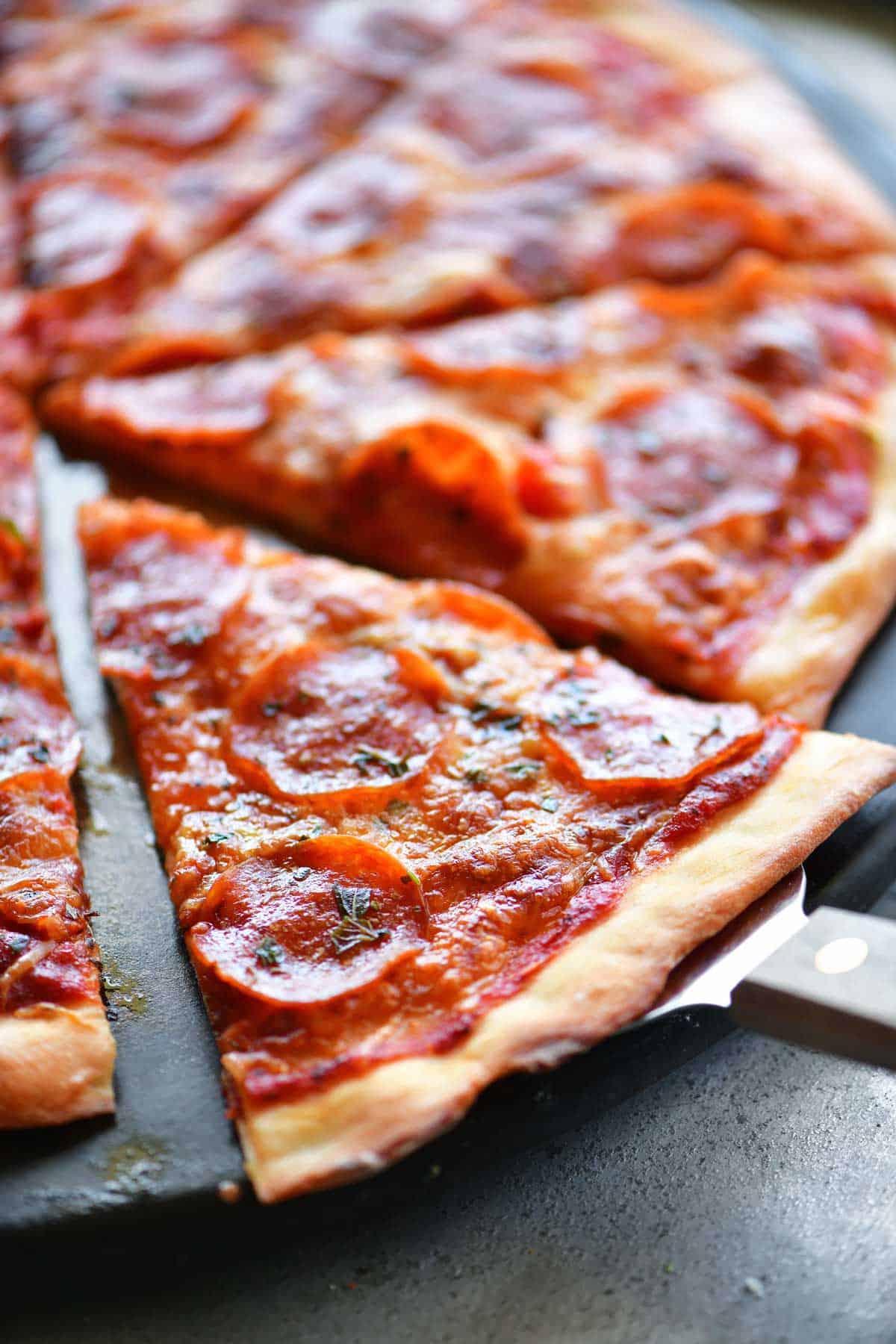
This dough is better when made with 00 flour. This will make up to 3 large regular crust pizzas.
- Carbohydrate 303.042200006294 g
- Cholesterol 25.380000051492 mg
- Fat 144.96440041584 g
- Fiber 1.68000000340845 g
- Protein 3.81880000774774 g
- Saturated Fat 20.1170600576229 g
- Serving Size 1 1 Serving (695g)
- Sodium 76.4373334796277 mg
- Sugar 301.362200002885 g
- Trans Fat 4.11418001164348 g
- Calories 2466 calories
Step-by-step
- In a mixer with a hook. I use Kitchen Aid, but have also used the bread machine with this recepie and it works fine. I just let it rise half way before I divide it into 3 portions.
- Mix water with yeast, sugar, salt and oil.
- Then mix in the Flour in and turn the mixer to low speed until the dough comes together. This is to prevent flour flying all over the place.
- Once the flour has come together bring the speed up to medium for about 20 mins.
- Let it sit for 15 mins and turn it back on to medium speed for 15 more mins.
- Let rise for 25 mins and then divide into three pieces, if you want large pizzas. however if you prefer smaller or thinner you may divide into more pieces.
- Make the dough balls and let sit for about 35-40 mins depending on were you live. I put the dough balls in an oven (turned off) on medium level panel. At the bottom of the oven I place a bowl with boiling water and close the door for about 30 mins. This speeds up the process considerably.
Unlike a lean, water-and-flour artisan loaf that relies solely on wild fermentation and high heat for its character, enriched pizza dough incorporates oil and sugar to fundamentally alter the final crumb and crust. Sugar acts as primary food for active dry yeast, accelerating carbon dioxide production while simultaneously tenderizing the gluten network so the stretched round remains pliable rather than tough. Adding oil coats the individual flour proteins to impede excessive water absorption, which prevents the dough from becoming dense and ensures a tender bite after baking. When incorporating the flour into the liquid base, keeping the mixer on low speed prevents airborne particulate clouds while the gluten strands begin aligning under mechanical action. Extended mixing times on medium speed develop high elasticity, though letting the dough rest periodically prevents the motor from overheating and allows the protein matrix to relax. Placing the divided dough balls in a humid, unheated oven alongside a bowl of boiling water creates an ambient proofing environment that encourages optimal gas retention without skin formation.



