Chicken with Basil Cream Sauce
A dear friend brought this meal to us after we were in a car accident. It was so delicious I had to have the recipe.
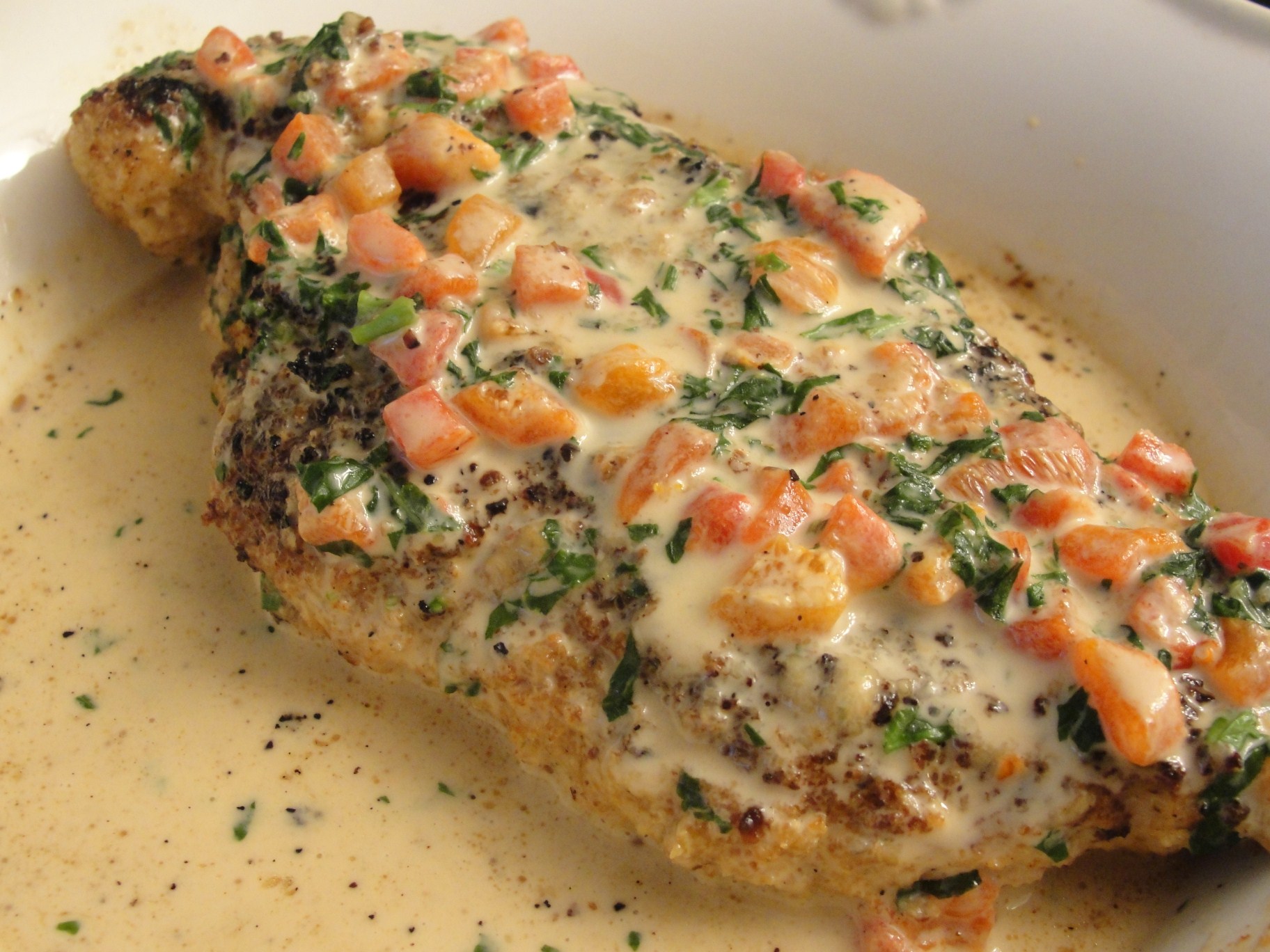
A dear friend brought this meal to us after we were in a car accident. It was so delicious I had to have the recipe.
- Carbohydrate 77.7326925001652 g
- Cholesterol 797.497125013081 mg
- Fat 82.3112012556585 g
- Fiber 0.0329999987185001 g
- Protein 269.968578750056 g
- Saturated Fat 45.4070450032253 g
- Serving Size 1 1 Serving (1726g)
- Sodium 1516.52525003537 mg
- Sugar 77.6996925014467 g
- Trans Fat 6.92034375036505 g
- Calories 2184 calories
Step-by-step
- Preheat oven to 350 degrees F.
- Bake chicken breasts covered in a shallow dish for 1 hour.
- If cooking chicken tenderloin instead of chicken breasts, bake at 350 degrees F covered for 45 minutes.
- While chicken is cooking, prepare sauce.
- Heat butter and oil in skillet over medium heat.
- Add onions and garlic and cook until onions are tender and light brown.
- Add wine and reduce by half.
- Add cream and bullion and reduce by half again.
- Add pesto.
- Bring to simmer and heat until slightly thickened (about 2-3 minutes).
- After chicken is cooked, pour sauce over chicken and serve.
Emulsified dairy sauces containing high-fat whipping cream fail when introduced to excessive heat too quickly. Butter and olive oil combined in the skillet provide a fat medium that stabilizes minced onions and garlic at medium heat without scorching the milk solids. Reducing white wine by half concentrates the acid, which prevents curdling when the heavy cream is subsequently introduced. Simmering the cream and bouillon mixture until volume halves evaporates excess water, yielding a sauce dense enough to coat a spoon at 212 degrees F. Pesto must be stirred in at the final simmer stage to preserve volatile basil aromatics that degrade under prolonged heat.
Preventing Dairy Separation
Heavy cream with a minimum 36 percent fat content withstands reduction better than half-and-half, which curdles readily under rapid boiling. Maintain burner temperature at medium-low once the cream is added to keep the emulsion intact. Whisk continuously during the final two-minute simmer to distribute solids evenly.
- Reheating separated sauce requires whisking in one tablespoon of cold heavy cream over low heat to rebuild the emulsion.
- Freezing dairy-based sauces alters protein structures, causing graininess upon thawing; store cooked sauce in the refrigerator for up to three days instead.
- Bake chicken covered tightly with foil at 350 degrees F for one hour to retain internal moisture before applying the sauce.



