Sweet Potato + Five Spice Muffins
Try this Sweet Potato + Five Spice Muffins recipe, or contribute your own.
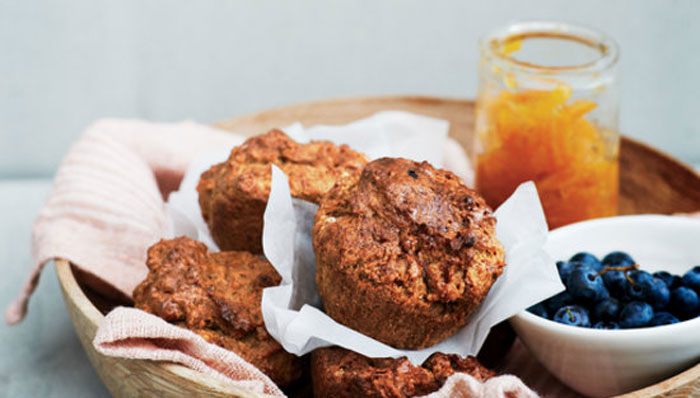
Try this Sweet Potato + Five Spice Muffins recipe, or contribute your own.
- 1/2 cup almond milk.
- 1 large sweet potato.
- 1/2 cup extra virgin olive oil.
- 2 tablespoons rice malt syrup.
- 1 teaspoon pure vanilla extract.
- 2 cups gluten free flour (if the flour doesn’t include xa add 1 teaspoon).
- 2 teaspoons baking powder.
- 2 teaspoons baking soda.
- 1 1/2 tablespoon chinese five-spice powder.
- 1/2 teaspoon fine sea salt.
- Carbohydrate 2.24933333333334 g
- Cholesterol 0 mg
- Fat 108 g
- Fiber 0.0186666669448217 g
- Protein 0.00933333333333334 g
- Saturated Fat 14.91264 g
- Serving Size 1 1 recipe (117g)
- Sodium 738.840000000001 mg
- Sugar 2.23066666638851 g
- Trans Fat 2.92464000000001 g
- Calories 959 calories
Step-by-step
- Preheat the oven to 200°C / 400°F. Prick the sweet potato a few times with a paring knife or a fork. Bake until soft (when a paring knife can cut through with zero resistance), about 1 hour. Set the sweet potato aside until it’s completely cool.
- Peel the sweet potato, discard the skin, and mash the flesh in a mixing bowl with a fork. Whisk the olive oil, almond milk, syrup and vanilla into the sweet potato. In a separate bowl, whisk together the flour, baking powder, baking soda, five-spice powder, and salt. Fold the dry ingredients into the wet ingredients.
- Line a 12-cup muffin tin with paper liners and evenly distribute the muffin batter among the cups. Bake for 20 to 25 minutes, or until a toothpick comes out clean. Let the muffins cool before serving.
Starchy vegetable purees change the structural mechanics of baked goods by introducing heavy moisture that can easily lead to a gummy interior if thermal energy is mismanaged. Dense batters containing roasted root vegetables require exact internal transformation benchmarks rather than guesswork, meaning bakers must rely on physical indicators instead of arbitrary clock monitoring. When baking sweet potato and five-spice batter, pierce the whole root with a paring knife until it encounters zero resistance, indicating that internal starches have fully gelatinized and softened.
Assessing doneness without a thermometer relies on monitoring the crumb's elasticity alongside toothpick resistance. Insert a wooden pick into the center of the largest muffin after twenty minutes at 200 degrees Celsius, withdrawing it to check for clinging wet crumbs or clean surfaces. Gluten-free flour blends lack elastic protein networks to trap gas, making chemical leaveners like baking powder and baking soda crucial for structural lift during the initial expansion phase.
Pairing these spiced treats with a high-protein beverage like unsweetened soy milk or a warm cup of black coffee balances the concentrated sweetness of the root vegetable flesh. Adjusting the aromatic profile requires careful proportioning; reduce the Chinese five-spice powder by half if a milder herbal presence is preferred against the earthy potato base.



