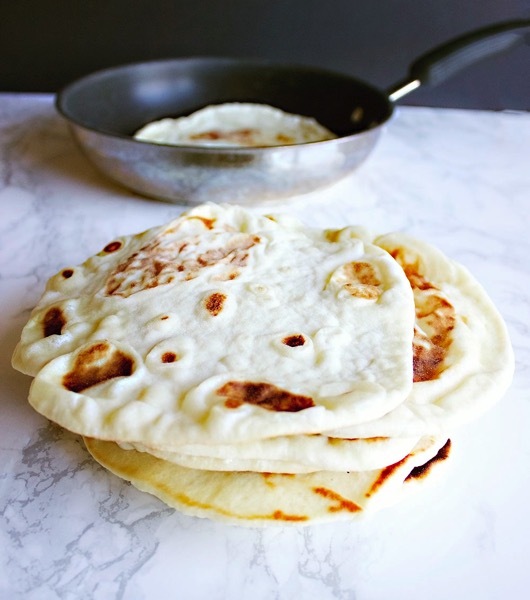
Try this Greek Style Pita Bread recipe, or contribute your own.
- Carbohydrate 0.0108016666666667 g
- Cholesterol 0 mg
- Fat 1.13596567708333 g
- Fiber 0.00441666666666667 g
- Protein 0.001825 g
- Saturated Fat 0.0837871889505208 g
- Serving Size 1 1 Serving (1g)
- Sodium 0.00733333333333333 mg
- Sugar 0.006385 g
- Trans Fat 0.0138414232567709 g
- Calories 10 calories
Step-by-step
- Mix flour, salt, and 1 tablespoon of sugar together in a bowl.
- In a separate small bowl, mix 1/2 tablespoon sugar, yeast, and warm water and allow to proof for 10 minutes.
- In a mixer fitted with a dough hook attachment, pour in the yeast and water mixture, followed by the flour mixture, and lastly the oil.
- Mix for 5 minutes and check the dough. The dough should spring back when you push on it. If it does not, mix for another 3 minutes and check again. Keep mixing until the dough springs back and is not sticky. It should feel extremely soft and pliable.
- Warm oven to 200 degrees for 1 minute and turn off.
- Transfer dough to a greased bowl, cover with plastic wrap, and place in the warmed oven until doubled in size (about 1 hour).
- Punch down the dough and divide into 8 equal pieces.
- Flatten out each dough ball into a circle with about 1/8 inch thickness.
- Heat a teaspoon of oil in a pan (cast iron recommended) and cook for a few seconds on each side before removing and setting aside to continue making the rest.
My Greek Pita Bread Adventure: A Home Baker's Journey
As a busy working mom, finding time to bake is a luxury, not a given. But there’s something incredibly satisfying about creating something delicious from scratch, especially when it's something as versatile as pita bread. This simple Greek-style pita bread recipe became my weekend ritual, a small act of self-care amidst the whirlwind of school runs, deadlines, and dinner preparations. It's a testament to the fact that even amidst the chaos, we can find moments of calm and creativity in the kitchen.
The journey started, as many do, with a craving. I was yearning for the soft, pillowy texture of authentic pita, the kind you find in small tavernas nestled amongst the sun-drenched streets of Greece. The internet, as it often does, came to the rescue, revealing this seemingly straightforward recipe. Little did I know that the simplicity would mask a subtle challenge: mastering the art of the perfect dough. The initial attempts were, let's just say, less than ideal. Some pitas were tough, others collapsed in a soggy heap, a culinary catastrophe of epic proportions. But I persevered, fueled by the tantalizing thought of warm, freshly-baked pita, bursting with flavour.
The magic, as it turned out, lies in the kneading. This isn't just about mixing ingredients; it's a process of coaxing the flour and water into a harmonious union, forming a dough with the right elasticity and texture. I learned to feel the dough, to sense when it was sufficiently developed, when the gluten had reached its peak, transforming a humble mixture into something remarkably elastic and supple. This was more than just baking; it was an exercise in patience and precision.
The subtle dance of flour, yeast, and water is captivating. Each ingredient plays a vital role; the yeast provides lift, the flour provides structure, and the water binds it all together. The gentle warmth of the oven during the proofing stage helps to encourage the yeast to do its job; you can practically feel the dough expanding, slowly growing, filling the air with a yeasty aroma. This waiting period, far from being frustrating, became a time for reflection. A chance to detach from the pressures of daily life and simply appreciate the simple beauty of fermentation.
Finally, the moment of truth – cooking the pita. The sizzling sound of the dough hitting the hot pan, the rapid inflation as the air pockets expand, the tantalising aroma of freshly baked bread, each stage was a small victory, a reward for the effort. From initially slightly misshapen and pale specimens to perfectly browned, puffed-up circles, my pita bread was steadily improving.
Now, weeks later, this recipe has become a cherished part of my routine. The pita bread is not just a side dish; it's a canvas for creativity. It is the perfect vessel for flavorful hummus, the ideal accompaniment to succulent grilled meats, and a delightful base for all sorts of fillings. Moreover, the process itself has become a therapeutic ritual; the rhythmic kneading, the satisfying aroma of baking bread, it's a welcome break from the whirlwind of everyday life. So, if you’re looking for a simple yet rewarding baking project, give this Greek-style pita bread recipe a try. You might just discover, as I did, that it’s more than just bread; it’s a journey of culinary discovery and self-care.
Beyond the practical aspects of baking, the experience holds a deeper significance for me. It's a connection to tradition, a glimpse into the rich culinary heritage of Greece, and a celebration of the simple joys of creating something delicious from scratch. Each perfectly puffed pita becomes a small reminder that even in the midst of chaos, we can find moments of peace and connection through cooking.



