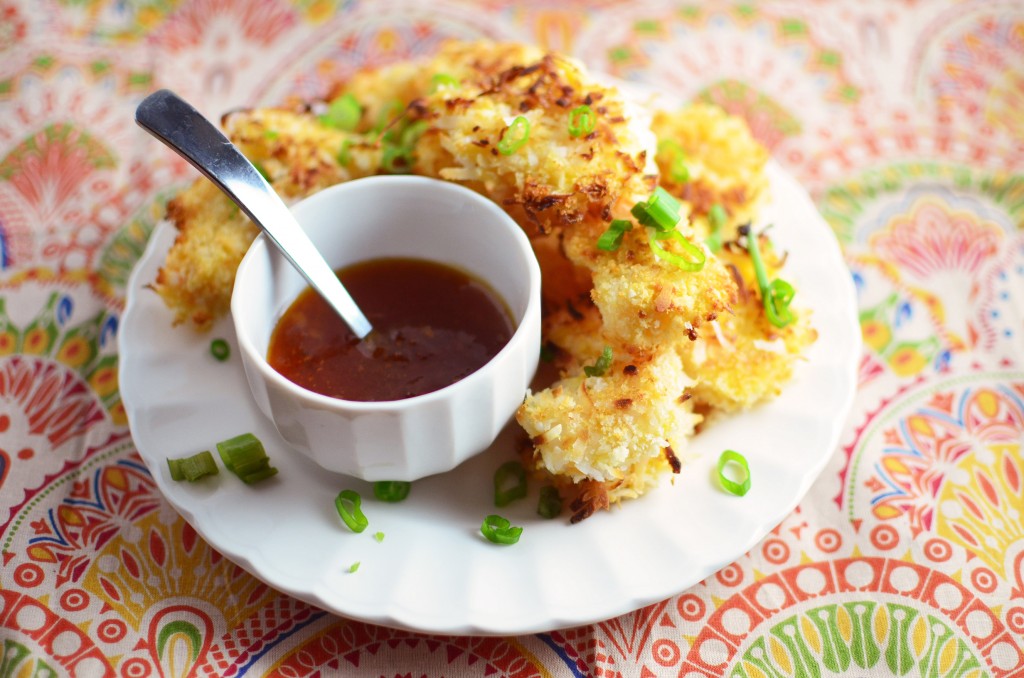
Try this Coconut Shrimp recipe
- Carbohydrate 24.8050250135848 g
- Cholesterol 68.3166666650098 mg
- Fat 439.42323874148 g
- Fiber 2.52562492692581 g
- Protein 8.80460250070061 g
- Saturated Fat 61.986435993906 g
- Serving Size 1 1 Serving (547g)
- Sodium 327.280166876913 mg
- Sugar 22.279400086659 g
- Trans Fat 21.0272517262985 g
- Calories 4027 calories
Step-by-step
- In medium bowl, combine egg, 1/2 cup flour, beer and baking powder. Place 1/4 cup flour and coconut in two separate bowls.
- Hold shrimp by tail, and dredge in flour, shaking off excess flour. Dip in egg/beer batter; allow excess to drip off. Roll shrimp in coconut, and place on a baking sheet lined with wax paper. Refrigerate for 30 minutes. Meanwhile, heat oil to 350 degrees F (175 degrees C) in a deep-fryer.
- Fry shrimp in batches: cook, turning once, for 2 to 3 minutes, or until golden brown. Using tongs, remove shrimp to paper towels to drain. Serve warm with your favorite dipping sauce.
Standard tempura relies on a thin, starch-heavy veil that shatters instantly, but coconut crusting demands structural integrity to hold heavy flakes against bubbling oil. Standardizing this coating requires setting up a strict station with distinct dry and wet zones. Dredging the shellfish lightly in plain flour gives the batter something to cling to; skipping this step causes the coating to slide off during frying. Whisking beer and baking powder into the second portion of flour creates a carbonated batter that aerates as it hits the heat, resulting in a crisp exterior. Chilling the breaded shellfish for thirty minutes on wax paper firms the fats in the coconut and sets the batter, preventing premature shedding in the fryer. Maintain the oil strictly at 350 degrees Fahrenheit using a clip-on deep-fry thermometer. Overcrowding drops the temperature rapidly, leading to soggy, grease-logged crusts. Cook the items in small batches for two to three minutes until they achieve a deep golden brown. Transfer the finished batch to a wire rack set inside a sheet pan rather than paper towels, maintaining airflow so the undersides remain crisp. Pair these crunchy morsels with an acidic element like sweet chili sauce or a citrus-heavy remoulade to cut through the rich fat content of the coconut and frying oil.



