Ham
This is a simple but awesome ham Perfect for the Holidays the only thing is finding one in the stores Walmart is the only place I can find it
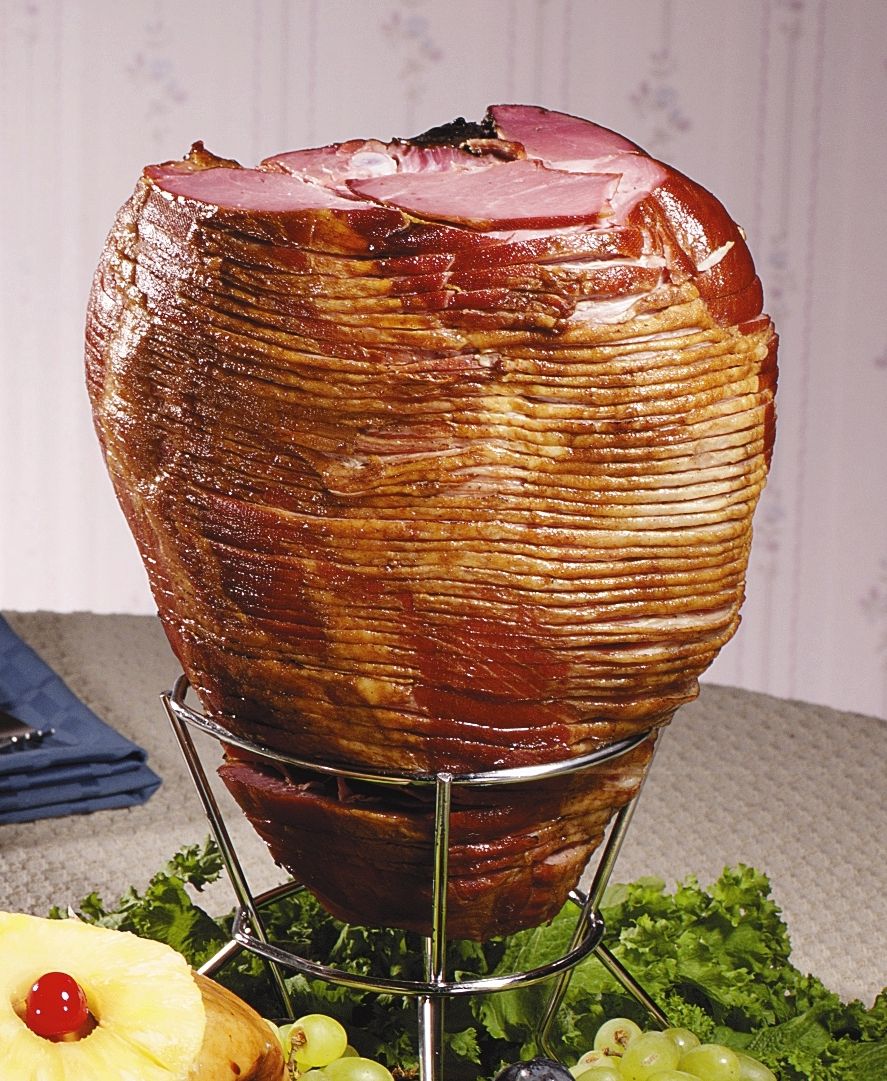
This is a simple but awesome ham Perfect for the Holidays the only thing is finding one in the stores Walmart is the only place I can find it
- Carbohydrate 11.8525416666667 g
- Cholesterol 173.876933333333 mg
- Fat 19.787951 g
- Fiber 0 g
- Protein 60.8336273333333 g
- Saturated Fat 6.87947866666667 g
- Serving Size 1 1 Serving (201g)
- Sodium 165.920466666667 mg
- Sugar 11.8525416666667 g
- Trans Fat 1.96556533333333 g
- Calories 484 calories
Step-by-step
- The best fresh ham is the smithfield whole bone in fresh ham.
- Put it cut side down in a large roasting pan, pack it with Dark Brown sugar and put enough water in to cover the bottom of the pan.
- Cover with aluminum foil and cook at 300 degrees for 30 min per pound.
- You can baste every hour if you like.
- It totally falls apart and is the best thing you will ever eat.
Unlike a standard cured or spiral-sliced holiday ham, a fresh cut is essentially untrimmed pork leg that requires thorough cooking to reach a safe internal temperature of 145 degrees Fahrenheit followed by a three-minute rest. This specific preparation accommodates multiple dietary restrictions naturally, remaining completely free of gluten, dairy, tree nuts, and shellfish without requiring specialized commercial substitutes. While dark brown sugar creates an essential caramelized crust when packed densely over the exterior skin, light brown sugar functions as an adequate replacement if adjusted slightly downward in quantity to compensate for lower molasses content.
Managing Moisture and Roasting Mechanics
Maintaining adequate humidity inside the roasting vessel prevents the lean pork tissue from drying out during the extended thermal transfer required for large cuts. Pouring water directly into the bottom of the roasting pan generates steam beneath the aluminum foil tent, which keeps the meat tender while the connective tissues slowly break down. Basting the surface every sixty minutes redistributes the melting sugar and pan juices, though lifting the foil repeatedly will extend total cooking time by releasing accumulated heat.
- If the exterior darkens too quickly before the interior reaches doneness, lower the oven temperature by 25 degrees and re-cover tightly with heavy-duty foil.
- Ensure the roasting pan is deep enough to hold the water without spilling onto the oven floor during transfer.
- Allow the bone-in roast to rest uncovered for twenty minutes before carving so the internal juices redistribute evenly through the thick muscle fibers.



