Peanut Butter Hummus
Notes: The hummus can be made 1–2 days ahead. Transfer to a non-metallic container, cover, and refrigerate until needed. Should be consumed within 2 days of making. Peanut butter hummus doesnt have an elegant ring to it, but elegant is exactly what this is. Rather than using tahini, which is in effect sesame butter, I use peanut butter. It is gorgeously filling, but without the slight clagginess that tahini can give. Although I think this version possesses a certain manila-tinted chic (despite the kindergarten appeal of its title) that makes me happy to bring it out to eat with cocktails when I have people over, I am even happier to have a batch in the refrigerator to pick at, spreading it over spelt crispbread or a piece of rye toast, when the mood takes me.
Notes: The hummus can be made 1–2 days ahead. Transfer to a non-metallic container, cover, and refrigerate until needed. Should be consumed within 2 days of making. Peanut butter hummus doesnt have an elegant ring to it, but elegant is exactly what this is. Rather than using tahini, which is in effect sesame butter, I use peanut butter. It is gorgeously filling, but without the slight clagginess that tahini can give. Although I think this version possesses a certain manila-tinted chic (despite the kindergarten appeal of its title) that makes me happy to bring it out to eat with cocktails when I have people over, I am even happier to have a batch in the refrigerator to pick at, spreading it over spelt crispbread or a piece of rye toast, when the mood takes me.
- 2 teaspoons kosher salt
- 2 teaspoons ground cumin
- 1 clove garlic
- 3 tablespoons lemon juice
- 1 teaspoon smoked paprika
- 1/3 cup creamy peanut butter
- 1/4 cup greek yogurt
- 2 15 oz cans chickpeas (garbanzo beans)
- 3 tablespoons olive oil
- 2 tablespoons peanuts
- 1 box breadsticks, mini pitas, crackers, tortilla chips
- Carbohydrate 33.5481775193617 g
- Cholesterol 0.1225 mg
- Fat 7.83427852335333 g
- Fiber 5.05525715256031 g
- Protein 8.38142834704448 g
- Saturated Fat 1.40005789510733 g
- Serving Size 1 1 Serving (128g)
- Sodium 672.005005540407 mg
- Sugar 28.4929203668014 g
- Trans Fat 0.570114218381668 g
- Calories 232 calories
Step-by-step
- Drain and rinse the chickpeas.
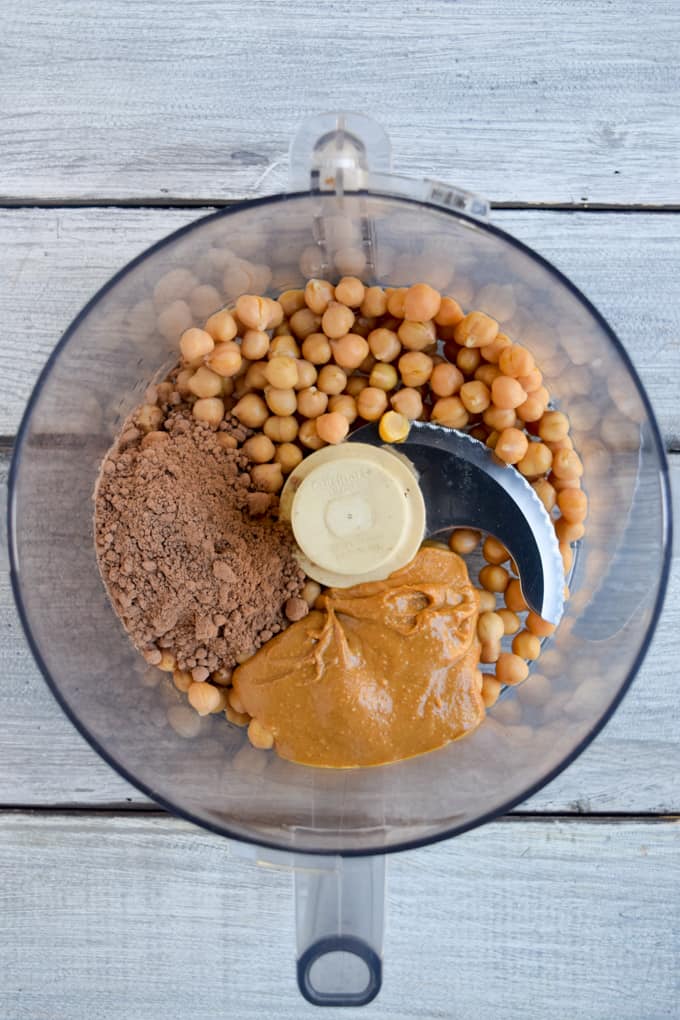
- Put the garlic clove, chickpeas, 3 tablespoons oil, peanut butter, lemon juice, salt, and cumin into a food processor and blitz to a knobbly puree.
- Add 1/4 cup of the Greek yogurt and process again; if the hummus is still very thick, add another 1–2 tablespoons yogurt and the same of oil. (This will often depend on the chickpeas, as different sorts make the hummus thicker or not.)
- Taste for seasoning, adding more lemon juice and salt if you feel it needs it.
- On serving, mix the chopped peanuts with the paprika and sprinkle on top if you wish, and put an array of bits and pieces to eat with or dip in, as you see fit.
Processing the chickpeas while they are still slightly warm from rinsing helps the machine break down their outer skins more efficiently, yielding a smoother final purée. Canned garbanzo beans vary significantly in moisture content, meaning the initial blitz often produces a dense, knobbly paste rather than the desired silky consistency. Adjusting the texture relies entirely on incremental additions of Greek yogurt and oil until the blades spin freely and the mixture aerates.
Swapping standard tahini for creamy peanut butter introduces robust roasted oils and natural plant fats that alter both viscosity and flavor. This substitution naturally accommodates legume-based dietary frameworks while providing a denser mouthfeel without requiring additional sesame paste. When seeking alternative fats, sunflower seed butter acts as a direct one-to-one replacement for those managing peanut allergies, though it yields a slightly earthier profile.
Achieving a uniform, micro-smooth emulsion requires a high-powered food processor equipped with sharp, multi-level blades. Standard immersion blenders or underpowered choppers often struggle with the viscous combination of peanut butter and dense pulses, leaving noticeable grit. Scraping down the bowl midway through processing ensures no whole garbanzo beans remain trapped beneath the central spindle.
Store the finished dip in an airtight, non-metallic container in the refrigerator to prevent flavor transference from surrounding foods. Consuming the batch within a forty-eight hour window ensures optimal freshness and prevents the garlic from turning sharp and overpowering. Allow the container to sit at room temperature for fifteen minutes before serving to loosen the chilled fats.



