Rosemary Mashed Fauxtatoes
This is another delicious recipe from Erica Cooksey, the blogess behind Stuff I Make My Husband, and makes about 4 cups. Erica says, The original recipe used sage, but I had some rosemary in my garden so I went with that. You can substitute other fresh herbs, but dont use dried for this. I pureed everything in my food processor to get it creamy and smooth; you can use a potato masher if youd like but it will be lumpy and the cauliflower will be more detectable.
This is another delicious recipe from Erica Cooksey, the blogess behind Stuff I Make My Husband, and makes about 4 cups. Erica says, The original recipe used sage, but I had some rosemary in my garden so I went with that. You can substitute other fresh herbs, but dont use dried for this. I pureed everything in my food processor to get it creamy and smooth; you can use a potato masher if youd like but it will be lumpy and the cauliflower will be more detectable.
- freshly ground black pepper
- 1 medium-sized head of cauliflower stemmed and cut into uniform florets
- about 1/2 lb turnips peeled and cut into 1″ chunks
- 1 tbs fresh minced rosemary or other herb
- 1 tbs ghee (can substitute olive oil or clarified butter
- 1 tbs coconut milk
- 1/2 tsp tabasco or hot pepper sauce
- generous amount of salt to taste
- truffle salt for sprinkling (optional)
- Carbohydrate 22.998189375 g
- Cholesterol 0 mg
- Fat 8.97054 g
- Fiber 9.39053119945526 g
- Protein 6.913749375 g
- Saturated Fat 2.418152125 g
- Serving Size 1 1 Recipe (418g)
- Sodium 466.020875 mg
- Sugar 13.6076581755447 g
- Trans Fat 6.220973125 g
- Calories 179 calories
Step-by-step
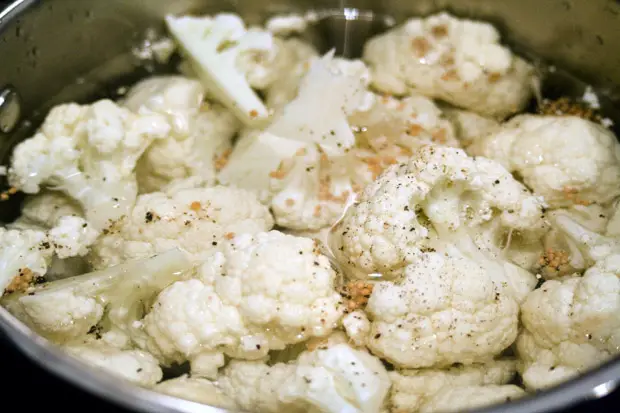
- Bring an inch of water to a boil in a saucepan just large enough to hold the turnip chunks in a single layer. Add a generous pinch of salt, add the turnips, then layer the cauliflower on top. Sprinkle with salt, cover, and cook until very tender and just slightly overcooked. Drain in a colander.
- When cool enough to handle, add the veggies to a food processor with the remaining ingredients. Depending on the size of your food processor, you may have to partially process half of them before you can add the rest. Process until completely smooth. Taste and add salt if desired.
- Serve warm, optionally sprinkled with truffle salt.
Turnips do the heavy lifting in this blend, providing the starchy backbone and earthy foundation that cauliflower alone simply cannot deliver. Without the high concentration of sulfur compounds found in brassicas, root vegetables anchor the dish with a savory depth. Steaming the vegetables tightly covered traps moisture, softening the stubborn fibrous cell walls of both turnips and cauliflower until they yield completely to a blade. Fresh rosemary contains volatile oils that require heat and fat to disperse properly, which makes incorporating the herb directly into the warm processing stage essential for even flavor distribution.
Achieving Velvet Texture
Using a food processor rather than a hand masher is non-negotiable for achieving a uniform emulsion. The high-speed steel blades shear the cooked fibers into microscopic particles, creating a creamy mouthfeel that mimics traditional starches. Introduce the coconut milk and ghee gradually while the motor runs to build a stable fat-in-water suspension. If the mixture remains too thick, add warm water one tablespoon at a time until the blade spins freely without stalling.
- Ensure turnip chunks are cut to uniform one-inch sizes so they cook at the exact same rate as the cauliflower florets.
- Drain the cooked vegetables in a colander for a full five minutes to remove excess surface water that causes watery purées.
- Scrape down the bowl of the food processor at least twice to prevent unblended chunks from hiding near the spindle.



