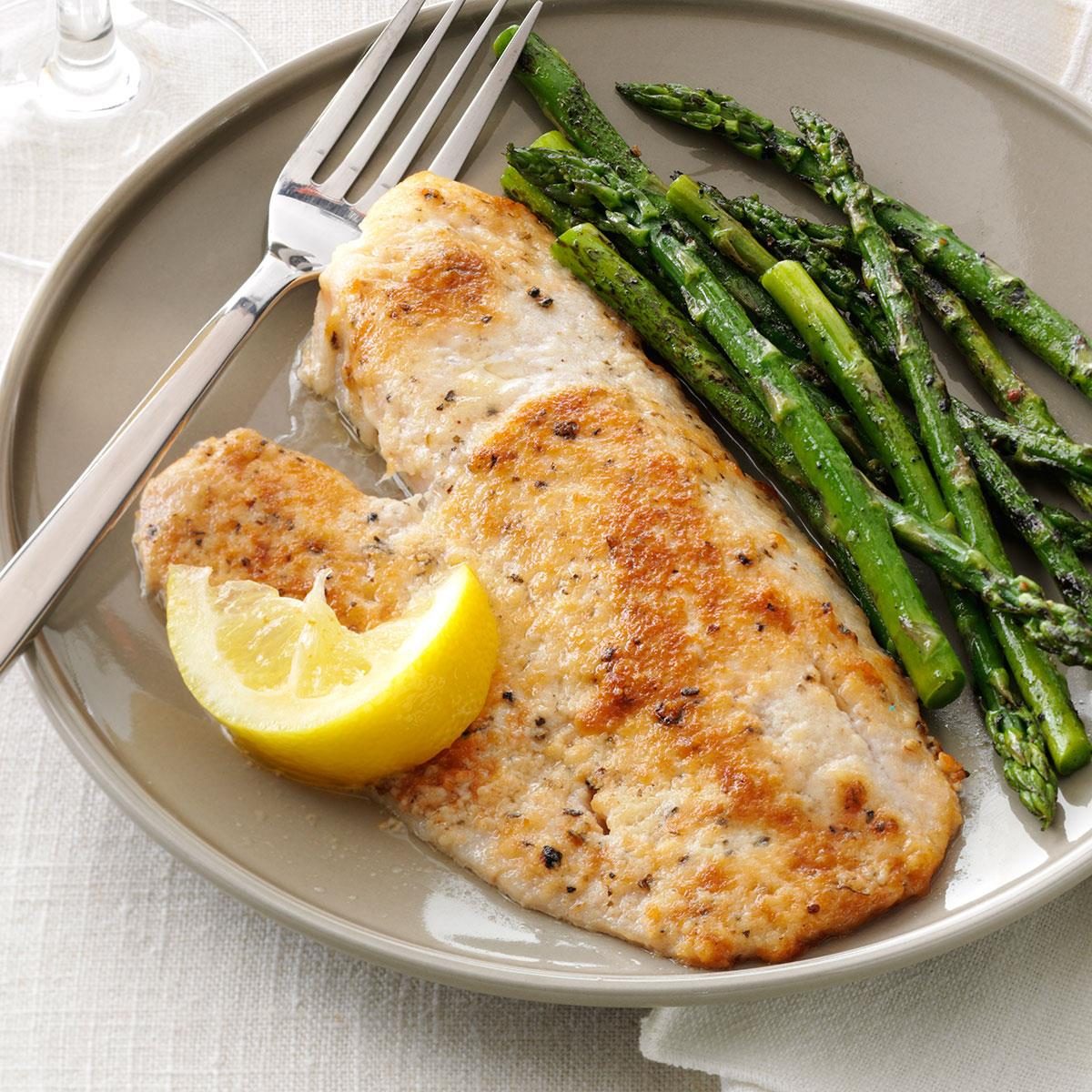
What a great easy and delicious fish recipe.
- Carbohydrate 1.2111001565479 g
- Cholesterol 58.1453125211854 mg
- Fat 10.5602139662343 g
- Fiber 0.0985492191623895 g
- Protein 20.7462613029352 g
- Saturated Fat 5.1980820362375 g
- Serving Size 1 1 (133g)
- Sodium 184.348700603363 mg
- Sugar 1.11255093738551 g
- Trans Fat 3.50007902919412 g
- Calories 178 calories
Step-by-step
- Turn broiler onto high and adjust oven rack to the top.
- In a small bowl, combine all ingredients except the tilapia.
- Set aside.
- Place tilapia fillets on a foil lined pan.
- Broil for 3 minutes.
- Remove from the oven, flip over and divide the parmesan mixture over the uncooked sides of the tilapia.
- Return to the oven and broil an additional 3-4 minutes making sure not to over cook the fish.
Golden parmesan crusts bubble directly under radiant high-heat elements while lean white fish flakes cleanly at the fork. Controlling moisture prevents watery outcomes when handling mild seafood varieties under intensive thermal sources. Position foil-lined pans precisely on the uppermost oven rack to maximize infrared energy transfer. Thick fillets demand careful temperature management because delicate proteins transition from opaque to rubbery within seconds.
Maximizing Budget Ingredients and Thermal Efficiency
Economical condiments act as reliable binders that protect lean flesh from drying out during rapid exposure. Combining softened butter with mayonnaise creates an emulsion resistant to immediate separation under direct heat. Fresh dill contributes volatile aromatic compounds that brighten the heavy dairy fats without adding unnecessary cost. Spacing fish evenly across aluminum-lined surfaces guarantees uniform radiant absorption without requiring specialized commercial equipment.Storage and Reheating Protocols
Raw tilapia fillets stored below 40 degrees Fahrenheit remain safe for up to two days before protein degradation compromises texture. Freezing uncooked fish requires airtight wrapping to prevent moisture sublimation and subsequent freezer burn during extended storage periods. Reheating cooked seafood demands indirect, moderate heat rather than microwave exposure to avoid tightening muscle fibers excessively. Leftover flakes integrate smoothly into cold grain salads or warm omelets when folded in during the final moments of preparation.


