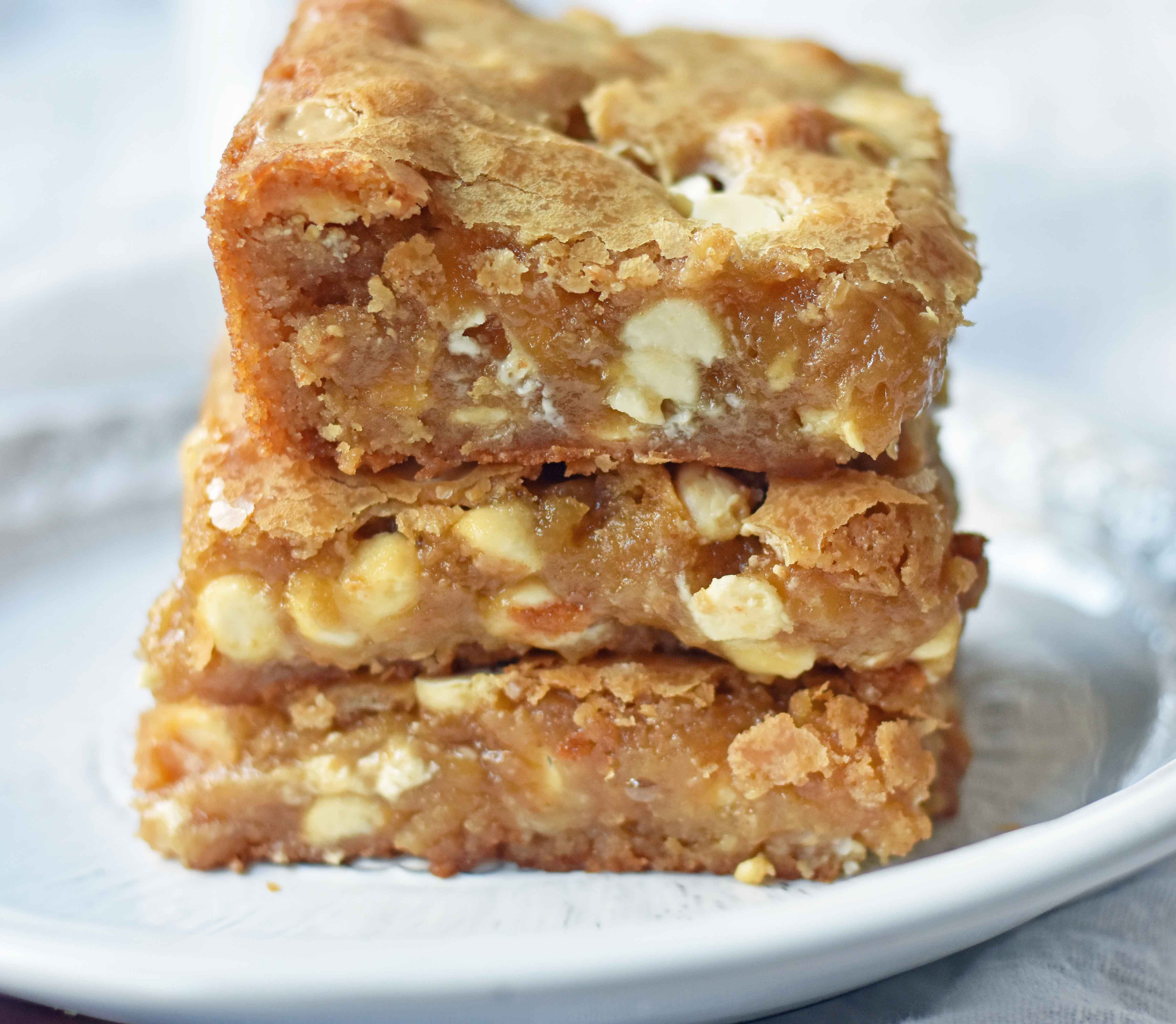
Unbelievably sweet and gooey.
- Carbohydrate 19.7132668038918 g
- Cholesterol 27.8106944444444 mg
- Fat 7.04682513888889 g
- Fiber 0.60563195716161 g
- Protein 2.23687777777087 g
- Saturated Fat 4.27770229166667 g
- Serving Size 1 1 Serving (38g)
- Sodium 293.324742510647 mg
- Sugar 19.1076348467302 g
- Trans Fat 0.599718611111111 g
- Calories 149 calories
Step-by-step
- Preheat oven to 350 degrees.
- Grease 7x11 glass baking dish.
- If you only have non-stick reduce heat to 325.
- Combine first three ingredients, set aside.
- In a large mixing bowl, beat butter and sugars until smooth, add eggs and vanilla until blended.
- Gradually add the dry mixture and chocolate chunks.
- Stir until well blended.
- Spread evenly into prepared pan.
- Drizzle caramel topping in criss-cross fashion across the batter.
- Swirl with a knife if needed.
- Bake for approx 20-23 minutes or until golden brown.
Should these rich bars be served alongside something sharp to cut the sweetness, or do they demand a beverage that mirrors their buttery density? Balancing a pan of dense baked goods requires understanding how contrasting flavors interact on the palate, particularly when dealing with high sugar loads. Pairing these squares with unsalted roasted peanuts or a handful of sharp, aged cheddar cheese creates a counterpoint that resets the taste buds between bites. Strong black coffee brewed at a 1 to 16 coffee-to-water ratio provides the necessary bitterness to balance the caramel topping.
Standard dessert wines often fail here because the residual sugar in the blondies overpowers delicate profiles. Pouring a glass of dry stout or a tart cider offers enough acidity and carbonation to scrub the palate clean of residual dairy fat and chocolate. When hosting, arrange these contrasting elements on a wooden board so guests can experiment with the interplay of bitter, sweet, and salt. Temperature also matters greatly; serving these bars slightly chilled firms up the structure for cleaner cuts while concentrating the flavor of the chocolate chunks.
Achieving the correct texture relies entirely on managing the oven temperature and pan material. Glass baking dishes retain heat differently than dark metal pans, which necessitates reducing the ambient oven temperature by 25 degrees to prevent premature scorching along the bottom edges. If only a metal pan is available, line it with parchment paper that extends two inches past the rim to insulate the sides and allow for easy removal once cooled. Overbaking turns a gooey interior into a dry cake, so pull the pan out the moment the edges turn a pale golden brown and the center still registers slightly soft.
Leftovers keep well for up to four days when stored in an airtight container at room temperature with a slice of plain white bread placed inside to maintain moisture. Reheating individual squares in a 300-degree oven for five minutes restores the soft chew of the crumb without melting the chocolate completely. Proper storage prevents the caramel from weeping into the surrounding blondie batter and keeps the crust from turning tough. Plan the baking schedule so these bars have at least two hours to set completely before slicing into twenty-four uniform pieces.



