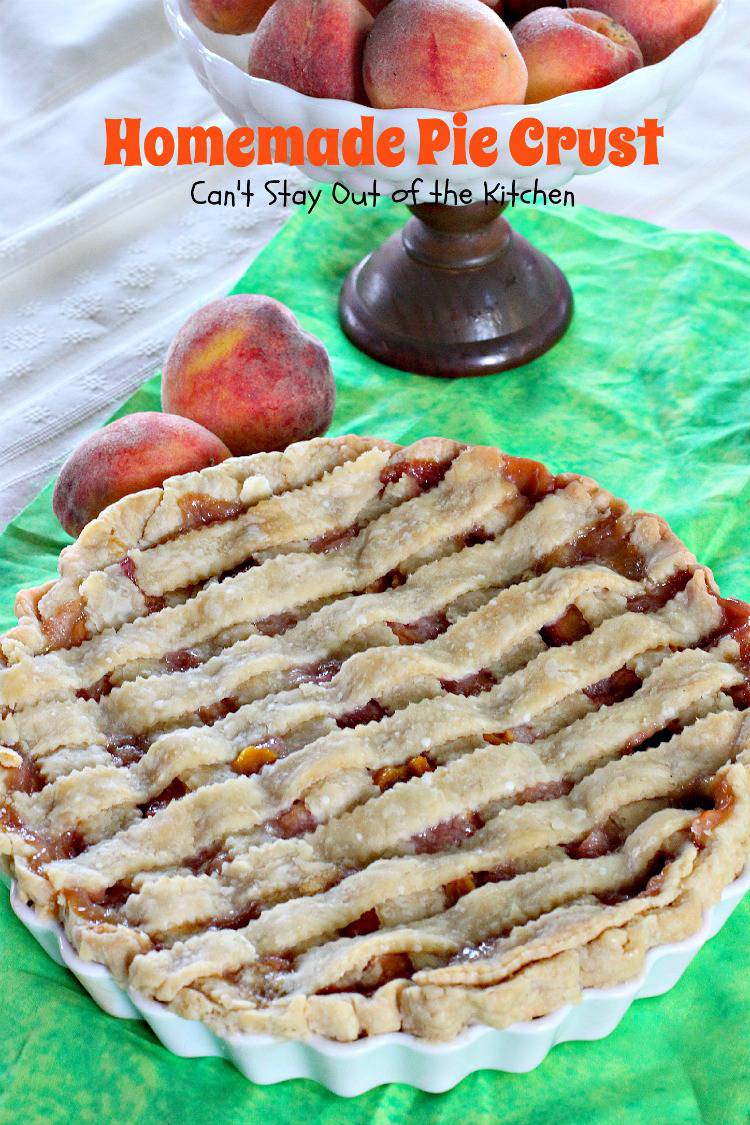
Plain pie crust—makes 2 crusts
- Carbohydrate 26.6685982289309 g
- Cholesterol 9.56671451218983 mg
- Fat 17.4259063391159 g
- Fiber 0.943588212420013 g
- Protein 3.61009854153919 g
- Saturated Fat 6.93878671700089 g
- Serving Size 1 1 Serving (52g)
- Sodium 3.92878755241159 mg
- Sugar 25.7250100165109 g
- Trans Fat 0.865250486557991 g
- Calories 281 calories
Step-by-step
- Mix flour and salt in a large bowl. Cut in shortening using a pastry blender or 2 knives until the mixture resembles coarse crumbs.
- Add water 1 tablespoon at a time, mixing lightly with a fork until the flour mixture is evenly moistened and clings together when pressed into a ball. Divide the dough in half, shape each half into a 1/2 inch thick round. Wrap each in plastic wrap and refrigerate for 10-15 minutes.
- Roll into circles between 2 sheets of plastic wrap or waxed paper until 1-2 inches larger than the diameter of the pan.
- Peel off the top paper and invert the crust into the pan. Shape and remove the top paper.
- If using a top crust, trim the bottom to the edge of the pie plate. Fill, place the top crust and trim to double the width of the rim and fold over the bottom crust. Seal by fluting—crimping with fingers to form a V shape. If using 1 crust, trim the crust to double the width of the rim, then fold under and seal by crimping with fingers to form a V shape.
The Simple Joy of Homemade Pie Crust: A Baker's Tale
The aroma of freshly baked pie, that warm, comforting scent that instantly transports you to cozy kitchens and cherished family memories. For me, that aroma always starts with the crust. It's the foundation, the canvas upon which the sweet or savory masterpiece is created. And while store-bought crusts are convenient, nothing quite compares to the flaky, buttery perfection of a homemade pie crust. It’s a skill I learned from my grandmother, a woman who believed the heart of a home was found in its kitchen, filled with the sounds of laughter and the delicious smell of baking.
I remember spending countless hours in her kitchen, watching her nimble fingers work magic with flour and butter. She’d tell me stories while she worked, her hands moving with practiced ease, each motion precise and confident. The process seemed almost magical, transforming simple ingredients into something extraordinary. It wasn't just about following a recipe; it was about understanding the interplay of ingredients, the subtle nuances of texture and taste. And it was about sharing, about the joy of creating something delicious to be shared with loved ones.
Over the years, I've refined my own pie crust recipe, tweaking it here and there to suit my tastes. But the core principles remain the same: cold ingredients, gentle handling, and a touch of patience. The cold ingredients are crucial; the butter shouldn't melt, as this affects the flakiness. Gentle handling prevents the gluten from developing too much, resulting in a tender crust. And patience, well, that's essential for ensuring an even, consistent texture throughout.
Making a pie crust is more than just following instructions; it’s a mindful process that connects you to the tradition of baking. It allows for creativity. Sometimes I add a touch of lemon zest for a bright, citrusy flavor. Other times, I incorporate herbs into the crust for a savory twist. The possibilities are endless. The beauty lies in experimenting and finding what works best for you.
This recipe, my grandmother's legacy passed down through generations, allows for a comforting sense of familiarity while simultaneously welcoming creativity. It's a recipe that teaches patience and the rewards of a labor of love. The process becomes a meditation; the rhythmic motion of the pastry blender, the feel of the cool dough, the satisfying crackle as the crust bakes. The end result is a perfect base for a variety of fillings—from classic apple to decadent chocolate, or even a savory quiche. But regardless of the filling, the foundation is always the same, and that's the magic of the perfect homemade pie crust.
So, gather your ingredients, roll up your sleeves, and embark on a baking adventure. The journey may take a little time, but the reward—a flaky, tender crust that elevates any pie—is well worth the effort. Remember, it’s not just about the finished product; it’s about the process, the connection to tradition, and the joy of sharing something delicious with those you love. Because in the end, isn't that what baking is all about?
The process of making pie crust is as much an art as it is a science. The right temperature of the butter and water, the gentle handling of the dough—these seemingly small details have a significant impact on the final product. Don’t be discouraged if your first attempt isn't perfect; even seasoned bakers have their moments of frustration. The key is to keep practicing, to experiment, and to learn from your mistakes. Each pie crust you make will be a step closer to mastering this timeless baking skill. Embrace the challenges and enjoy the journey—the delicious reward awaits.
And remember, a homemade pie crust is a gift. It's a gift of time, effort, and love, presented to those you care about. It’s a gesture that transcends the simple act of baking; it's a connection to history, a tradition carried on through generations, a taste of home, wherever that may be. It’s a comforting reminder of simpler times, when the kitchen was the heart of the home, and the smell of freshly baked goods filled the air.



