Lamb Stew with Dumplings
This recipe is a family winter warmer which is great with crusty bread. It's made on a budget and packed full of great flavors. My mum used to make it when I was a kid in New Zealand and I still make it today. It's an absolute winner with the blokes who always want second helpings - I usually double the recipe without any drama.
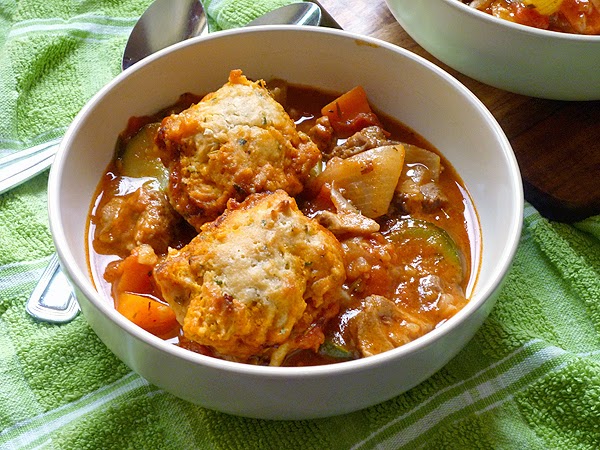
This recipe is a family winter warmer which is great with crusty bread. It's made on a budget and packed full of great flavors. My mum used to make it when I was a kid in New Zealand and I still make it today. It's an absolute winner with the blokes who always want second helpings - I usually double the recipe without any drama.
- Carbohydrate 189.335653330307 g
- Cholesterol 160.618333325192 mg
- Fat 124.376742080223 g
- Fiber 15.7423247300509 g
- Protein 36.7520941662252 g
- Saturated Fat 56.773338706382 g
- Serving Size 1 1 Serving (1228g)
- Sodium 2062.52674997811 mg
- Sugar 173.593328600256 g
- Trans Fat 7.34423558310544 g
- Calories 2005 calories
Step-by-step
- Place meat in a medium pan and cover with the water - you may need to add more water to cover meat. Bring to boil and cook on medium heat for about 40 minutes until tender and the meat is falling from the bone. Turn heat off and allow to cool slightly before skimming fat. Remove meat and pull from bone. Chop meat into bite size pieces, discarding the fat.
- Add meat back into water along with carrots, potatoes, onions, salt, pepper, bay leaf, tomato sauce and parsley. Bring to boil and reduce to a simmer for about 10 minutes. Blend your 2 tablespoons of flour with a little water and add to pan. Stir until stew thickens. Drop spoonfulls of dumping mixture into stew. Cover and cook on a medium heat for about 15 - 20 minutes, stirring the bottom occasionally to prevent sticking.
- Sift flour and salt. Rub in butter, stir in parsley. Add milk and stir quickly to make a soft sticky dough.
- Serve with hot crusty bread.
Brahing Techniques for Tough Cuts
Replacing the water in a braise with unsalted chicken or vegetable stock fundamentally alters the final depth of the liquid, whereas plain water requires heavy reliance on the bay leaf and tomato sauce to build a savory foundation. Simmering the lamb for 40 minutes ensures the connective tissues break down sufficiently before root vegetables enter the pot, preventing the potatoes from turning to mush during the extended cooking phase. Skimming excess rendered fat from the surface after the initial boil prevents a greasy mouthfeel without sacrificing the rich texture provided by the meat. When creating the thickening slurry, whisking two tablespoons of flour with cold water before stirring it into the simmering liquid prevents lumps from forming in the starch matrix.Dumpling Structure and Steam Management
Working the self-rising flour, butter, and milk into a soft, sticky dough requires minimal handling to preserve the pockets of carbon dioxide released by the chemical leavening agents during steaming. Dropping spoonfuls directly onto the simmering stew surface allows the dumplings to expand and absorb surrounding aromatics while the pan remains covered for the required 15 to 20 minute window. Stirring the bottom of the pan occasionally during this stage stops the dense starch from scorching against direct heat sources. Keeping the lid tightly sealed traps the steam necessary to cook the interior crumb of each dumpling evenly without drying out the exterior surface.Next-Day Transformation and Storage
Extended refrigeration for 24 hours allows the starches in the potatoes and the flour slurry to gelatinize further, resulting in a noticeably thicker consistency that benefits from a splash of water during reheating. Storing leftovers in an airtight container for up to three days concentrates the herbaceous notes of the parsley and the savory profile of the lamb. Gentle reheating over medium-low heat prevents the lean meat fibers from tightening and turning rubbery while ensuring the dumplings warm through to their centers without disintegrating into the broth.


