Barbecued Spareribs
These can be made entirely in advance if you are doing other things when you want to serve it. I marinate the meat in a resealable freezer bag the day before. Then I roast it, cut the ribs apart, and cover it with foil or wrap. Before serving, I either wrap it in foil and reheat in a low oven or reheat - covered with plastic wrap - in a microwave. These have become a staple on my occasional Chinese Banquet nights (once or twice a year). They are good at other times too.
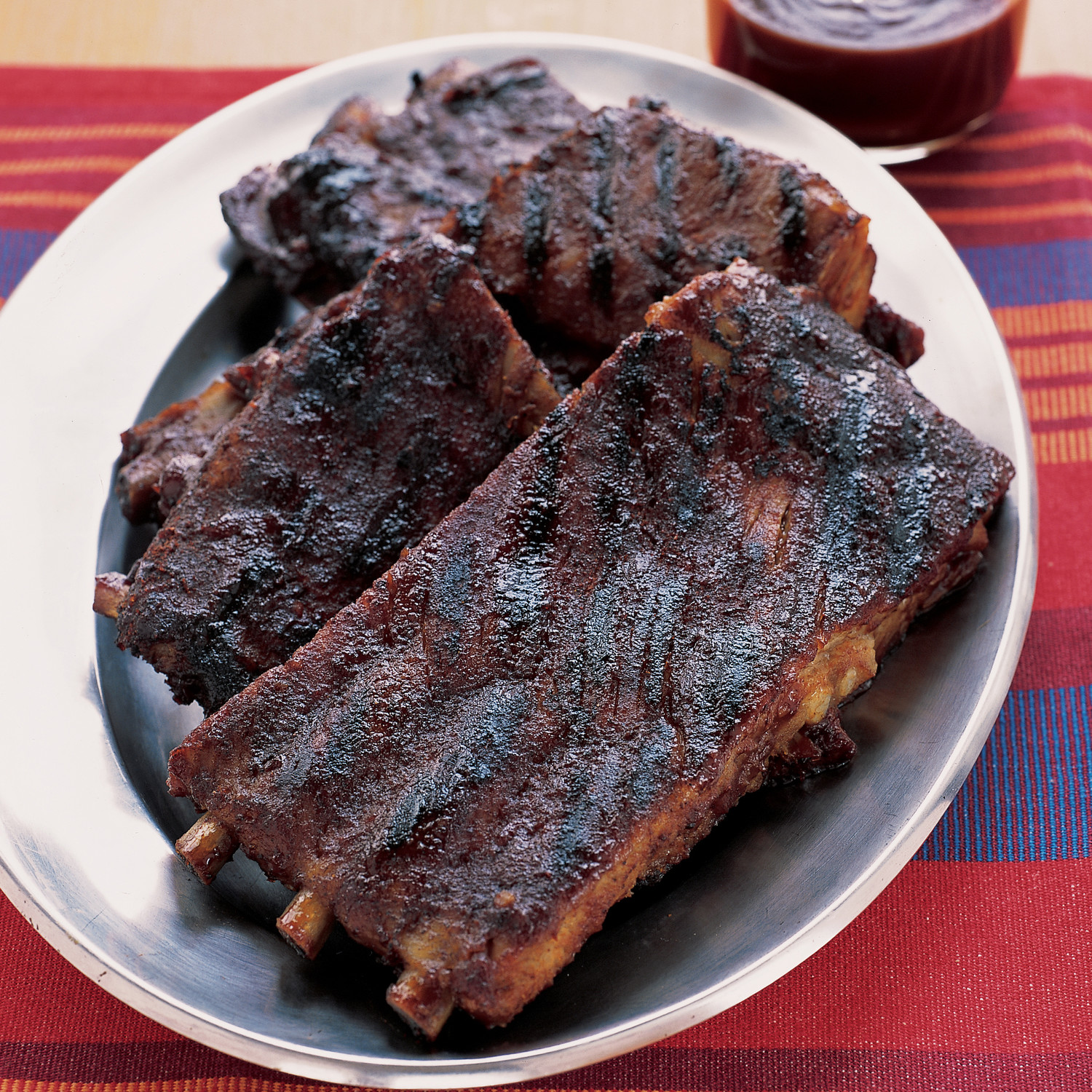
These can be made entirely in advance if you are doing other things when you want to serve it. I marinate the meat in a resealable freezer bag the day before. Then I roast it, cut the ribs apart, and cover it with foil or wrap. Before serving, I either wrap it in foil and reheat in a low oven or reheat - covered with plastic wrap - in a microwave. These have become a staple on my occasional Chinese Banquet nights (once or twice a year). They are good at other times too.
- Carbohydrate 7.95864249666733 g
- Cholesterol 119.776666666667 mg
- Fat 35.1901333333333 g
- Fiber 0.190195830808021 g
- Protein 23.7716404166667 g
- Saturated Fat 11.2903953333333 g
- Serving Size 1 1 Serving (172g)
- Sodium 382.115375 mg
- Sugar 7.76844666585931 g
- Trans Fat 5.05582466666667 g
- Calories 452 calories
Step-by-step
- With a cleaver or large, sharp knife, trim any excess fat from the spareribs. If the breastbone is still attached, use a cleaver to chop it away from the ribs and discard it. Place the spareribs in a long shallow dish, large enough to hold them comfortably.
- In a small bowl, combine the soy sauce, honey, hoisin sauce, vinegar, wine, garlic, sugar, and chicken stock. Stir until they are well mixed. Pour the sauce over the spareribs, baste them thoroughly, and let them marinate for 3 hours at room temperature (6 hours if refrigerated), turning them over in the marinade and basting them every hour or so.
- Preheat the oven to 375 F. To catch the drippings of the spareribs as they roast, and toprevent the oven from smoking as well, fill a large shallow roasting pan or baking dish with water and place it on the lowest rack of the oven. Insert the curved tips of two or three S-shaped hooks - such as curtain hooks or 5 inch lengths of heavy-duty wire or even unpainted coat hangers bent into shape - at each end of the spareribs. As if hanging a hammock, use the curved ends of the hooks to suspend the ribs from the uppermost rack of the oven directly above the pan of water. Roast the ribs undisturbed for 45 minutes. then raise the oven heat to 450 F. and roast about 15 minutes longer, or until the spareribs are crisp and a deep, golden brown.
- To serve, place the ribs on a chopping board and, with a cleaver, separate the strip into individual ribs. If the ribs are large, chop them each in half crosswise. Serve hot or cold with plum sauce. As a main course, this will serve 4 - 6. As part of an elaborate Chinese meal, it will serve 6 - 8.
Accompaniments and Pairing Strategies
Plain steamed jasmine rice acts as an essential neutral base to absorb the rich drippings and sticky plum sauce accompanying the pork. Crisp, raw vegetables like cucumber ribbons dressed in rice vinegar and toasted sesame oil provide necessary textural contrast to the dense, fatty protein. Pickled daikon radish or lightly salted cabbage slaw brings acidity that cleanses the palate between rich bites of pork.Common Pitfalls in Preparation
Overcrowding the pan or failing to catch drippings correctly causes smoking and bitter flavors that ruin the delicate balance of the honey-based glaze. Monitoring the internal oven temperature closely during the transition from 375 degrees Fahrenheit to 450 degrees Fahrenheit prevents the sugars from burning before the meat renders properly. Suspending the slab vertically from hooks allows heat to circulate evenly, ensuring the exterior achieves a deep golden brown while the interior remains tender.


