Detox Salad
Vegan, gluten-free, oil-free, soy-free. Packing a powerhouse of nutrients, this light and energizing salad will have you bursting with energy. It makes a lot so you can enjoy it all week long for easy, energizing lunches. I wouldn’t recommend skipping the currants and raisins as it adds a much needed sweetness to balance out the vegetables and lemon juice. I loved it drizzled with a touch of maple syrup just before serving. Feel free to use any herbs and spices you wish. I also love it with a sprinkle of cinnamon on top. Inspired by Whole Foods
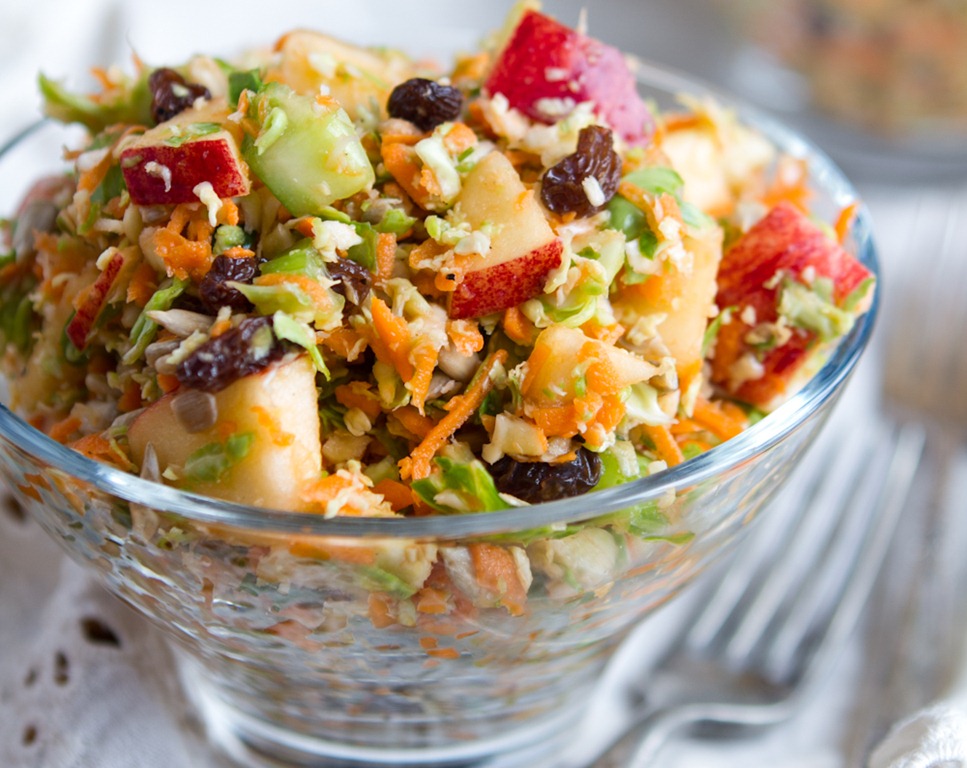
Vegan, gluten-free, oil-free, soy-free. Packing a powerhouse of nutrients, this light and energizing salad will have you bursting with energy. It makes a lot so you can enjoy it all week long for easy, energizing lunches. I wouldn’t recommend skipping the currants and raisins as it adds a much needed sweetness to balance out the vegetables and lemon juice. I loved it drizzled with a touch of maple syrup just before serving. Feel free to use any herbs and spices you wish. I also love it with a sprinkle of cinnamon on top. Inspired by Whole Foods
- 1/2 cup raisins
- 1/2 cup sunflower seeds
- 2 heads broccoli (1 bunch) stems removed
- 1 head cauliflower stems removed
- 2.5 cups shredded carrots
- 1 cup currants
- 1/2 cup finely chopped fresh parsley
- 4-6 tbsp fresh lemon juice to taste
- kosher salt pepper to taste (1/4-1/2 tsp salt and lots of pepper)
- kelp granules or herbamare (optional) to taste
- pure maple syrup to drizzle on before serving
- Carbohydrate 34.0630708724053 g
- Cholesterol 0 mg
- Fat 1.50469137270145 g
- Fiber 4.23276399334156 g
- Protein 3.15095756572572 g
- Saturated Fat 0.146198558476699 g
- Serving Size 1 1 Serving (119g)
- Sodium 88.6409884446601 mg
- Sugar 29.8303068790638 g
- Trans Fat 0.278073389969174 g
- Calories 145 calories
Step-by-step
- In a food processor (or chop by hand) process the broccoli (no stems) until fine. Add into large bowl.
- Now process the cauliflower (no stems) until fine and add into bowl. Do the same with the carrots.
- Stir in the sunflower seeds, currants, raisins, and parsley. Add lemon juice and seasonings to taste.
- Drizzle with maple syrup to taste.
Raw cruciferous vegetables require precise mechanical reduction to yield a tender mouthfeel rather than a woody resistance. Food processors fitted with an S-blade achieve this uniform mincing quickly, but working in small batches prevents the bottom layers from liquefying before the top pieces break down. Removing the fibrous broccoli and cauliflower stems entirely prior to processing keeps the water content manageable and avoids bitter undertones. Reserve those discarded stems for quick-cooking applications like stir-fries or vegetable stocks later in the week.
Scaling quantities upward or downward alters the surface area-to-acid ratio, meaning large batches demand careful attention during the seasoning phase. Doubling the recipe requires starting with half the stated lemon juice and salt, then tasting after a thorough toss to prevent premature chemical curing of the raw brassicas. Sunflower seeds and dried fruits should be folded in only after the base vegetables are fully processed and salted. This sequence ensures the seeds retain their crunch and the dried currants and raisins distribute evenly throughout the dense matrix of greens.
Acid and salt draw moisture out of raw shredded carrots and crucifers over time, changing the structural integrity of the dish within hours. Storing the dressed mixture in an airtight glass container in the refrigerator for up to three days works well, provided excess liquid is drained off before serving. Adding a drizzle of maple syrup immediately before eating counters the sharp natural astringency of raw brassicas without softening the cellular walls prematurely. Fresh parsley oxidizes rapidly when exposed to lingering salt, so folding it in just prior to consumption preserves its bright green color and herbaceous punch.
Adapting this formulation to seasonal availability relies entirely on maintaining proper moisture balances and structural density across substitute ingredients. Substituting finely shredded green cabbage for the cauliflower requires cutting the added lemon juice by a quarter, because cabbage tissues release cellular fluid much faster under acidic conditions. Walnuts or toasted pumpkin seeds replace sunflower seeds at a one-to-one volumetric ratio without modifying the structural integrity of the finished bowl. Keeping the fundamental ratio of dense vegetables to dried fruit stable ensures consistent results regardless of specific seasonal swaps.



