Iron Skillet Blackberry Cobbler
Butter piecrust gets crunchy on bottom and edges of cast iron skillet, with dough pieces in layers with the berries and sugar. You can use peaches or blueberries as well, blackberries are just my favorite. Frozen fruit works nicely, too. You must use a cast iron skillet! If you dont have one, go buy one and season it well...its a kitchen necessity!
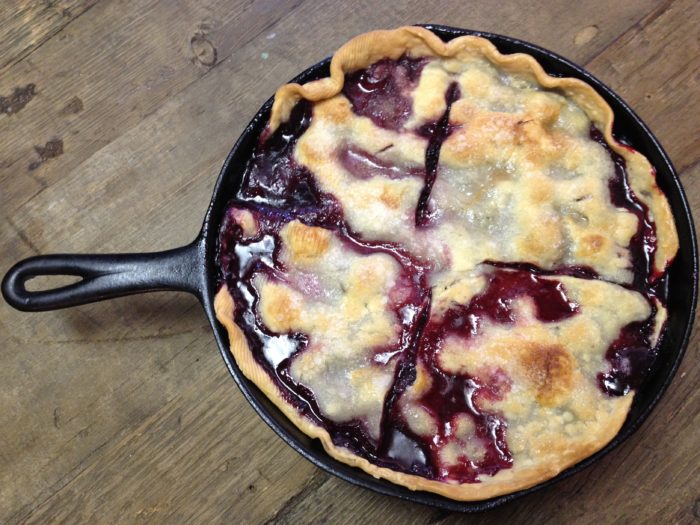
Butter piecrust gets crunchy on bottom and edges of cast iron skillet, with dough pieces in layers with the berries and sugar. You can use peaches or blueberries as well, blackberries are just my favorite. Frozen fruit works nicely, too. You must use a cast iron skillet! If you dont have one, go buy one and season it well...its a kitchen necessity!
- Carbohydrate 127.0776853125 g
- Cholesterol 64.872890625 mg
- Fat 25.12291265625 g
- Fiber 1.82156253129244 g
- Protein 7.05606796875 g
- Saturated Fat 15.603047625 g
- Serving Size 1 1 Serving (178g)
- Sodium 175.360640625 mg
- Sugar 125.256122781208 g
- Trans Fat 1.92679153125 g
- Calories 753 calories
Step-by-step
- For piecrust, combine flour and salt; cut in butter with a pastry blender until mixture is crumbly.
- Sprinkle water, 1 T at a time, evenly over surface; stir with a fork just until dry ingredients are moistened.
- Roll piecrust to 1/4 inch thickness.
- Fit into a 10-inch cast iron skillet.
- Trim excess pastry along edges, reserving trimmings.
- Prick bottom and sides of piecrust with a fork.
- Bake at 375 degrees for 8 minutes.
- Remove from oven; set aside.
- Cut butter into flour with a pastry blender until crumbly; add 1/2 c sugar.
- Place 1/3 of berries in piecrust; sprinkle with about 1/3 remaining sugar.
- Sprinkle with 1/3 flour mixture.
- Top with 1/3 of pastry trimmings.
- Repeat layers twice.
- Sprinkle with additional sugar.
- Bake at 375 degrees for 50 minutes or until crust is lightly browned.
Will the pastry get soggy underneath dense fruit? Managing moisture is the central hurdle when layering raw dough directly with high-water berries inside a heavy skillet. Cold fat distribution dictates whether the pastry base stays flaky or turns gummy before the fruit releases its juices. Cutting the butter into the flour until the mixture resembles coarse crumbs creates microscopic pockets of steam that lift the dough during the initial eight-minute blind bake at 375 degrees Fahrenheit. Pricking the bottom and sides with a tined fork prevents large air bubbles from distorting the crust while it sets. Layering the remaining flour and sugar mixture directly between the fruit portions absorbs excess liquid as the berries break down during the subsequent fifty-minute oven phase. Frozen fruit requires no thawing before assembly, though adding an extra tablespoon of flour to the dry mix helps counteract the additional water released during baking. Heavy cast iron retains thermal energy far better than glass or ceramic bakeware, ensuring the bottom crust develops a deep, golden crunch. Overworking the dough with warm hands melts the butter prematurely, destroying the layered flakiness required to support the heavy filling.



