Vegetable Tian
Thinly sliced veggies topped with cheese and then roasted. Many have tried this and have been wanting me to post the recipe again. So here it is. Enjoy You talk about good eating This is delish I never used to like this type of stuff because I thought this type of healthy = NASTY not the case. There is so much flavor in these types of dishes and it does a body good It sure beats those fries that I used to stuff in my face not so very long ago
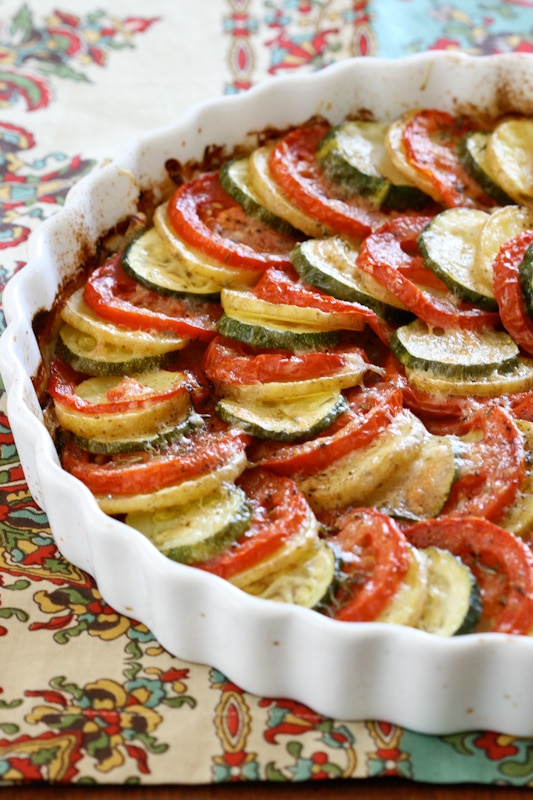
Thinly sliced veggies topped with cheese and then roasted. Many have tried this and have been wanting me to post the recipe again. So here it is. Enjoy You talk about good eating This is delish I never used to like this type of stuff because I thought this type of healthy = NASTY not the case. There is so much flavor in these types of dishes and it does a body good It sure beats those fries that I used to stuff in my face not so very long ago
- Carbohydrate 8.78252875 g
- Cholesterol 0 mg
- Fat 0.587609375180917 g
- Fiber 1.64691254031658 g
- Protein 1.497381875 g
- Saturated Fat 0.0983646250249811 g
- Serving Size 1 1 Serving (111g)
- Sodium 78.8126250000036 mg
- Sugar 7.13561620968342 g
- Trans Fat 0.0527091250048992 g
- Calories 43 calories
Step-by-step
- Preheat the oven to 180 (400 degrees f) Finely dice the onion and mince the garlic. Sauté both in a skillet with olive oil until softened (about five minutes).
- While the onion and garlic are sauteing, thinly slice the rest of the vegetables.
- Spray the inside of an 8x8 square or round baking dish with non-stick spray. Spread the softened onion and garlic in the bottom of the dish. Place the thinly sliced vegetables in the baking dish vertically, in an alternating pattern. Sprinkle generously with salt, pepper, and thyme.
- Cover the dish with foil and bake for 30 minutes. Remove the foil, top with cheese and bake for another 15-20 minutes or until the cheese is golden brown
Assessing Doneness Without a Thermometer
Visual and textural cues replace internal temperature readings when evaluating baked gratins and tians. Piercing the center potato slice with the tip of a paring knife provides the primary test; resistance indicates raw centers while zero structural feedback signals overcooking. The surrounding liquid should bubble actively at the edges of the baking dish rather than flood the base. Cheese toppings require monitoring during the final uncovered baking phase to prevent bitter burnt milk solids. Golden-brown coloration across the shredded dairy layer indicates both proper fat rendering and adequate moisture evaporation from the underlying produce layers.Fresh Versus Preserved Components
Fresh market produce introduces variable water content compared to pre-cooked or dried components. Raw zucchini and yellow squash release significant moisture during the initial covered bake at four hundred degrees Fahrenheit. Salting sliced produce thirty minutes prior to assembly draws out excess cellular water through osmosis, concentrating natural sugars and preventing soggy textures. Dried herbs such as thyme distribute essential oils more predictably in baked matrices than fresh leaves when moisture levels fluctuate wildly across alternating vegetable rings.


