Apple Crumb Pie
One Thanksgiving, I attempted to bake an apple pie. Needless to say, it was a little runny and the apples were still a little hard. I never heard the end of it from Grandpa After that, Grandma gave me her recipe for apple pie.
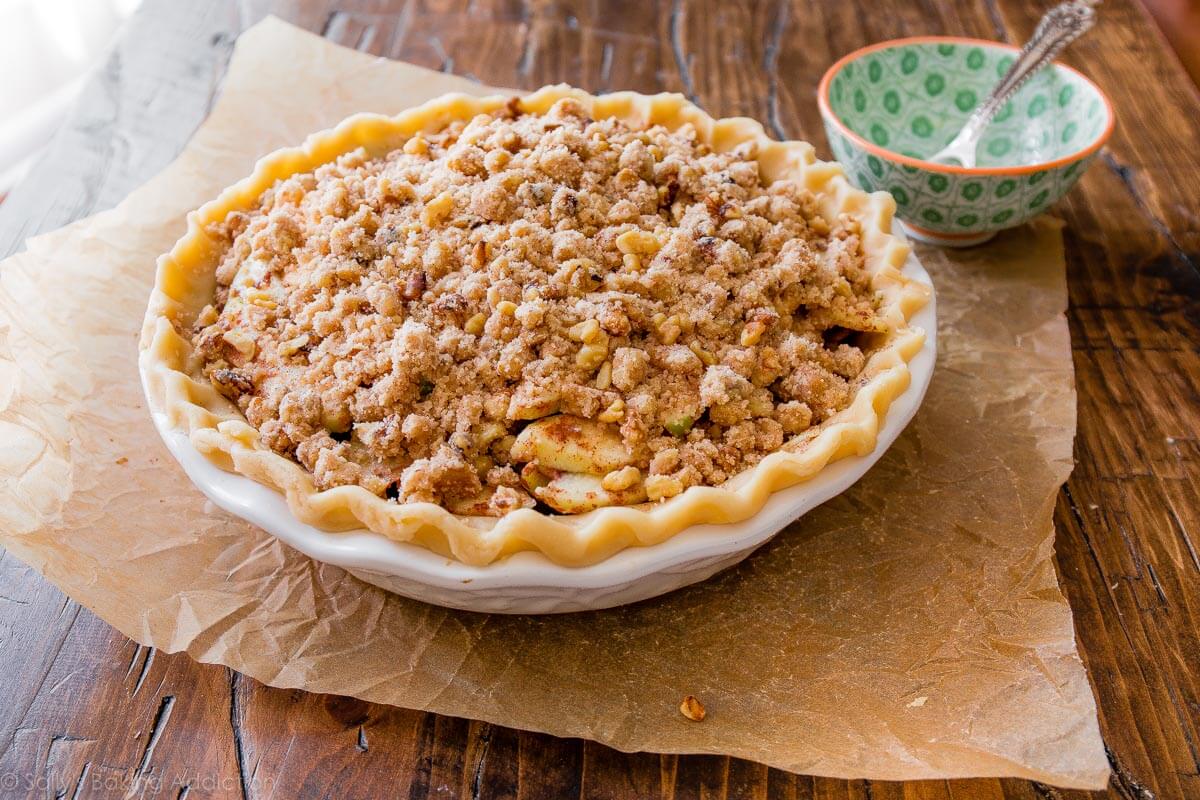
One Thanksgiving, I attempted to bake an apple pie. Needless to say, it was a little runny and the apples were still a little hard. I never heard the end of it from Grandpa After that, Grandma gave me her recipe for apple pie.
- Carbohydrate 33.7058067011549 g
- Cholesterol 13.5569444617186 mg
- Fat 5.39618195096122 g
- Fiber 2.28790840468804 g
- Protein 1.53776638895718 g
- Saturated Fat 3.30777486523827 g
- Serving Size 1 1 Serving (107g)
- Sodium 71.0271667129453 mg
- Sugar 31.4178982964669 g
- Trans Fat 0.457030361567308 g
- Calories 182 calories
Step-by-step
- Preheat oven to 450?
- Peel and core apples. Slice into eighths, and toss with sugar, cinnamon and nutmeg. Arrange in a 9" pie crust.
- Sift together the sugar and flour, and then cut in 1/3 cup butter until crumbly. Sprinkle over the apples.
- Bake in a hot oven (450?) for 10 minutes. Reduce heat to 350? and bake about 40 minutes, or until the apples are tender.
Standard double-crust apple pies often suffer from a dual textural failure: overbaked pastry protecting undercooked fruit, or saturated bottom crusts. This streusel-topped variant solves that structural dilemma by utilizing an exposed apple layer beneath a granular flour-and-butter topping.
Fruit Texture and Pectin Breakdown
Raw apples contain rigid cell walls bound by pectin. Heating converts this insoluble protopectin into soluble pectin, softening the fruit. Slicing Granny Smith apples into uniform eighths ensures they reach tenderness simultaneously during the secondary 350 degree bake. Uneven cuts yield a discordant mouthfeel where crunchy pieces coexist with mush.The Physics of the Crumb Topping
Cutting cold butter into flour and sugar creates small pockets of fat. As the pie bakes, water evaporates from the melting butter, creating steam pockets that lift the flour mixture into a friable, crumbly crust. Sifting the sugar and flour prior to fat incorporation prevents dense pockets of dry flour in the finished topping.Thermal Shock and Crust Integrity
Starting the bake at a high temperature of 450 degrees for 10 minutes provides rapid initial oven spring to the pastry. Dropping the thermostat to 350 degrees for the subsequent 40 minutes prevents the exterior sugar from burning before the internal apples fully soften. Piercing an apple slice with a metal skewer verifies doneness without resistance.


