20 Minute Shrimp Creole
I have made this dish a few times and each time I cant believe how much flavor it has. It is a great dish and very fast.
I have made this dish a few times and each time I cant believe how much flavor it has. It is a great dish and very fast.
- 1/4 teaspoon salt
- 2 cloves garlic minced
- 1/2 cup celery chopped
- 1/4 cup onion chopped
- 1 teaspoon parsley dried
- 1 pound shrimp
- 1 14-oz can tomatoes diced, undrained
- 1 cup chili sauce low sodium
- 1 1/2 cup green pepper chopped
- 1 teaspoon basil dried
- 1/4 teaspoon red pepper crushed
- 1 cup minute rice prepared
- Carbohydrate 55.5989272916025 g
- Cholesterol 170.24 mg
- Fat 2.855069374992 g
- Fiber 4.21973541051779 g
- Protein 28.4208218749699 g
- Saturated Fat 0.554176708331996 g
- Serving Size 1 1 Serving (394g)
- Sodium 196.620583332766 mg
- Sugar 51.3791918810847 g
- Trans Fat 0.672847437497579 g
- Calories 366 calories
Step-by-step
- Spray deep skillet with nonstick spray coating.
- Preheat pan over high heat.
- Cook shimp in hot skillet, stirring, for 3 to 5 minutes, or until done.
- Reduce heat.
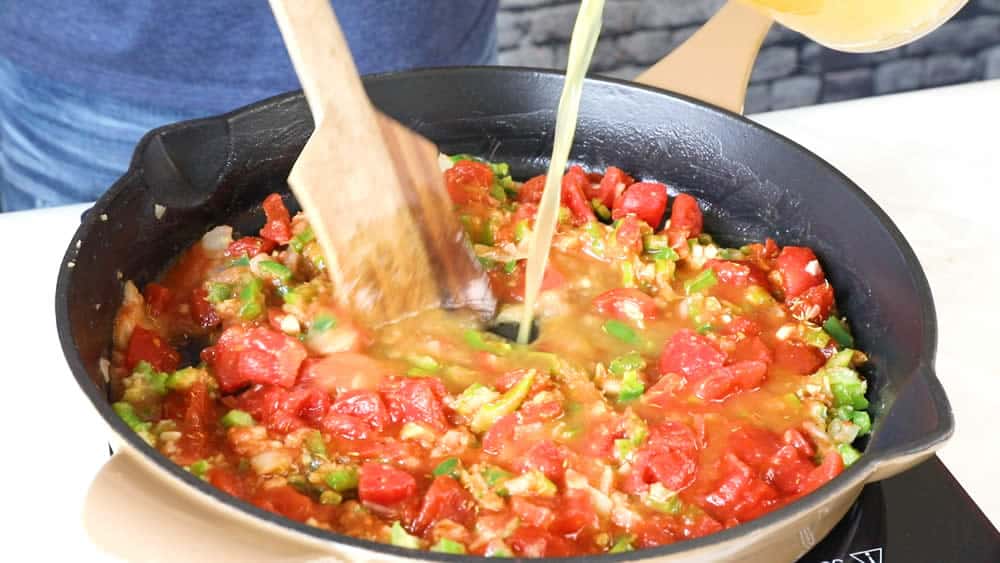
- Add tomatoes and their juice, low sodium chili sauce, green pepper, celery, onion, garlic, basil, parsley, crushed red pepper, and salt.
- Bring to boiling; reduce heat and simmer, covered, for 10 minutes.
- Serve over hot cooked rice or whole wheat pasta.
Operating within a strict fifteen-minute window requires precision, particularly when combining delicate shellfish with acidic tomatoes. Traditional Creole cooking merges French roux-based foundations with Spanish and African flavor profiles, but this rapid weeknight adaptation bypasses flour thickening in favor of reduction. Managing volume shifts in quick-cooking crustacean dishes demands careful calculation.
- Double the aromatics proportionally when scaling up to eight servings, but increase the canned tomato volume by only 1.5 times to prevent excess liquid accumulation.
- Cook shrimp until internal temperatures reach 145 degrees Fahrenheit or until muscle tissue turns opaque and pink.
- Maintain high initial heat when searing shrimp to develop surface flavor compounds before introducing moisture from the vegetables and canned tomatoes.
- Substitute fresh bell peppers with frozen diced varieties only if thoroughly thawed and drained; excess water extends the simmering time beyond the target ten-minute threshold.
- Utilize a wide-bottomed sauté pan rather than a deep pot to maximize surface area evaporation during the final simmer.
Adjusting quantities requires monitoring moisture levels closely because wider pans accelerate evaporation rates. Storing leftovers safely demands rapid cooling within two hours before refrigeration for up to three days.



