Pavlova
A classic Aussie Pav recipe with my tips that make all the difference, especially during hot humid summers which make Pavs prone to collapsing during or after baking. Top your Pav with whatever fruit you want!
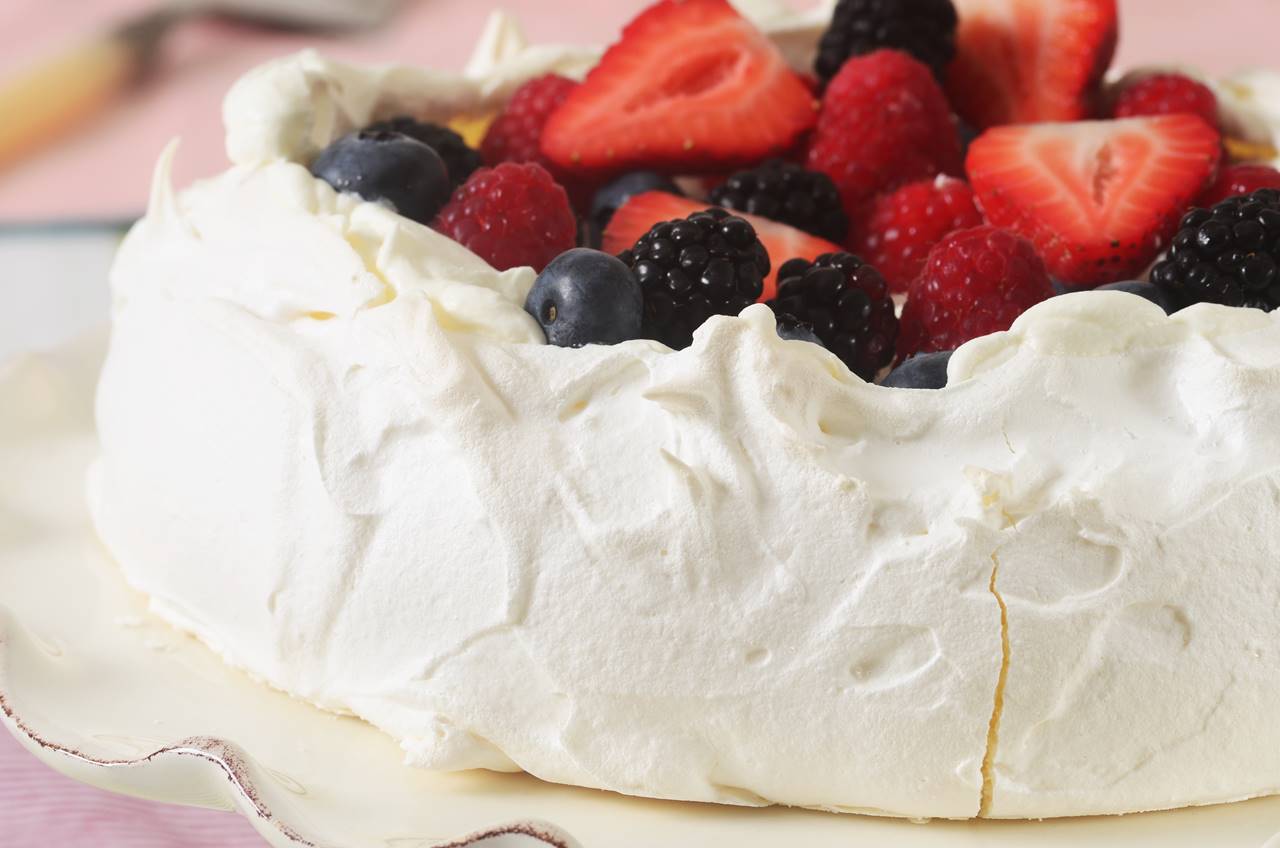
A classic Aussie Pav recipe with my tips that make all the difference, especially during hot humid summers which make Pavs prone to collapsing during or after baking. Top your Pav with whatever fruit you want!
- 1 tsp white vinegar
- 150 ml / 5 oz egg whites (4-5 eggs fridge cold eggs) (n
- 1 cup / 220g caster sugar (superfine sugar)
- 1 tbsp cornflour / cornstarch sifted
- 1 1/2 cups / 375 ml thickened cream / heavy cream (any whip
- 1/4 cup / 55g cup caster sugar (superfine sugar)
- 1 tsp vanilla extract or essence
- fruit of choice. i used: raspberries blueberries, strawberries and cherries.
- Carbohydrate 0.000248333332936 g
- Cholesterol 0 mg
- Fat 0 g
- Fiber 0 g
- Protein 0 g
- Saturated Fat 0 g
- Serving Size 1 1 -10 (1g)
- Sodium 0.0124166666468 mg
- Sugar 0.000248333332936 g
- Trans Fat 0 g
- Calories 0 calories
Step-by-step
- Separate the whites and yolks while eggs are cold. Measure 150 ml/5oz egg whites (140 - 160ml is ok).
- Set whites aside to come to room temperature.
- Preheat oven to 150C/300F (fan / convection) / 170C/340F (standard).
- Place whites in a bowl. Use a stand mixer (I use speed 7) or handheld beater (high) and beat until soft peaks form.
- Add sugar 1 tbsp at a time, beating as you go.
- After adding the sugar, beat for a further 3 minutes or until thick and glossy. Rub a little of the fluff between your fingers, there should be no sugar grit - that means it is ready.
- Add cornflour and vinegar, beat on low for 5 - 7 seconds (or fold through with spatula) until just mixed through.
- Get the base of a springform cake pan (24cm/9.5" or larger) and turn it upside down. Dab meringue on the edge and place a piece of baking paper (parchment paper) on top.
- Gently place half the fluff onto the paper. Use the cake pan as a guide to make it round and coax it into a circle shape around 20cm / 8" in diameter.
- Carefully scoop out the remaining fluff. Now coax it into a dome shape (not a cake with straight smooth sides) with edges sloping in slightly. Flatten top. Make it 4-5cm / 2 " high - not much higher.
- Transfer to baking tray. CAREFULLY place in the oven, GENTLY close the door and turn oven DOWN to 100C/210F (fan / convection) / 115C/240F (standard).
- Bake for 1 1/2 hours - no peeking, no thundering through kitchen!
- Turn oven off, leave the door closed and leave Pav in the oven overnight to cool (I've done 18 hours).
- Transfer Pav to serving platter then slide cake pan out from underneath. Use butter knife if required to loosen edges from paper, then slide paper out from underneath.
- Just before serving, top with cream and fruit of choice.
- Serve and be a rock star!
- Place cream, sugar and vanilla in a bowl. Beat cream until it is thickened and just holds its shape - don't overbeat, it should be silky smooth, not speckled with bubbles and stiff.
My Pavlova Journey: A Summertime Sweet Treat
As a busy working mom, finding time for baking is a luxury, not a given. But there's something incredibly rewarding about creating something beautiful and delicious from scratch, especially when it's a dessert as elegant and impressive as a Pavlova. This classic Aussie treat has become a regular feature in my summer repertoire, and not just for its delicious taste, but for the sheer joy it brings to my family. This recipe, perfected over countless attempts (and a few memorable collapses!), is designed to be forgiving, even during those muggy summer days when humidity threatens to sabotage your meringue masterpiece.
The key, I've discovered, lies in the details. Room temperature egg whites are crucial for achieving that perfect, glossy peak, and the addition of cornflour and vinegar provides stability, ensuring your Pavlova doesn't deflate after baking. The lower baking temperature and extended cooling time are also essential for achieving a crisp exterior and a soft, marshmallowy interior. I've seen my share of cracked and collapsed Pavlovas, and let me tell you, the secret to salvaging them is a generous layer of whipped cream – the ultimate Pavlova camouflage!
Beyond the Basics: Fruit, Cream and Creativity!
What truly elevates a Pavlova is the freedom of customization. The foundation is a delicate meringue nest, a perfect blank canvas for your culinary creativity. While raspberries, blueberries, strawberries, and cherries are classic choices, I encourage you to experiment with seasonal fruits. Imagine the vibrant sweetness of mango and passionfruit, the tangy zest of citrus fruits, or even the unexpected crunch of toasted nuts. The possibilities are endless!
The whipped cream, too, can be infused with flavors. A hint of vanilla extract is standard, but you can also try adding a touch of lemon zest, a splash of liqueur, or even a swirl of Nutella for a decadent twist. The beauty of this recipe is its adaptability. Whether you’re serving it at a casual family gathering or a more formal dinner party, the Pavlova will always impress.
Beyond the Recipe: The Art of Patience
Baking a Pavlova is more than just following instructions; it's about embracing the process. There's a quiet satisfaction in meticulously separating egg whites, patiently whipping the mixture until stiff peaks form, and carefully shaping the meringue. It’s a journey of careful attention to detail, a mindful activity that slows down the frantic pace of everyday life. And even if your Pavlova doesn't turn out perfectly, remember, it’s the effort, the intention, the love that truly matters. And, as I mentioned, whipped cream is a wonderful friend to have in the kitchen!
More Than Dessert: A Symbol of Shared Moments
For me, the Pavlova is more than just a dessert; it's a symbol of shared moments, of laughter and family gatherings. It represents the joy of creating something beautiful, something to be savored and shared with loved ones. It’s a recipe passed down, a tradition upheld, a taste of summer, and a sweet reminder of the simple pleasures in life. So, gather your ingredients, put on some music, and embark on your own Pavlova adventure. The journey, as they say, is often as rewarding as the destination.
Tips for Pavlova Success:
Enjoy your Pavlova, and remember, even a slightly imperfect one is still incredibly delicious!



