Beef Vegetable Soup
This is a good recipe for winter. I like it thick and hearty. It is faster and easier to make when I have leftover meat from pot roast. Amounts are really approximate and I have made a million variations.
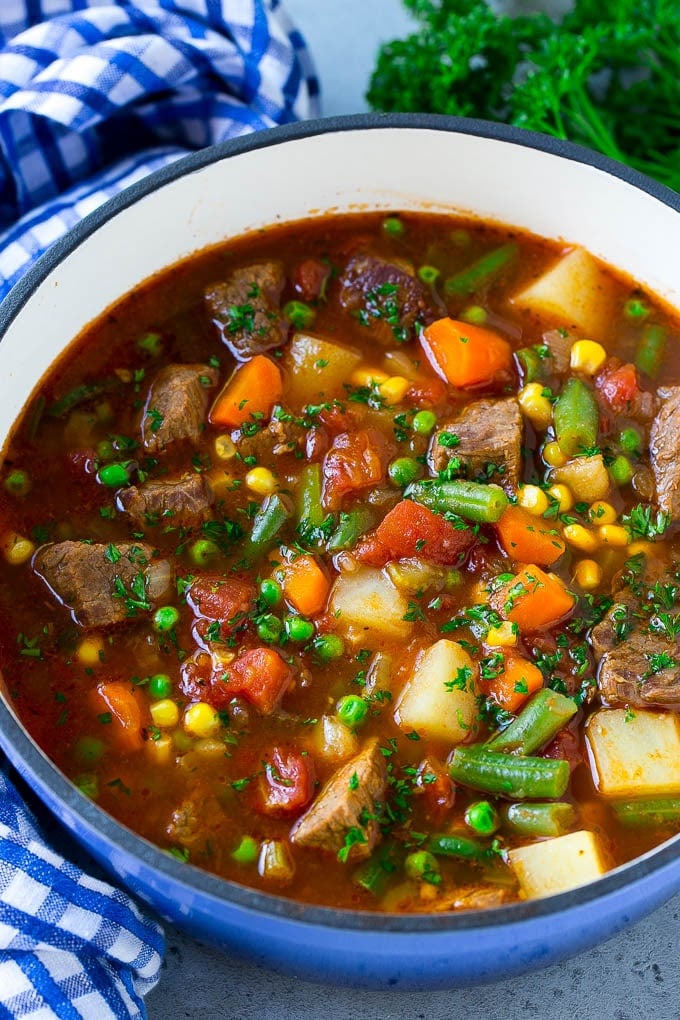
This is a good recipe for winter. I like it thick and hearty. It is faster and easier to make when I have leftover meat from pot roast. Amounts are really approximate and I have made a million variations.
- pepper
- salt
- 4 cups water
- 1 cup elbow macaroni
- 1 large onion
- 1 cup corn frozen
- 1 cup peas frozen
- 1.5 pounds beef chuck roast
- 1 can tomatoes
- 1 package lipton onion soup
- 1 each beef boullion cube
- 2 teaspoons garlic powder diced
- 1 large potato baking
- 1 cup baby carrots sliced
- 1/2 cup bell pepper any color you like
- 4 each fresh mushrooms sliced
- Carbohydrate 63.356173854653 g
- Cholesterol 74.86674105 mg
- Fat 22.4839609898512 g
- Fiber 8.22495528509158 g
- Protein 31.5514801670068 g
- Saturated Fat 8.45644567162275 g
- Serving Size 1 1 Serving (547g)
- Sodium 1304.20135902232 mg
- Sugar 55.1312185695615 g
- Trans Fat 3.85268472746274 g
- Calories 582 calories
Step-by-step
- You may use 1" cubed chuck roast or already cooked chuck roast cut into pieces.
- If starting from scratch, brown the meat in a dutch oven. Season with salt and pepper and add the garlic to saute. Add the can of tomatoes and water and bouillion. (Sometimes I add a can of Rotel also.) Cook until meat is tender.
- Add ingredients according to the ones that take the longest to cook. (I do not like vegetables to be mushy. First carrots, then potatoes cubed, then onion diced. Cook until vegies are starting to get soft.
- Add macaroni. Cook a few minutes until it is almost cooked.
- Add the peas, corn, mushrooms and peppers. Cook a few more minutes..about 5 or 10. Season to taste.
- Sometimes I add a squeeze of lime toward the end of cooking.
Most home cooks dump everything into a soup pot at once, which destroys delicate vegetables and turns starches to mush. Controlling texture requires understanding how different ingredients respond to heat duration. A heavy-bottomed Dutch oven provides the even heat distribution needed for browning meat without scorching. Browning beef chuck roast builds a fond on the pot bottom that dissolves when liquids are introduced, adding deep savory notes to the broth.
Staggered Cooking for Vegetables
Introduce ingredients based on their density to prevent overcooking. Carrots and cubed baking potatoes require longer simmering times to soften fully than quick-cooking items like frozen peas and corn. Add dense roots first, letting them tenderize before introducing softer components. Mushrooms and bell peppers need only five to ten minutes of exposure to retain structural integrity. Incorporating elbow macaroni near the end prevents the pasta from absorbing excess liquid and becoming waterlogged.Managing Starch and Seasoning
Starch management dictates the final viscosity of the broth. Adding dehydrated soup mix and bouillon concentrates sodium levels early, so adjust final salt quantities only after the reduction reaches its target volume. Maintain a gentle simmer rather than a rolling boil to keep the meat fibers from tightening too quickly. Rapid boiling forces moisture out of protein strands, leaving chunks dry and chewy instead of tender.


