Cheese Fries
Originally published as Cheese Fries in Quick Cooking September/October 2005, p33. I came up with this recipe after my daughter had cheese fries at a restaurant and couldnt stop talking about them. She loves that I can fix them so quickly at home. Plus, the frozen fry packets can be refrigerated and reheated. -Melissa Tatum, Greensboro, North Carolina
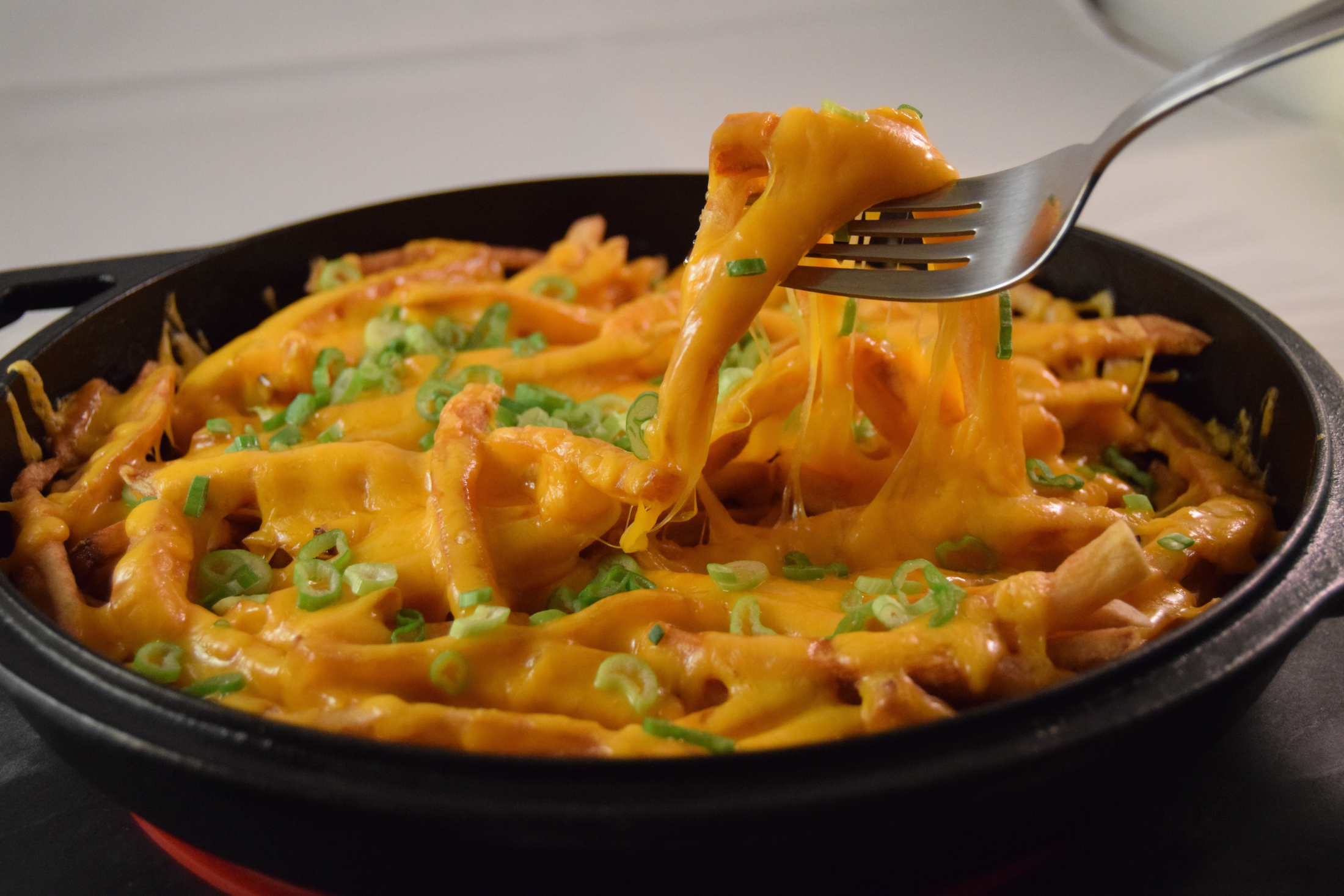
Originally published as Cheese Fries in Quick Cooking September/October 2005, p33. I came up with this recipe after my daughter had cheese fries at a restaurant and couldnt stop talking about them. She loves that I can fix them so quickly at home. Plus, the frozen fry packets can be refrigerated and reheated. -Melissa Tatum, Greensboro, North Carolina
- Carbohydrate 0.1769603515625 g
- Cholesterol 0 mg
- Fat 0.0126735546875 g
- Fiber 0.0501167975403368 g
- Protein 0.04243359375 g
- Saturated Fat 0.00207589453125 g
- Serving Size 1 1 Serving (106g)
- Sodium 0.0758828125 mg
- Sugar 0.126843554022163 g
- Trans Fat 0.0015431640625 g
- Calories 1 calories
Step-by-step
- Arrange the steak fries in a single layer in two greased 15-in. x 10-in. x 1-in. baking pans.
- Bake at 450° for 15-18 minutes or until tender and golden brown.
- Meanwhile, in a small saucepan, combine the soup, milk, garlic powder and onion powder; heat through.
- Drizzle over fries; sprinkle with paprika.
Avoiding Soggy Potatoes
Many home cooks crowd frozen steak fries onto a single baking pan, trapping steam and preventing proper browning. Arranging the potatoes in a single layer across two greased 15-inch by 10-inch pans allows hot oven air to circulate freely around every piece. Operating the oven at a high temperature of 450 degrees Fahrenheit triggers rapid surface dehydration, yielding a crisp exterior shell while keeping the interior tender.
Building the Sauce Base
Using condensed cheddar soup as a shortcut eliminates the need to build a roux from scratch, though straight canned soup can be overly thick. Whisking in one-fourth cup of 2 percent milk thins the condensed base just enough to achieve a smooth pouring consistency without diluting the cheese flavor. Incorporating half a teaspoon of garlic powder and one-fourth teaspoon of onion powder balances the sodium present in canned soup bases.
Managing Leftovers
Prepared frozen fry packets handle refrigeration and reheating surprisingly well when stored in airtight containers for up to three days. Reheating works best in a 350-degree oven rather than a microwave, which turns the potatoes limp and separates the dairy fats in the sauce. Warming the components together for ten minutes restores both the crisp texture of the potatoes and the viscosity of the topping.



