Corn Bread
This is a basic cornbread recipe. We generally only use a small amount of sugar when we make it. The saying goes the farther north you go the more sugar in cornbread and the farther south you go the more sugar in the iced tea. It is also really good with some grated onions and chopped jalapenos stirred in.
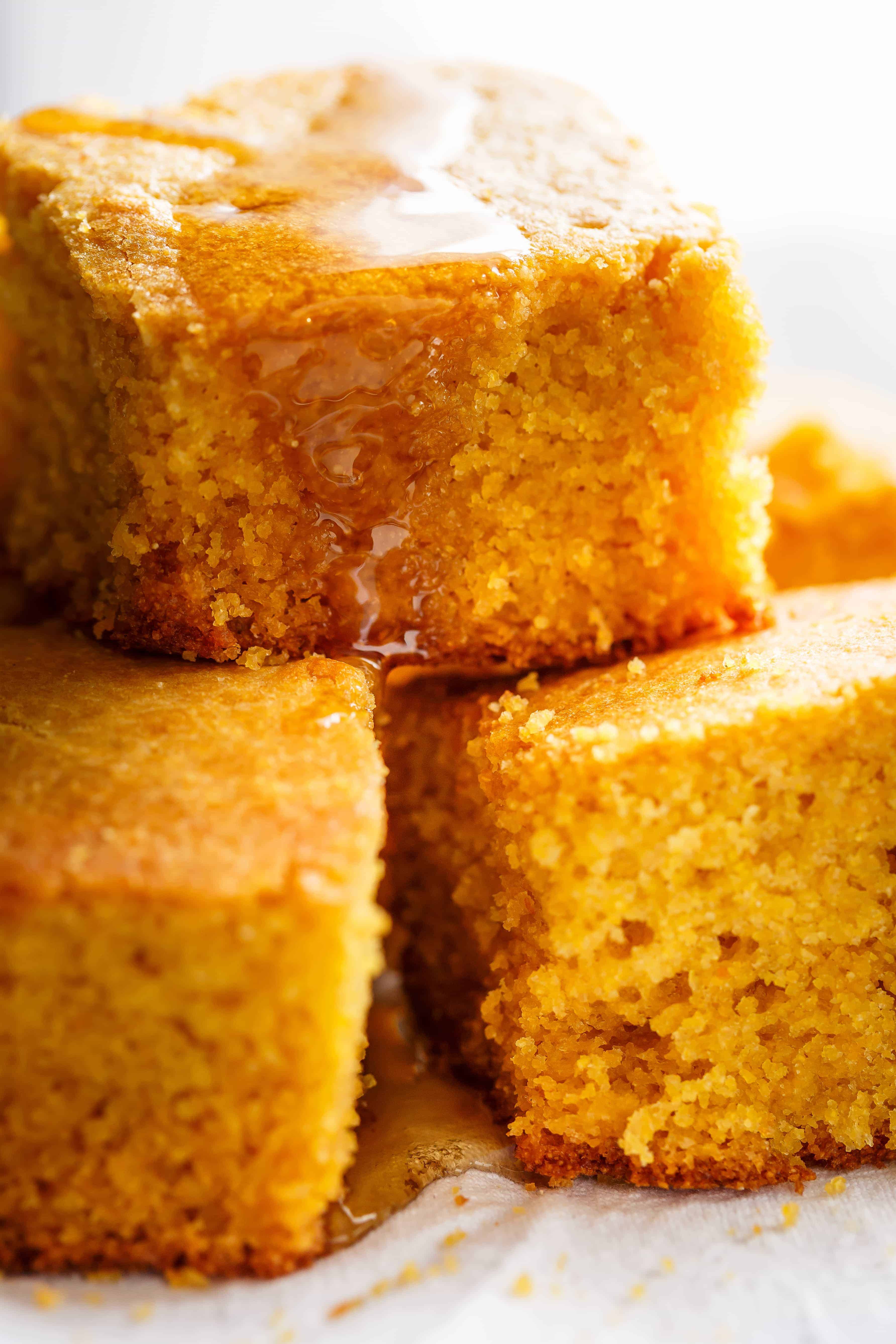
This is a basic cornbread recipe. We generally only use a small amount of sugar when we make it. The saying goes the farther north you go the more sugar in cornbread and the farther south you go the more sugar in the iced tea. It is also really good with some grated onions and chopped jalapenos stirred in.
- Carbohydrate 35.393970253465 g
- Cholesterol 265.315476191271 mg
- Fat 15.1115547680358 g
- Fiber 3.04014990073673 g
- Protein 12.4744083349024 g
- Saturated Fat 3.30802781043604 g
- Serving Size 1 1 Serving (126g)
- Sodium 218.61157168422 mg
- Sugar 32.3538203527283 g
- Trans Fat 1.54826700034713 g
- Calories 327 calories
Step-by-step
- Preaheat oven to 425 degrees
- Combine all ingredients and stir until just smooth
- Pour into a cake or muffin pan
- Bake until inserted tooth pick comes out clean, 20 to 25 minutes
Unlike a standard cake that relies heavily on chemical leaveners for its rise, traditional cornbread depends significantly on the physical properties of ground maize, which absorbs moisture at a much slower rate than refined wheat flour. Stirring the batter only until just smooth prevents the development of excess gluten that would otherwise turn the crumb rubbery and tough rather than tender. Preheating the oven to 425 degrees Fahrenheit ensures that the baking powder activates instantly upon contact with the wet ingredients, driving a rapid initial rise before the starches fully set. When the inserted wooden toothpick emerges with zero wet crumbs attached, the bread has reached completion, typically requiring between 20 and 25 minutes of total baking time in a standard metal or cast-iron pan.
Stale cornbread rarely deserves to be discarded, as day-old loaves readily absorb liquids and fats for entirely different culinary applications. Wrapping the cooled loaf tightly in plastic wrap or storing it in an airtight container at room temperature preserves its integrity for up to three days without requiring refrigeration, which accelerates starch retrogradation and staling. Cubing the hardened remnants and toasting them in a 350-degree oven yields durable croutons suitable for panzanella salads or thick winter stuffings. Alternatively, crumbling yesterday's loaf into a hot skillet with melted butter creates a coarse, deeply browned base for breakfast hashes and savory bread puddings that capitalize on the dry crumb's capacity for rehydration.



