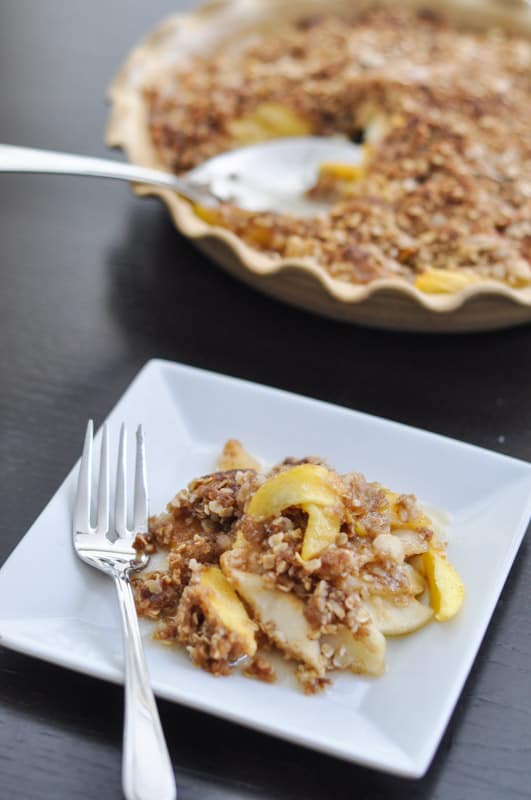
Very quick and easy recipe Delicious with vanilla ice cream
- 1/2 cup butter melted
- 2 tablespoons fresh lemon juice
- 1 cup all purpose flour
- 8 apples 6 to 8 tart apples - peeled, cored, and sliced (i like fuji or yellow delicious or a tarter apple like granny smith) or use peaches
- 1 cup light brown sugar packed
- 3/4 cup quick cooking oat meal
- 2 tablespoons cinnamon divided
- Carbohydrate 57.6624082586188 g
- Cholesterol 34.3634315386616 mg
- Fat 13.9648510320011 g
- Fiber 6.55069765650863 g
- Protein 3.35707991787852 g
- Saturated Fat 8.37515561898175 g
- Serving Size 1 1 Serving (242g)
- Sodium 98.5198643640514 mg
- Sugar 51.1117106021102 g
- Trans Fat 1.23320377940535 g
- Calories 352 calories
Step-by-step
- Preheat oven to 350 degrees F (175 degrees C).
- Place apples in a 9x13 inch baking dish, squeeze lemon juice over apples, sprinkle 1 tablespoon cinnamon over apples.
- In a bowl, mix melted butter, flour, sugar, oats, and 1 tablespoon cinnamon to form a crumbly mixture ( You can use a fork for this but make sure it is crumbly and well mixed . I put dry ingredients in the bowl and then drizzle the melted butter in as I mix with a fork or pastry blender. Sprinkle over apples.
- Bake 50 minutes in the preheated oven, until lightly browned and apples are tender. Should be bubbly around the edges. Cool on cooling rack, serve warm with a dollop of vanilla ice cream
Unlike a double-crust pie that relies on laminated dough for flakiness, a crisp achieves its distinct character through the direct opposition of tender fruit and a rugged, crumbly topping. Achieving this balance requires careful management of moisture during the baking process at 350 degrees F. When the melted butter meets the flour, oats, and brown sugar, it hydrates the dry particles just enough to form cohesive clusters without creating a dense, uniform paste. Mixing the dry components thoroughly before drizzling the fat ensures the oats retain individual structural integrity rather than clumping into heavy, raw pockets. Tart varieties like Granny Smith hold their cell walls better under heat than softer eating apples, preventing the base from turning into a purée before the 50-minute baking window expires. Swapping the fruit for peaches introduces significantly more internal liquid, which demands a heavier hand with the flour ratio to prevent a soggy bottom crust. Keeping the butter completely liquid during incorporation prevents premature gluten development, ensuring the topping remains friable and crumbly as the edges bubble.



