Chocolate Chip Muesli Cookies
This was adapted from a recipe that originally called for whole wheat flour. I only had regular flour on hand, so I added more of it. If you can get stone ground whole wheat flour, use that instead!
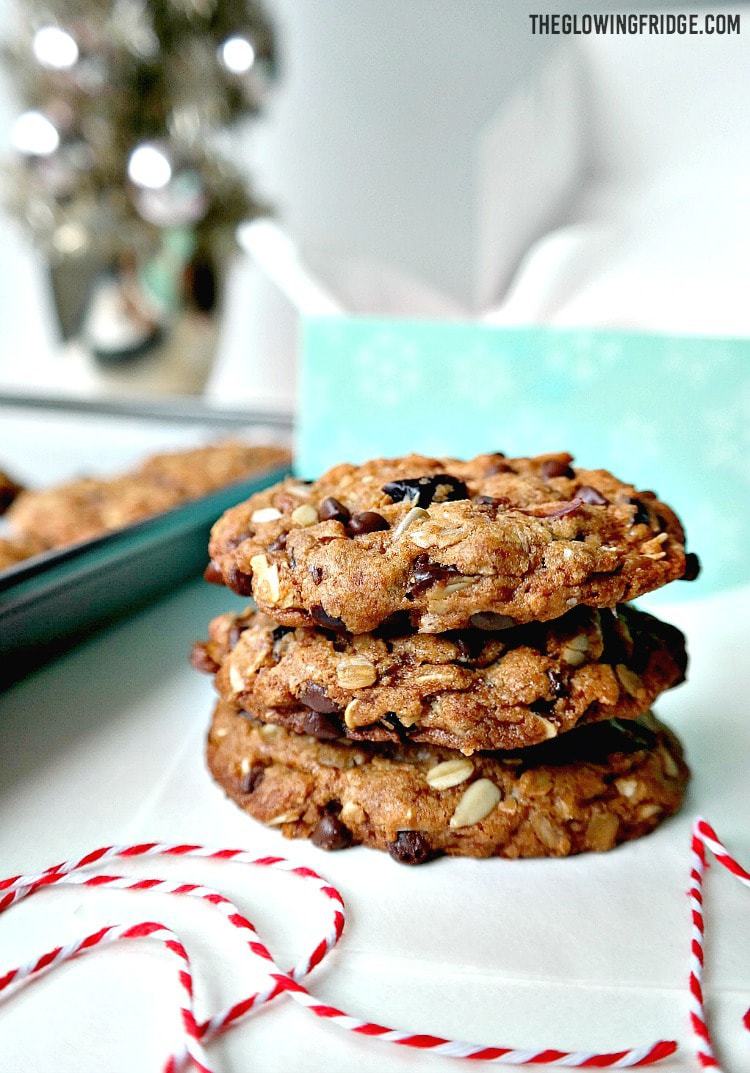
This was adapted from a recipe that originally called for whole wheat flour. I only had regular flour on hand, so I added more of it. If you can get stone ground whole wheat flour, use that instead!
- Carbohydrate 30.6782420621225 g
- Cholesterol 19.5528059245389 mg
- Fat 6.71666344483591 g
- Fiber 1.22507461826224 g
- Protein 2.49382788456808 g
- Saturated Fat 3.88639385761512 g
- Serving Size 1 1 Serving (50g)
- Sodium 1336.01354470671 mg
- Sugar 29.4531674438602 g
- Trans Fat 0.509914689648566 g
- Calories 189 calories
Step-by-step
- Heat oven to 375?F.
- Sift flour, baking soda, and salt together and set aside.
- Blend butter, sugar, mace, cinnamon and vanilla.
- Beat in egg. Add flour mixture and mix.
- Stir in Muesli, cranberries and chocolate chips.
- Drop by teaspoons on lightly greased cookie sheet.
- Bake at 375?F for 10-12 minutes.
Standard chocolate chip cookies rely entirely on a baseline dough of flour, butter, and sugar, but this formulation introduces rolled grains and dried fruit from muesli for added structural heft. Creaming the butter with brown sugar, mace, cinnamon, and vanilla requires beating until the mixture aerates slightly and lightens in color, which incorporates air pockets that help the baking soda react properly. Sifting the flour, baking soda, and salt together beforehand prevents pockets of leavening agent from clumping together in the batter. Dropping the portions by teaspoons onto a lightly greased baking sheet ensures uniform thickness across the entire batch.
Assessing doneness visually replaces thermometers in drop-cookie baking. Watch for the edges to turn a pale golden brown while the centers remain slightly soft and opaque after 10 to 12 minutes in a 375 degree Fahrenheit oven. Residual heat on the pan finishes setting the interior structure during the first two minutes after removal, preventing the cookies from crumbling upon transfer. Overbaking dries out the oats and cranberries, turning the edges brittle instead of chewy.
Whole wheat flour provides a nutty flavor and denser crumb compared to all-purpose flour. Swapping in all-purpose flour lightens the final texture, though stone-ground whole wheat remains the optimal choice for maximum rustic flavor and fiber content. Adjusting flour ratios changes hydration levels, so weighing ingredients on a scale yields more consistent results than volume measurements.
Proper storage maintains the chewy texture of oat-heavy baked goods over several days. Seal cooled cookies in an airtight container with a slice of white bread to transfer moisture into the crumb. Consume within five days for optimal taste, or freeze unbaked portions on a tray before transferring them to a freezer bag for up to two months.



