Lamb Tagine with Quinces
This is a great fall dish when quince are just harvested. I like to use my crockpot and lamb shank for melt in your mouth goodness from the long braising. I use a crockpot which liner can be used on the flame directly for browning the meat before cooking in the electric crockpot holder.
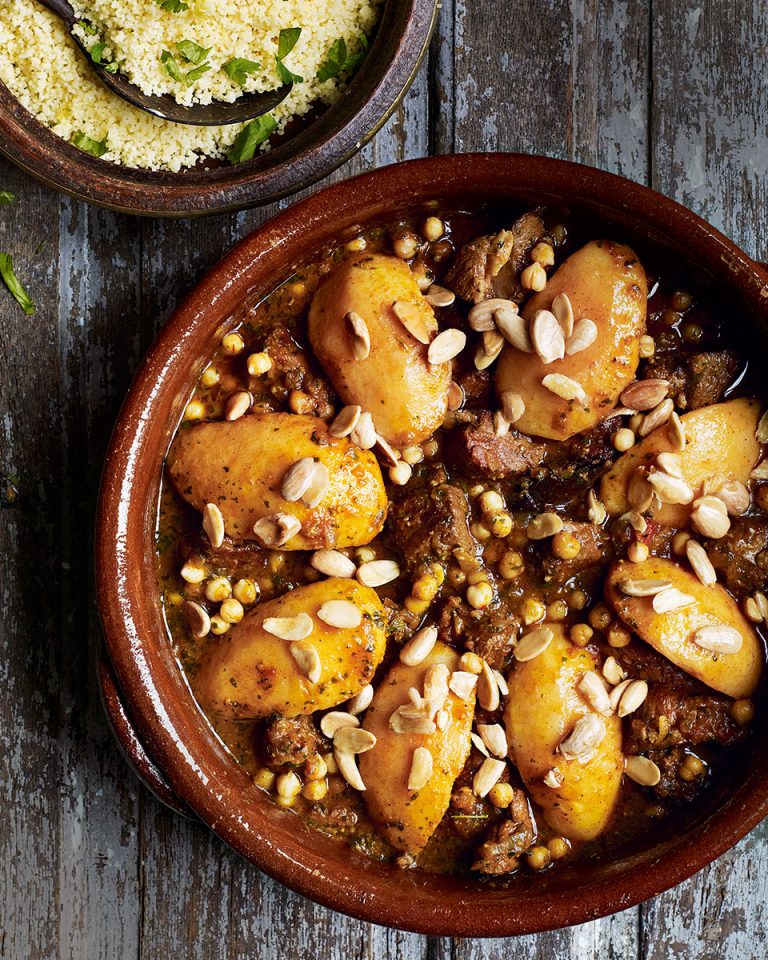
This is a great fall dish when quince are just harvested. I like to use my crockpot and lamb shank for melt in your mouth goodness from the long braising. I use a crockpot which liner can be used on the flame directly for browning the meat before cooking in the electric crockpot holder.
- Carbohydrate 4.76966769251377 g
- Cholesterol 556.64 mg
- Fat 61.6166622319401 g
- Fiber 1.39057355313275 g
- Protein 39.7725093861082 g
- Saturated Fat 30.8421197338865 g
- Serving Size 1 1 Serving (332g)
- Sodium 182.364050257581 mg
- Sugar 3.37909413938101 g
- Trans Fat 6.65635931996547 g
- Calories 742 calories
Step-by-step
- chop onion and celery and put in crock pot with splash of olive oil. season with salt and pepper and cook for about 5 minutes scraping up any brown bits from the bottom.
- season lamb shank with sea salt and pepper and brown in the crockpot with the onion and celery.
- add the cinnamon stick, ginger, saffron and cover with just enough water to cover the lamb.
- cook in the crock pot for 8 hours. you can use the 4 hour setting but the lamb will not be as delicately braised.
- during the last 30 minutes of cooking, pour the whole jar of quince along with simple syrup into the crock pot with the lamb.
- heat through and serve lamb over a bed of quinoa
Tender lamb shanks release gelatin into the braising liquid, coating the palate while saffron and cinnamon release lipid-soluble aromatic compounds into the simmering water. Brown the meat thoroughly at a moderate heat before slow cooking to trigger the Maillard reaction, developing complex savory flavor molecules that carry through the eight-hour braise. Saffron threads impart a distinct golden hue alongside earthy notes, requiring gentle heat extraction to disperse evenly across the dense connective tissue of the shanks.
Timing remains critical when incorporating poached fruit, as introducing high-sugar ingredients too early can toughen plant cell walls by dehydrating pectin structures. Adding the quince during the final thirty minutes ensures the fruit warms through without dissolving into the surrounding sauce while absorbing savory rendered fats. Managing this sequence keeps the distinct texture of the fruit intact while blending sweet syrups with the rich meat drippings.
Storing this dish overnight allows redistribution of moisture as temperature drops below 40 degrees Fahrenheit, letting muscle fibers reabsorb aromatic cooking liquids. Collagen continues to set into a firm gel during refrigeration, creating a thick sauce consistency that reheats smoothly on the stovetop. Allowing the braise to rest overnight transforms the mouthfeel, mellowing sharp spice edges as fats solidify and concentrate around the bone.
Shredding the cold leftover meat directly into its jellied broth creates a rich base for quick pasta additions or grain bowls within three days of storage. Gentle reheating over medium-low heat melts the solidified fats without overcooking the tender protein strands, preserving moisture retention. This method repurposes complex braises efficiently while maintaining the distinct balance of floral fruit and savory meat notes established during the initial long cook.



