Olive Garden Zuppa Toscana
I used Italian turkey sausage and turkey bacon. I also added 1/2 tsp hot pepper flakes.
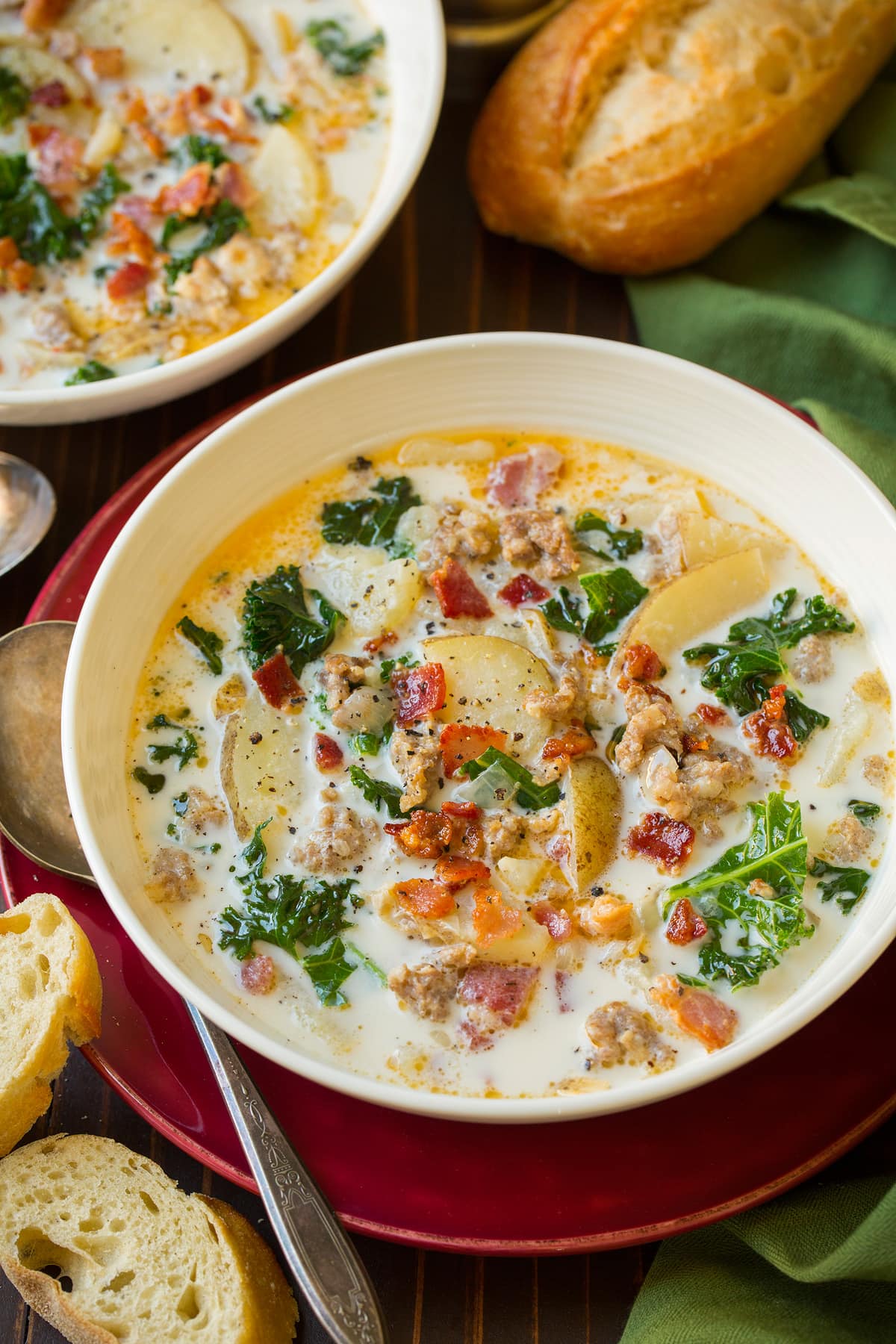
I used Italian turkey sausage and turkey bacon. I also added 1/2 tsp hot pepper flakes.
- 1/4 teaspoon salt
- 2 tablespoons butter
- 1/8 teaspoon pepper
- 1 quart water
- 1 1/2 cups spicy sausage
- 2 medium potatoes cut in half lengthwise and cut into 1/4 inch slices
- 3/4 cup onions diced
- 1 1/2 teaspoons garlic minced
- 2 cups kale leaves cut in half, then sliced
- 2 tablespoons chicken base
- 1/3 cup rice milk
- Carbohydrate 25.52353953125 g
- Cholesterol 75.9348958333333 mg
- Fat 28.4749061458333 g
- Fiber 3.68112037700415 g
- Protein 16.58800734375 g
- Saturated Fat 11.1422423125 g
- Serving Size 1 1 Serving (391g)
- Sodium 613.110020833333 mg
- Sugar 21.8424191542458 g
- Trans Fat 2.49340289583334 g
- Calories 421 calories
Step-by-step
- If sausage is in links, take out of wrapper (or slice).
- Cook ground sausage, until done. Cook onion over medium heat,
- Add garlic to the onion, and cook 1 minute.
- Add chicken base, water, salt, pepper and potatoes; simmer 15 minutes.
- Add sausage, kale and milk and butter.
- Simmer 4 minutes, then serve.
Roots in the Tuscan Countryside
Traditional representations of Zuppa Toscana in Italy bear little resemblance to the American restaurant adaptation. Across the rural zones of Tuscany, rustic peasant soups rely on stale bread, white beans, cavolo nero, and inexpensive root vegetables rather than heavy dairy and mass-market sausage. Adaptation by corporate chains in the United States transformed the dish into a creamy, potato-heavy potage designed for universal appeal. That evolution prioritizes richer mouthfeel, utilizing poultry or pork sausage combined with dairy bases to mimic the texture of emulsified animal fats.
Managing Starch and Dairy Integrity
Achieving proper textural balance requires understanding how starch interacts with liquid. Simmering sliced potatoes directly in the broth releases free amylose starch into the water, acting as a natural thickener. Introducing dairy too early in that boiling phase causes curdling, particularly when using low-fat alternatives like rice milk that lack sufficient fat solids to stabilize the emulsion. Adding milk and butter during the final four minutes of cooking prevents separation while maintaining the velvety finish necessary for a cohesive bowl.
Controlling Leafy Green Structure
Kale demands precise timing to avoid becoming either rubbery or completely mushy. Sturdy brassica leaves contain tough cell walls supported by fibrous stems that require thermal energy to soften. Slicing the leaves into thin ribbons exposes more surface area to the hot broth, ensuring the greens wilt uniformly without losing their vibrant chlorophyl. Undercooking leaves them too chewy against the soft potatoes, while overcooking breaks down the cell structure entirely, turning the broth gray and bitter.



