Goya's Black Beans and Rice
This recipe is a Goya recipe that I use over and over and I wanted to share: Rich and elegant... serve over classic white rice.
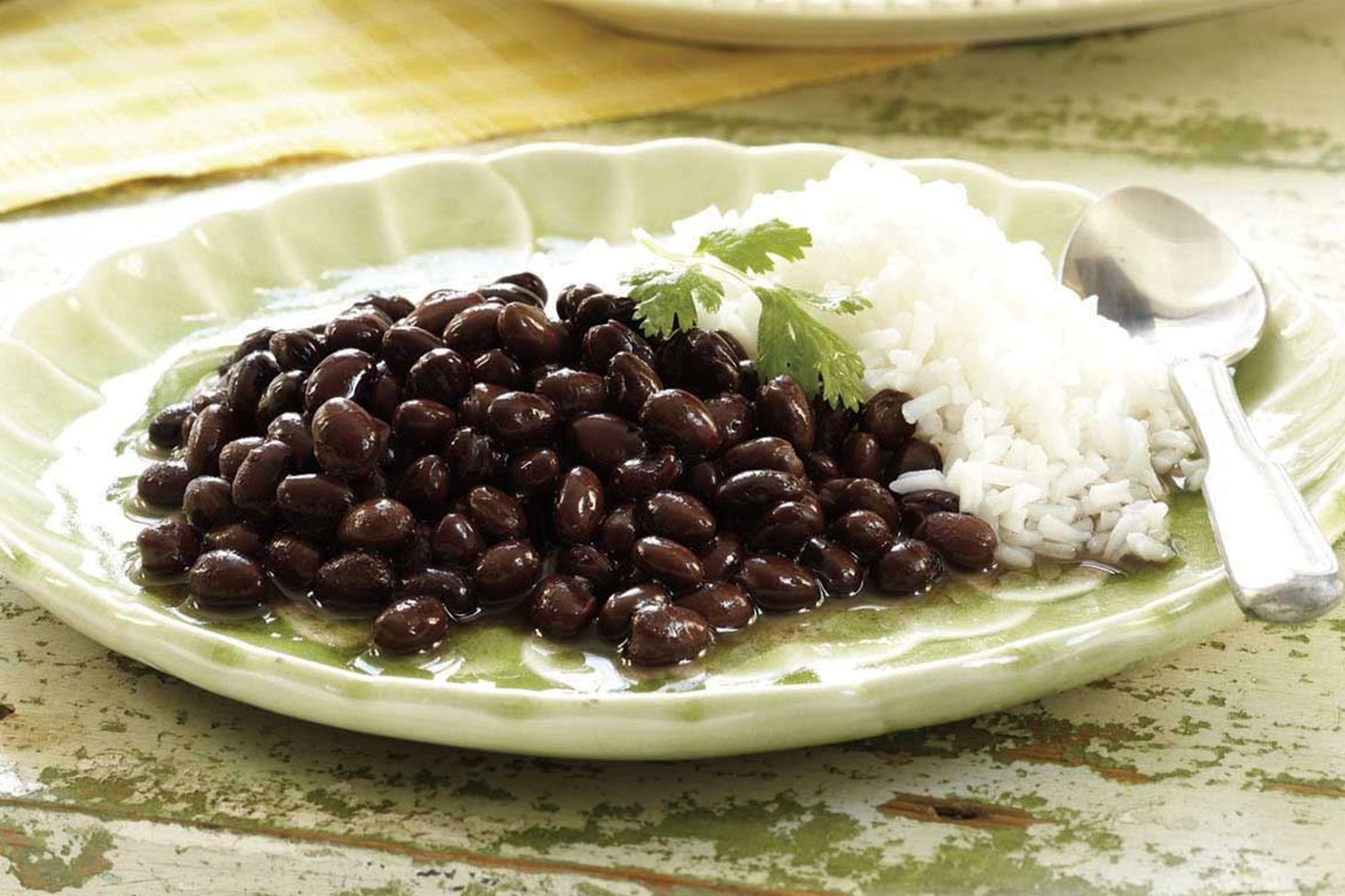
This recipe is a Goya recipe that I use over and over and I wanted to share: Rich and elegant... serve over classic white rice.
- Carbohydrate 29.015263 g
- Cholesterol 0 mg
- Fat 7.39936075 g
- Fiber 10.1406973020613 g
- Protein 10.14487025 g
- Saturated Fat 1.1031997 g
- Serving Size 1 1 Serving (203g)
- Sodium 1138.5413000015 mg
- Sugar 18.8745656979387 g
- Trans Fat 0.3318004 g
- Calories 220 calories
Step-by-step
- Heat oil in a medium saucepan over medium heat.
- Add Onion, Pepper and Garlic; cook until tender, about 8-10 minutes.
- Stir in remaining ingredients.
- Bring to a boil. Redice heat and summer 10 minutes.
- Reduce to desired consistency.
- Serve over hot White Rice.
Building a solid foundation for black beans relies entirely on how thoroughly the initial aromatics sweat in the pan. Rushing the onions, peppers, and garlic over high heat burns the exterior of the alliums while leaving the interior raw and pungent, introducing a harsh bitterness that cannot be corrected later. Cooking these vegetables over medium heat for the full eight to ten minutes breaks down the cellular walls and releases natural sugars, yielding a soft base that mellows out the seasoning packet. Olive oil transfers heat efficiently here, but extra virgin grades can break down if the burner is set too high. Standard cooking olive oil handles medium heat safely, though a neutral vegetable oil works fine if that is what sits on the shelf. When introducing the liquids and canned beans, pay attention to the simmer phase. Ten minutes of low heat allows the starches from the beans to mingle with the water and cooking wine, thickening the sauce naturally without requiring cornstarch or flour. Allowing the pot to reduce past this point risks scorching the bottom, as the bean starches quickly turn from a rich sauce into a sticky residue. A heavy-bottomed medium saucepan distributes heat evenly, preventing hot spots that cause the beans to stick during the reduction stage. Thin stainless steel pots often lack this thermal mass, meaning constant stirring becomes mandatory to protect the bottom. Serving the mixture over freshly prepared white rice provides the necessary textural contrast to the soft legumes. Leftovers keep well in a sealed container in the refrigerator for up to four days, and the flavor deepens overnight as the spices fully penetrate the beans.



