Vegan Southern Collard Greens
Try this Vegan Southern Collard Greens recipe, or contribute your own.
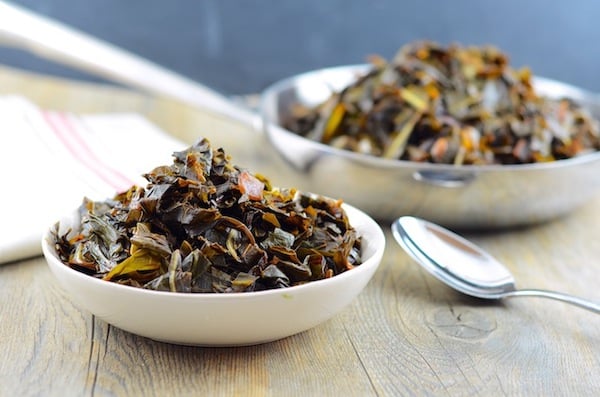
Try this Vegan Southern Collard Greens recipe, or contribute your own.
- Carbohydrate 57.980438581 g
- Cholesterol 0 mg
- Fat 3.907497783 g
- Fiber 33.4879747835167 g
- Protein 23.207124255 g
- Saturated Fat 0.525086357 g
- Serving Size 1 1 recipe (953g)
- Sodium 215.483073 mg
- Sugar 24.4924637974833 g
- Trans Fat 1.2418641766 g
- Calories 300 calories
Step-by-step
- Coat a large deep skillet or pot with vegetable oil.
- Sauté onions until almost tender over medium heat and then add in garlic.
- Cook until onion and garlic are fragrant, about 2-3 minutes.
- Add in vegetable broth.
- Season broth with smoked salt and red pepper flakes.
- Taste and adjust the seasonings if needed. Make sure it's to your liking because this is how your greens will taste.
- Bring to a simmer and reduce heat.
- Add in the greens. Green will wilt down as they cook.
- Simmer for 1 hr to 1 hr 30 mins. Do not boil.
- Add more vegetable broth if needed. May need more or less time so be sure to check them after 30-45 minutes.
- When done, greens will be dark green, tender and will not have a raw taste.
- Add in more smoked salt, black pepper, red pepper flakes and hot sauce, if desired. (I always do!)
- Enjoy! Add hot sauce or vinegar if desired.
A Southern Comfort Food, Reimagined: My Vegan Collard Greens Journey
Collard greens. The very name conjures up images of cozy Southern kitchens, steaming pots bubbling on the stove, and the comforting aroma of slow-cooked goodness. For years, this dish was a staple in my family's meals, a tradition passed down through generations. But as my lifestyle evolved, so did my approach to cooking. My transition to a vegan diet presented a delightful challenge: how to recreate the heartiness and soul-satisfying flavors of traditional Southern collard greens without using any animal products. This journey wasn't just about adapting a recipe; it was about understanding the essence of the dish and recreating it with fresh, plant-based ingredients that brought just as much comfort and satisfaction.
The initial attempts were…interesting. Let's just say, not all experiments ended in culinary success. There were moments of frustration, of questioning whether I could truly capture the depth of flavor that I remembered from my childhood. But the desire to enjoy a veganized version of this cherished dish fueled my perseverance. I spent countless hours experimenting with different combinations of spices, vegetables, and cooking techniques. I researched traditional Southern recipes, analyzed the balance of flavors, and meticulously adapted each ingredient to suit a vegan lifestyle. It was a process that not only honed my culinary skills but also deepened my appreciation for the art of cooking itself.
This particular recipe, my Vegan Southern Collard Greens, represents the culmination of that journey. It's a recipe born from experimentation, refined through trial and error, and perfected through a deep understanding of flavor profiles. The key, I've discovered, lies in the balance. The subtle smokiness of the smoked salt complements the earthiness of the collard greens perfectly. The hint of spice from the red pepper flakes adds a delightful warmth without overpowering the other flavors. And the slow cooking process—the gentle simmering that allows the greens to tenderize and absorb the rich flavors of the broth—is essential to achieving that authentic Southern texture. This isn't just about replacing animal products; it's about understanding the process and enhancing the natural flavors of the ingredients.
The beauty of this recipe is its adaptability. You can adjust the amount of spice to suit your personal preference. Some might prefer a milder version, while others might crave the extra kick of heat. Experiment with different types of broth – vegetable, mushroom, or even a homemade blend. The possibilities are endless. And the most rewarding part? Seeing the smiles on the faces of my loved ones as they savor each bite, proving that delicious, comforting food can be enjoyed while embracing a vegan lifestyle. It’s a reminder that traditions can evolve, adapting to new tastes and values without losing their heart and soul.
Beyond the simple act of cooking, this recipe became a symbol of my journey – a testament to the creativity and resourcefulness that a plant-based lifestyle can inspire. It’s not just about following a recipe; it’s about embracing the process, learning from each experiment, and ultimately creating something delicious and meaningful. It's about the stories woven into every meal, the memories shared around the table, and the enduring comfort of a truly satisfying dish. This recipe isn’t just about collard greens; it's about the love, dedication and personal transformation poured into every pot.
So, whether you’re a seasoned vegan chef or simply curious to explore the world of plant-based cooking, I encourage you to give this recipe a try. It’s a journey worth embarking on, a testament to the flavorful possibilities of vegan cuisine. And maybe, just maybe, it will inspire you to embark on your own culinary adventure, to rediscover old favorites through a new lens, and to create dishes that bring joy and comfort to your own table. The flavors are deep, rich and truly satisfying, and the process of making it is just as rewarding as savoring the final result.
Beyond the culinary aspect, I find a deeper connection to my food and my heritage through this adaptation. It's a reflection of how we can honor traditions while embracing change and a more sustainable way of life. It's about finding a balance between honoring the past and embracing the future, a theme that resonates deeply with me both in the kitchen and in my life.
I hope you enjoy this recipe as much as I do. Share your experiences and modifications in the comments below – I'd love to hear about your own vegan culinary adventures!



