Peanut Butter Cookies
I got this recipe from a Four Ingredient cookbook. It's so delicious, no one believes me when I tell them what the ingredients are!
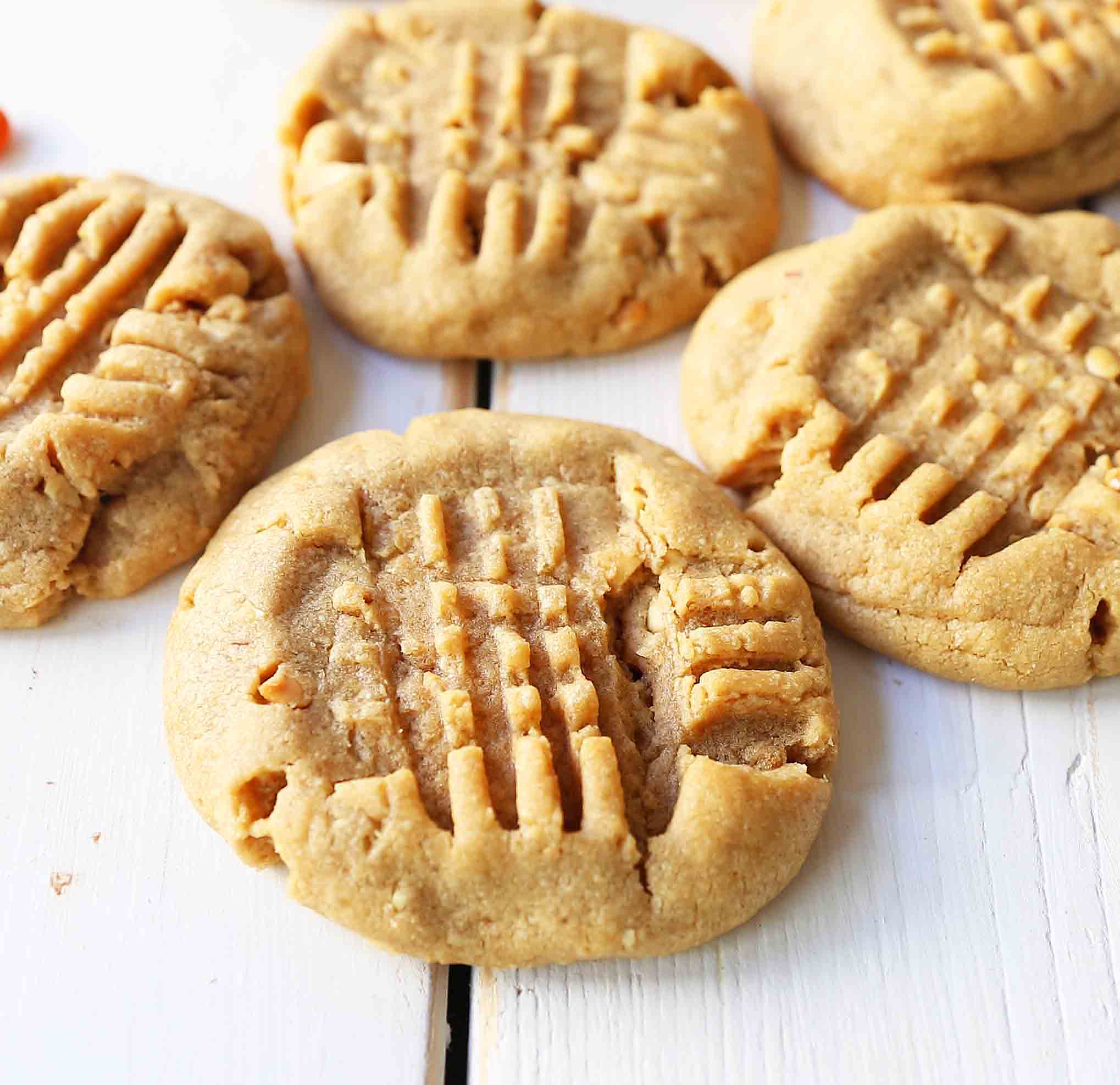
I got this recipe from a Four Ingredient cookbook. It's so delicious, no one believes me when I tell them what the ingredients are!
- Carbohydrate 3.72370833333333 g
- Cholesterol 15.51 mg
- Fat 9.77081 g
- Fiber 1.12 g
- Protein 5.14494333333333 g
- Saturated Fat 2.03483833333333 g
- Serving Size 1 1 Serving (23g)
- Sodium 8.33816666666667 mg
- Sugar 2.60370833333333 g
- Trans Fat 0.531276000000001 g
- Calories 116 calories
Step-by-step
- Preheat oven to 350 degrees F.
- Mix ALL the ingredients together in a medium mixing bowl.
- Roll dough into 1 inch balls and press flat with a fork, on a greased cookie sheet.
- Bake for about 10 minutes.
- Allow to cool for five minutes.
Peanut butter dictates the structural integrity, moisture content, and final mouthfeel of these cookies, functioning as both fat and flour replacement in a matrix held together solely by the coagulation of egg proteins and the dissolving sugar crystals. Because this formulation contains no traditional wheat flour, the natural oils from the nut butter will separate rapidly if overworked or exposed to ambient kitchen heat above 72 degrees Fahrenheit for too long, resulting in a greasy spread rather than a cohesive bake. Standard metal baking sheets lined with parchment paper are non-negotiable for consistent thermal transfer, whereas dark pans absorb heat too aggressively and will scorch the bottoms before the interior proteins fully set. Mixing can be accomplished efficiently with a stiff silicone spatula or a standard hand mixer fitted with paddle attachments, ensuring the single egg is fully emulsified into the mass before portioning. Rolling the dough into uniform one-inch spheres requires clean hands, and pressing them flat with a tined fork creates the classic crosshatch pattern while simultaneously reducing the center thickness so the thermal energy penetrates evenly during the bake. The most common error is leaving the batch in the oven past the ten-minute mark under the mistaken assumption that they should feel firm to the touch when raw heat is removed, whereas professional bakers know residual carryover heat solidifies the structure during the subsequent five-minute cooling rest on the pan. Once transferred to a wire rack, store these properly in an airtight container at room temperature with a slice of plain white bread to maintain moisture retention over a four-day window.



