Pulled BBQ Pork
I recently tried this at a holiday potluck and begged for the recipe! It's great on rolls, but I discovered that it's even better the next day on mashed potatoes!
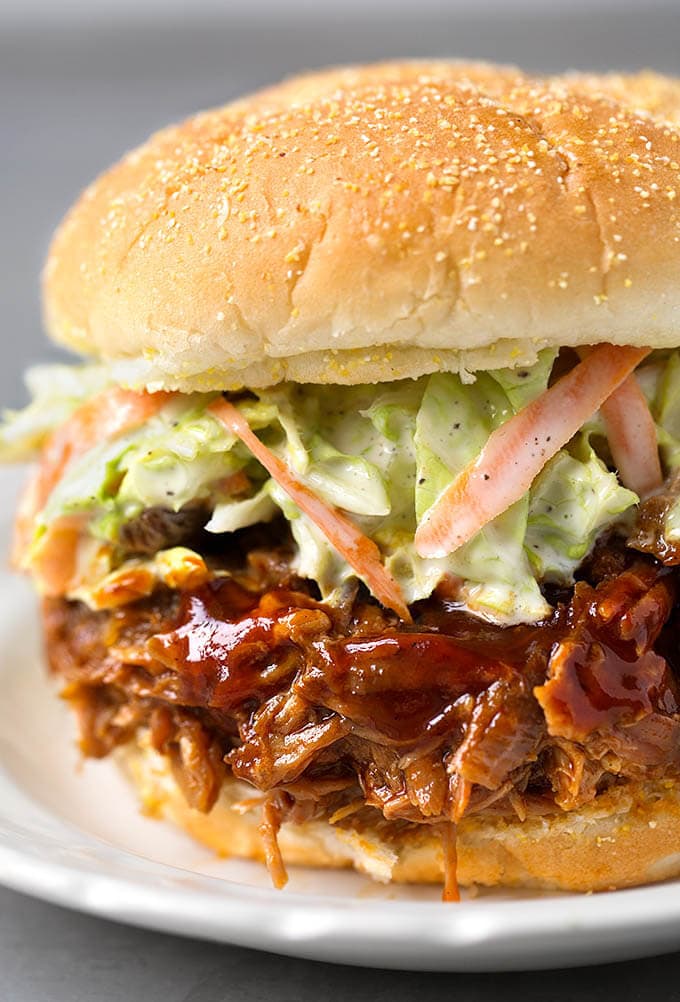
I recently tried this at a holiday potluck and begged for the recipe! It's great on rolls, but I discovered that it's even better the next day on mashed potatoes!
- Carbohydrate 40.9298 g
- Cholesterol 1451.52 mg
- Fat 173.1913 g
- Fiber 8.26100028276444 g
- Protein 515.577 g
- Saturated Fat 63.06538 g
- Serving Size 1 1 Serving (3053g)
- Sodium 1049.15 mg
- Sugar 32.6687997172356 g
- Trans Fat 18.8704600000001 g
- Calories 3908 calories
Step-by-step
- Lightly spray bottom of crock pot with Pam.
- Sprinkle sliced peppers, onions and apple slices on the bottom.
- Lay pork roast on top of sliced vegetables and apple.
- Cover all with bbq sauce.
- Place bay leaves on top.
- Cover and cook on high for 3 to 6 hours, or on low 4 to 8 hours - or until tender.
- Discard bay leaves.
- Lift pork roast onto platter and shred using 2 forks; return shredded meat to crockpot and stir mixture thoroughly.
- Ladle over buns or mashed potatoes.
- Make sure you find and discard all bay leaves before serving.
- Good served with cole slaw.
Ingredient lists rarely convey how aromatic vegetables behave during long cooking intervals. When sliced onions, bell peppers, and apples sit beneath a massive four-pound cut of meat, they release moisture that steams the lower fibers while caramelizing against the ceramic base. This foundational layer prevents scorching and infuses the pork with subtle acidity and sweetness before the bottled sauce even penetrates the muscle tissue.
Adapting for Dietary Needs and Chemical Interactions
Pork loin features very little intermuscular fat compared to shoulder cuts, making careful temperature monitoring essential to prevent dryness. Cook on low for four to eight hours or high for three to six hours until the internal temperature reaches 200 degrees Fahrenheit, allowing collagen to fully convert into gelatin. For dietary restrictions, substitute the commercial sauce with a homemade tomato and vinegar reduction to control sodium levels or eliminate high-fructose corn syrup entirely. Maillard reactions develop slowly here because liquid surrounds the meat, meaning savory glutamates from the pork combine with sugars in the apples and barbecue sauce to build depth through prolonged simmering rather than high-heat browning.
Shredding and Resting Mechanics
Extracting the roast onto a wide platter prior to shredding maximizes surface area cooling, which stops the cooking process instantly. Two forks pulled in opposite directions tear muscle fibers along the natural grain rather than crushing them into a paste. Reincorporating this shredded meat into the resting juices for fifteen minutes allows the lean protein strands to reabsorb rendered moisture. Store leftovers in an airtight container for up to four days at 38 degrees Fahrenheit.



