Pancakes
I modified this recipe from one I found at AllRecipes a few years ago. These are The Mans favorite pancakes, or panclocks, as he calls them. He rarely orders pancakes in restaurants anymore because he says they dont even come close to these!
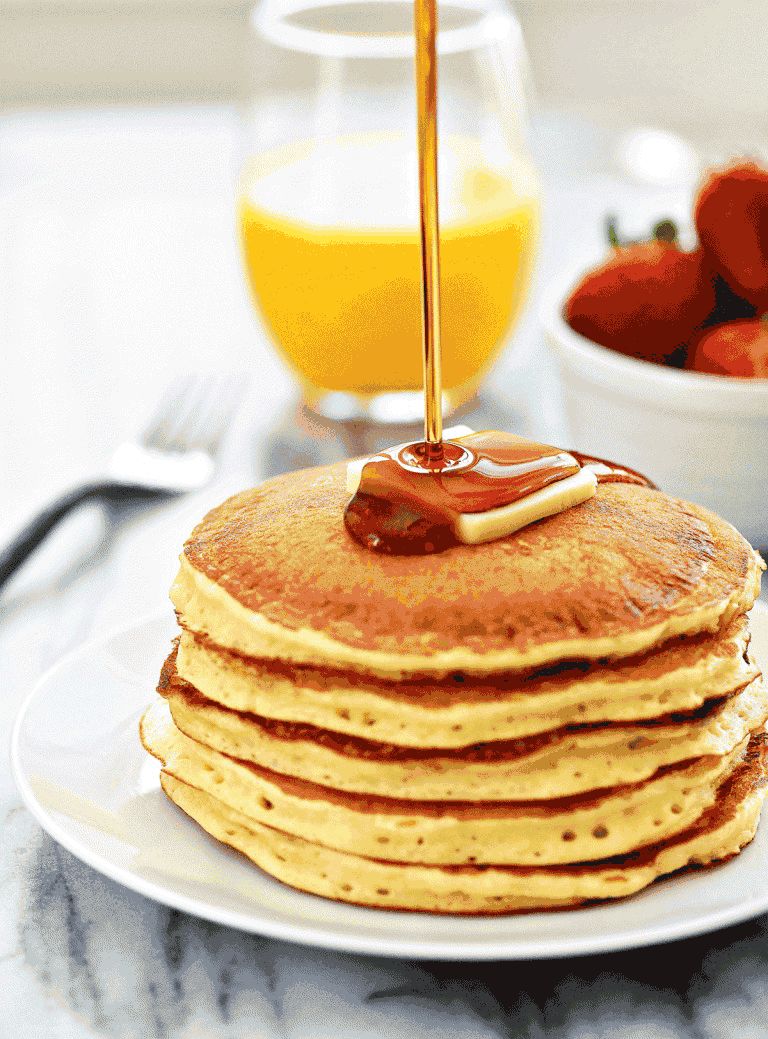
I modified this recipe from one I found at AllRecipes a few years ago. These are The Mans favorite pancakes, or panclocks, as he calls them. He rarely orders pancakes in restaurants anymore because he says they dont even come close to these!
- Carbohydrate 37.4111242034655 g
- Cholesterol 88.7754166807976 mg
- Fat 11.1833736955536 g
- Fiber 1.38656009559804 g
- Protein 8.87209447742377 g
- Saturated Fat 6.43192857564897 g
- Serving Size 1 1 (229g)
- Sodium 21214.2975902369 mg
- Sugar 36.0245641078675 g
- Trans Fat 0.995135238773556 g
- Calories 288 calories
Step-by-step
- Preheat and lightly grease a large skillet or griddle. (I like to use my 2-burner cast iron griddle for pancakes.)
- Mix the flour, salt, baking soda, and sugar together in a bowl. Add the egg, milk mixture, and butter; stir together lightly, but keep it lumpy. Let sit for 5 minutes. The batter should look thick and a bit bubbly.
- Drop 1/3 cup of the batter onto the cooking surface, spreading lightly with the bottom of the cup. Cook until lightly-browned on each side, 2 to 4 minutes per side.
Making light pancakes requires working within strict thermal limits. A heavy cast iron griddle holds heat evenly across its surface, preventing the hot spots that scorch butter before the batter sets. This thermal stability matters because batters containing chemical leaveners need steady conduction to rise properly once they hit the metal.
Allowing the mixed batter to rest for five minutes permits the flour to hydrate fully and gives the baking soda time to react with the acid. Skipping this rest period yields dense, flat discs instead of airy cakes. Overmixing the batter develops excess gluten networks, which results in a tough, rubbery interior texture.
Visual cues dictate when to flip. Bubbles will break through the upper surface of the batter and hold their shape rather than immediately closing back over. Once those bubbles form and the bottom turns golden brown, typically after two to four minutes, turn the cake over.
Cook the second side until it matches the first. Maintain medium-low heat throughout the process to ensure the interior cooks completely before the exterior darkens past golden.



