Thai Green Curry Chicken
Aromatic chicken and veggie stir-fry with a hint of spice (easily adjusted to your preference), served over rice.
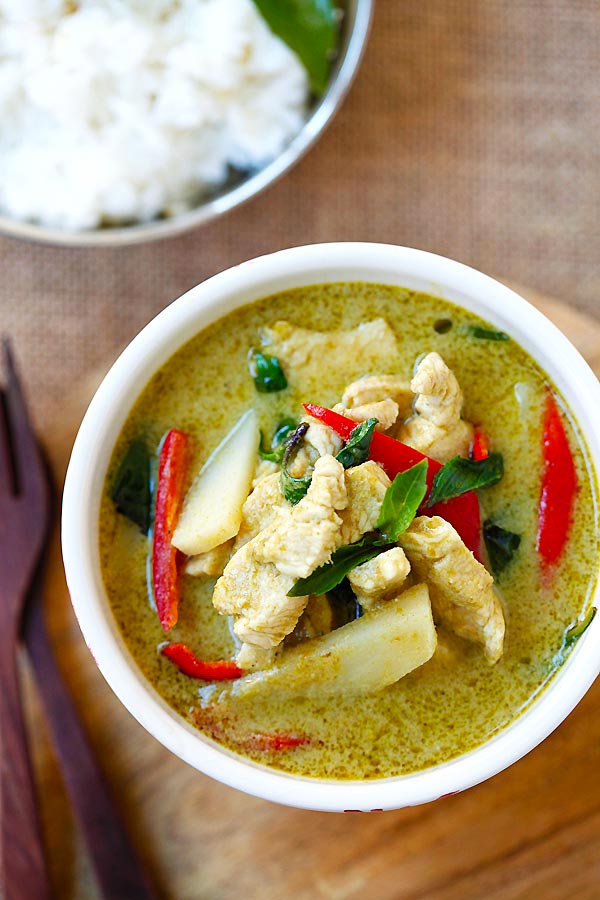
Aromatic chicken and veggie stir-fry with a hint of spice (easily adjusted to your preference), served over rice.
- 1 tablespoon brown sugar
- 1 cup broccoli chopped
- 1 cup carrot chopped
- 1 cup fresh mushrooms sliced
- 4 boneless chicken breasts cut up bite size
- 2.5 tablespoons green curry paste more for spice
- 3 cans coconut milk i use one light two regular
- 1 cup cauliflower chopped
- 1 cup zucchini sliced
- 1 can (small) bamboo shoots
- 1 cup basil fresh chopped
- 4 tablespoon fish sauce
- Carbohydrate 7.58216875066465 g
- Cholesterol 68.44 mg
- Fat 1.63481250000183 g
- Fiber 1.3841249859333 g
- Protein 28.9925500009239 g
- Saturated Fat 0.412760000000548 g
- Serving Size 1 1 Serving (198g)
- Sodium 793.376251409638 mg
- Sugar 6.19804376473134 g
- Trans Fat 0.462890000000365 g
- Calories 165 calories
Step-by-step
- Fry green curry paste 2 min in oil add chicken until cooked
- Add 2 cans coconut milk fish sauce and brown sugar bring to boil and simmer for 3-5 minutes.
- Add carrots and cauliflower for 5 more minutes
- Add rest of vegs for another 15 minutes add bamboo basil
- Turn off heat and add mushrooms and coconut milk and cover.
- Let sit for 2 -3 hours. Awesome the second day!
- Serve over steamed white or brown rice
Frying green curry paste in oil for precisely two minutes releases the fat-soluble aromatic compounds before the chicken goes into the pan. Crowding the skillet prevents proper searing, so use a wide 12-inch heavy-bottomed pan or work in batches to ensure the meat develops a clean surface contact rather than steaming in its own juices. This foundational step dictates whether the final sauce tastes vibrant or muddy.
Standard curry pastes frequently contain hidden shrimp paste, but vegan or vegetarian alternatives substitute fermented soybean paste or miso combined with extra lime zest and minced lemongrass to replicate the characteristic umami depth. Coconut milk viscosity varies wildly by brand, meaning that substituting light coconut milk for regular requires reducing the simmering duration by two minutes to prevent a watery consistency.
Staggering the addition of vegetables based on cellular density keeps the produce from turning to mush in the active simmer. Dense root vegetables like carrots and cauliflower require a solid five minutes of heat exposure, whereas delicate mushrooms and fresh basil must be added at the very end with residual heat to preserve texture and volatile aromatics.
Allowing the finished curry to rest off the heat for two to three hours marries the flavors completely before it is ladled over freshly steamed rice. Storing leftovers in an airtight glass container for twenty-four hours yields an even richer dish as the proteins fully absorb the complex blend of fish sauce and coconut fats.



