Easy Chicken Curry and Vegetables
Just a recipe I like to make when I am in the mood for curry and don't have enough energy to be cooking all day.
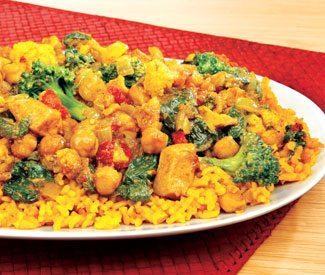
Just a recipe I like to make when I am in the mood for curry and don't have enough energy to be cooking all day.
- Carbohydrate 47.85946418321 g
- Cholesterol 68.44 mg
- Fat 29.3730021256304 g
- Fiber 2.38937499406496 g
- Protein 32.526398361689 g
- Saturated Fat 14.6247083542688 g
- Serving Size 1 1 Serving (259g)
- Sodium 106.666823613485 mg
- Sugar 45.4700891891451 g
- Trans Fat 1.70463135432484 g
- Calories 586 calories
Step-by-step
- Thaw the veggies in microwave while cutting the chicken and onion into pieces.
- Heat olive oil on medium-high in a deep sauce pan, add chicken and onion, and season with salt.
- Cook until chicken is almost done.
- Add coconut milk, curry powder, and veggies to the pan.
- Season with salt and pepper to taste, and bring up to low boil.
- Simmer the chicken and sauce on medium-low while cooking the rice, stir frequently.
- Scoop 1/2 cup rice onto plate and top with chicken, veggies, and sauce.
- It looks nice when parsley, cilantro, or basil is sprinkled on top!
Chicken curry built on a coconut milk base actually improves in flavor after twenty-four hours in the refrigerator as the aromatics fully saturate the fat. Cooking boneless chicken breasts in fork-sized pieces requires a medium-high pan temperature to sear the exterior before the interior dries out, preserving moisture inside the sauce. Using thawed frozen vegetables like cauliflower, peas, and carrots introduces extra surface water into the pan, which means the simmering phase on medium-low is essential for reducing the sauce to a proper consistency rather than leaving it watery.
Storage and Reheating Dynamics
Coconut milk emulsions can break when subjected to rapid temperature shifts, turning grainy if boiled too aggressively upon reheating. Store the finished curry in an airtight glass container for up to three days at or below 40 degrees Fahrenheit. Reheat portions gently on the stovetop over medium-low heat, stirring continuously to reincorporate any separated fats. When freezing the leftovers for longer storage, omit the instant rice entirely, because cooked starches undergo retrogradation in the freezer and turn unpleasantly spongy upon thawing. Instead, prepare fresh instant rice in ten minutes while the thawed curry simmers back to serving temperature.
- If the sauce appears too thin after adding the coconut milk, increase the simmer time by five minutes without a lid to evaporate excess moisture.
- Stir the sauce frequently during the simmer phase to prevent the coconut sugars from scorching on the bottom of the saucepan.
- Fresh herbs such as parsley or cilantro should be added only after plating, as direct heat causes their volatile aromatic compounds to degrade instantly.



