Schweineschnitzel
I first had this dish in Heidelberg, Germany in the early 70s. They served it with mashed potatoes and some cooked shredded carrots. I was hooked and spent the next two years looking for a recipe. This one is adapted from The Art of German Cooking.
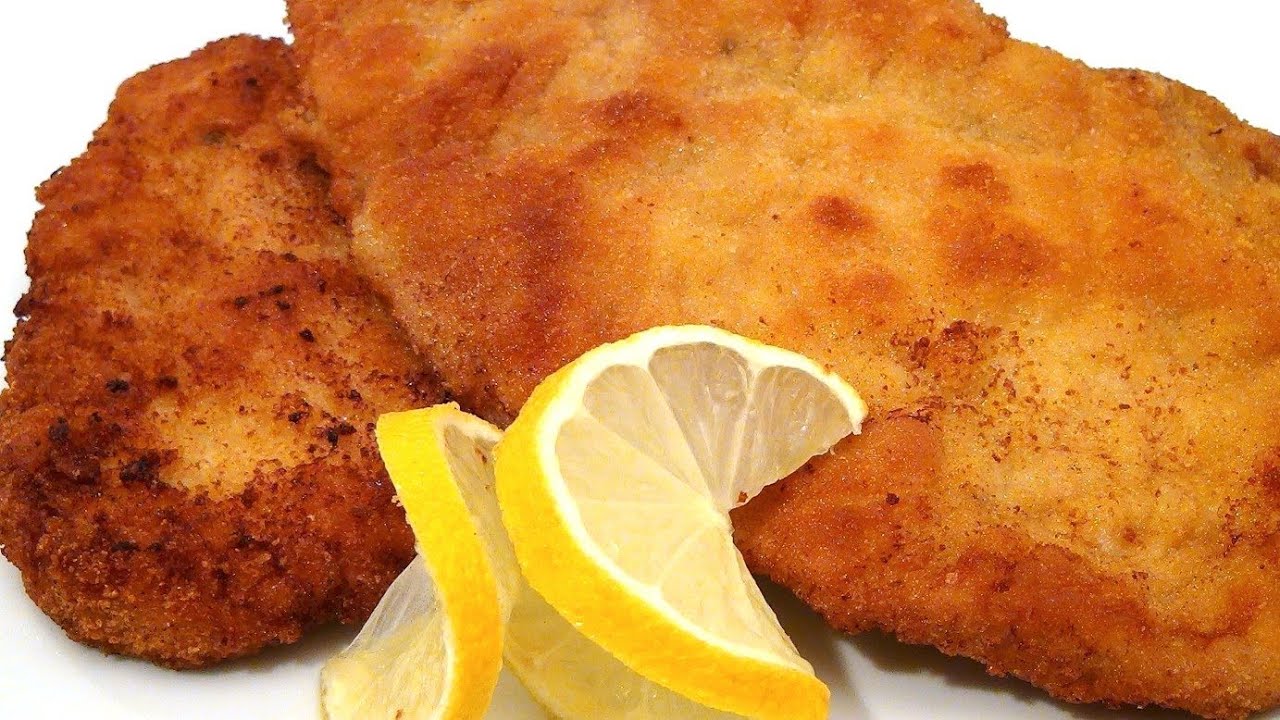
I first had this dish in Heidelberg, Germany in the early 70s. They served it with mashed potatoes and some cooked shredded carrots. I was hooked and spent the next two years looking for a recipe. This one is adapted from The Art of German Cooking.
- Carbohydrate 92.5672 g
- Cholesterol 897.882517939039 mg
- Fat 162.658532033997 g
- Fiber 6.19300011575222 g
- Protein 35.01035 g
- Saturated Fat 95.1185741597009 g
- Serving Size 1 1 Serving (444g)
- Sodium 3122.549375 mg
- Sugar 86.3741998842478 g
- Trans Fat 12.7473439094959 g
- Calories 1951 calories
Step-by-step
- Pound pork chops to 1/8"; score fat at edges to keep from curling while cooking.
- Blend eggs, water and salt.
- Dip meat in flour, then eggs, then crumbs.
- Fry in melted butter and shortening (about 375?) until crisp and brown.
- Drain on paper towels.
- Serve with lemon slices or wedges, baked potatoes, a sturdy green vegetable, and carrots.
The Make-Ahead and Freezing Reality
Preparing breaded pork cutlets ahead of time requires careful handling to protect the integrity of the coating. Raw breaded cutlets can be frozen for up to one month if separated by sheets of parchment paper, but freezing them cooked often leads to a soggy crust upon thawing. Instead, flash-freeze the raw, coated meat on a baking sheet until solid before transferring to a freezer-safe bag. When frying from a semi-thawed state, drop the oil temperature slightly below 375 degrees Fahrenheit to ensure the interior cooks through before the exterior darkens completely.
Reheating Without Losing the Crunch
Leftover schnitzel notoriously loses its signature crispness when reheated improperly in a microwave. Restore the crunch by placing the cutlets on a wire rack set inside a baking sheet and heating them in an oven preheated to 400 degrees Fahrenheit for approximately eight to ten minutes. This method allows hot air to circulate underneath the meat, preventing moisture from pooling and softening the breadcrumb layer.
Equipment and Oil Management
Achieving an even golden brown crust depends heavily on thermal stability during pan-frying. A heavy cast-iron skillet holds heat far better than thin aluminum pans, preventing drastic temperature drops when the cold meat enters the fat. Combining butter and shortening raises the smoke point higher than butter alone, allowing high-heat frying without burning the milk solids before the pork reaches a safe internal temperature of 145 degrees Fahrenheit.



