Chicken and Noodles
I make this recipe in a huge batch so I can divide it into smaller portions and have it for the freezer. You can reheat this recipe and serve over mashed potatoes or add chicken broth for homemade chicken noodle soup.
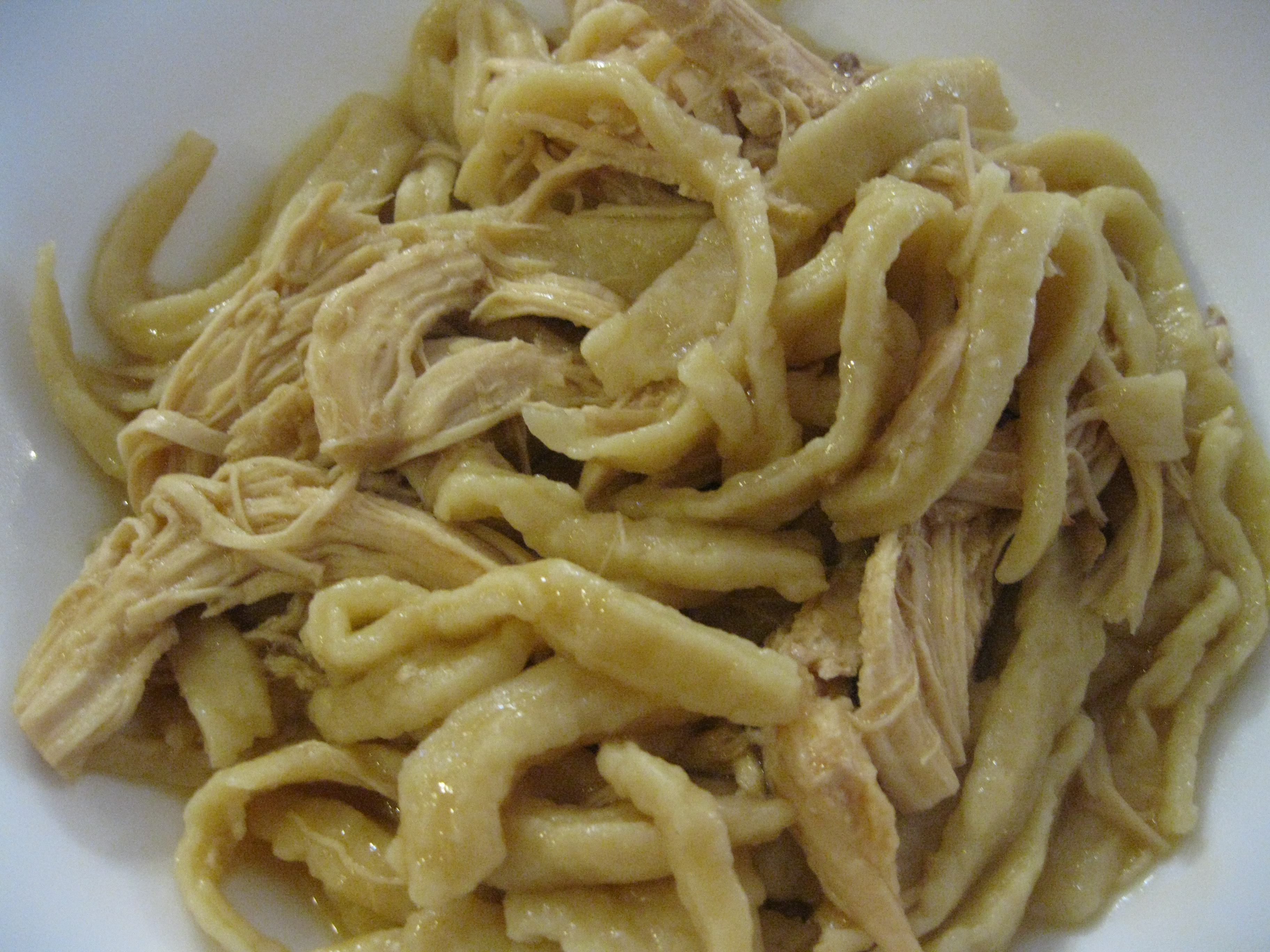
I make this recipe in a huge batch so I can divide it into smaller portions and have it for the freezer. You can reheat this recipe and serve over mashed potatoes or add chicken broth for homemade chicken noodle soup.
- Carbohydrate 26.5912783044442 g
- Cholesterol 0 mg
- Fat 14.3993878062988 g
- Fiber 4.92641173990187 g
- Protein 51.3369376612556 g
- Saturated Fat 3.9949654307641 g
- Serving Size 1 1 meal (2631g)
- Sodium 7916.32500578412 mg
- Sugar 21.6648665645423 g
- Trans Fat 1.59408582906833 g
- Calories 466 calories
Step-by-step
- In a large slow cooker place the carrots, celery, and onion on the bottom of the cooker.
- Place the frozen chicken breasts on top.
- Sprinkle the salt, pepper, and basil over the chicken.
- Fill the cooker 1/2-2/3 full of water.
- Cook at 250? for 8-10 hours or on high crock pot setting for 4 hours and then turn crock pot to low for an additonal 4 hours.
- Take the cooked chicken out of the cooker onto a cutting board and strain the broth into a large stock pot being sure to save the vegetables.
- Place the vegetables back into the slow cooker.
- Turn the broth on high heat and set to a boil.
- In the mean time, make sure the vegetables are cut into bite size pieces.
- Shred the chicken and place in the cooker with the vegetables.
- Add the noodles to the boiling broth and cook according to package directions.
- When noodles are tender add the entire pot with the noodles and chicekn broth into the slow cooker with the vegetables and chicken.
- Stir thoroughly and heat through.
- Season to taste.
- Serve over mashed potatoes or add additonal chicken broth to make home made chicken noodle soup.
- Refrigerate left overs and when cool place into gallon sized zip lock bags and freeze until ready to use.
Swapping the specified kluski noodles for thin dried strands alters the structural integrity of the dish completely, as delicate pasta will dissolve during the prolonged heating phase rather than holding up against the rich starch release. Kluski styles contain a high egg content and a dense extruded profile, which allows them to absorb substantial liquid without turning to mush. Understanding how pasta behaves in a slow-cooked environment prevents structural collapse.
Processing large batches requires careful consideration of vessel volume. Standard six-quart slow cookers will overflow with fifteen pounds of meat and twelve cups of liquid, necessitating either a commercial-grade ten-quart unit or dividing the raw components across two separate heating bases. When loading the base, place the root vegetables underneath the frozen protein to create an insulating barrier that prevents scorching while the internal temperature rises slowly over the eight to ten hour window.
Straining the cooking liquid into a separate stockpot permits rapid boiling of the pasta without crowding the slow cooker's heating element. Boiling the noodles independently at a rolling boil ensures proper starch gelatinization before combining the elements back together. Discarding excess water or topping up with additional chicken broth lets the cook calibrate the final viscosity precisely.
Ladling portions over dense, butter-heavy mashed potatoes absorbs excess liquid through starch-on-starch contact, creating a heavy winter meal format common in Midwestern culinary traditions. Storing leftovers in gallon-sized freezer bags for up to three months provides reliable meal-prepping utility when flattened completely before chilling.



