Pastrami Panini
The best panini for lunch or dinner! Running by Panera and getting one of their bread loaves is an excellent choice in making this.
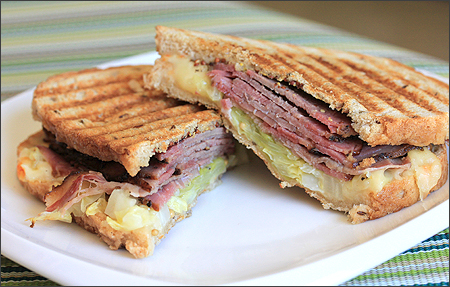
The best panini for lunch or dinner! Running by Panera and getting one of their bread loaves is an excellent choice in making this.
- Carbohydrate 0.7756 g
- Cholesterol 17.92 mg
- Fat 4.4576 g
- Fiber 0 g
- Protein 6.7928 g
- Saturated Fat 2.83192 g
- Serving Size 1 1 Serving (28g)
- Sodium 173.32 mg
- Sugar 0.7756 g
- Trans Fat 0.23072 g
- Calories 71 calories
Step-by-step
- It's pretty basic: just slap as much pastromi, pepperoni, salami, and mozzerella cheese as you want onto your panini and then stick it in the oven at 350 degrees until it looks good to you.
- Then just pull it out, let it cool for a minute, and enjoy.
- I like mine with potato chips and French Onion dip. :)
Swapping a standard sandwich loaf for a dense, crusty artisan boule alters the structural integrity of a toasted sandwich, requiring higher heat to achieve adequate interior melting without burning the exterior. Cured meats such as pastrami, salami, and pepperoni contain high concentrations of sodium and fat, which render differently under direct heat compared to fresh roasted cuts. Preserved meats will release their oils rapidly as temperatures rise, whereas fresh deli meats require longer exposure to thermal energy to reach the core. Operating an oven at 350 degrees Fahrenheit provides a balanced environment where the bread crisps evenly while the interior ingredients reach serving temperature. Determining doneness without a thermometer relies entirely on visual and textural indicators. Watch for the mozzarella cheese to transform from solid opaque slices into a glossy, bubbling pool with slight golden browning at the edges. Simultaneously, the exposed edges of the pastrami and pepperoni should curl slightly upward and develop a crisp perimeter while retaining pliable centers. Allow the finished sandwich to rest for exactly sixty seconds on a wire rack before slicing to let the melted fats redistribute through the crumb without making the bottom crust soggy. Storing leftover artisan bread in a paper bag at room temperature preserves the crust better than plastic wrap, which traps ambient moisture and softens the exterior before toasting.



