Warm Roasted Beet, Kale & Shrimp Salad
I pressure cooked the beets first rather than baked them. Then I added the kale in the oven and proceeded with the rest of the recipe
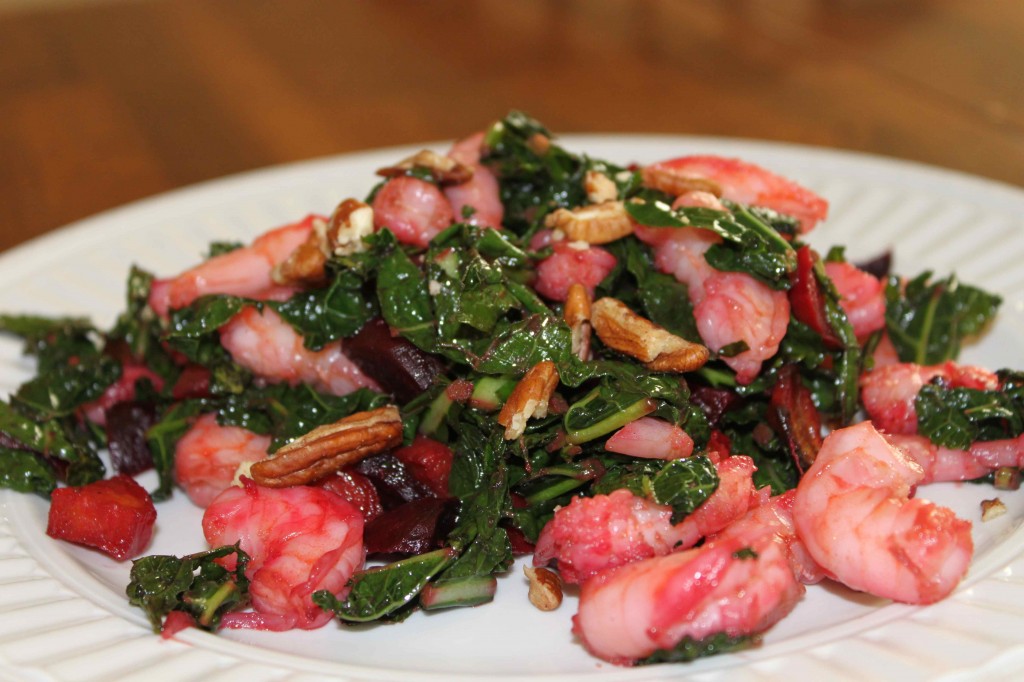
I pressure cooked the beets first rather than baked them. Then I added the kale in the oven and proceeded with the rest of the recipe
- sea salt and black pepper to taste
- 2 tablespoons coconut oil
- 1 pound medium cooked shrimp tails removed and deveined
- 8 small beets peeled, sliced and cubed
- 10 garlic cloves sliced in half lengthwise (less if you are not worried about vampires)
- 2 bunches of kale tough stems removed and diced
- 1/2 tablespoon of balsamic vinegar
- handful of crumbled pecans
- Carbohydrate 20.9045333333333 g
- Cholesterol 0 mg
- Fat 9.4384 g
- Fiber 6.12266656239828 g
- Protein 3.52053333333333 g
- Saturated Fat 7.90170666666667 g
- Serving Size 1 1 Serving (379g)
- Sodium 222.237333333333 mg
- Sugar 14.7818667709351 g
- Trans Fat 0.646453333333334 g
- Calories 172 calories
Step-by-step
- Preheat oven to 450.
- In a glass baking dish toss together the cut up beets, garlic cloves, and coconut oil.
- Bake for 35-40 minutes, stirring every 10 minutes.
- Remove the beets and garlic from the oven and pile the kale on top.
- Put back in the oven for 10 minutes, stirring half way through the cooking time.
- The kale will start to shrink down after that first 5 minutes, making it easier to stir.
- While the kale and beets finish cooking, add the shrimp to a medium sized mixing bowl.
- When the kale and beets are done, pour over the shrimp, add the balsamic vinegar and salt and pepper if you like, stir, top with crumbled pecans and eat!
Managing a single oven at 450 degrees requires strict staging when root vegetables and delicate greens share the cooking schedule. Dense root crops demand prolonged dry heat to caramelize their natural sugars without burning the accompanying aromatics. Slicing the beets into uniform cubes ensures they soften fully within thirty-five to forty minutes while the garlic halves infuse the surrounding coconut oil. Stirring the pan every ten minutes exposes all sides of the vegetables to direct thermal radiation from the glass baking dish.
Adding leafy greens late in the roasting cycle prevents them from scorching into bitterness before the roots finish. Layering the diced kale directly on top of the hot beets and garlic after their initial bake shields the leaves from harsh direct contact with the oven air. Allowing five minutes of heat exposure before the first stir gives the bulky greens time to wilt down into a manageable volume. A subsequent five-minute interval finishes the softening process and achieves a tender texture with slight crunch remaining in the ribs.
Combining cooked proteins directly with hot roasted components eliminates the need for separate stovetop pans while lightly warming the seafood. Adding pre-cooked shrimp to a mixing bowl alongside the hot beet and kale mixture transfers residual thermal energy efficiently without overcooking the shellfish. Acidic components like balsamic vinegar cut through the richness of the coconut oil and balance the earthy sweetness of the roasted roots. Pecans contribute a contrasting crunch that completes the textural interplay between soft greens and dense root vegetables.
Combining warm vegetables with cold-weather greens belongs to a long culinary tradition of transitional salads designed to bridge hearty winter fare and lighter eating. Raw salads often feel unappealing during cold months when heavy, warming meals dominate home cooking. Warm element salads utilize residual cooking heat to gently temper bitter greens like kale while releasing aromatic compounds from roasted garlic. Preparing this dish relies on thermal momentum, using the heat retained in the roasted beets to unify the entire bowl.



