Japchae (Korean Glass Noodles With Pork and Vegetables) Recipe
Korean japchae is festive, a colorful array of vegetables, egg, meat, and noodles that combine in a joyous celebration. This version is lighter, cleaner, and more refined than the hot and greasy ones many restaurants serve.
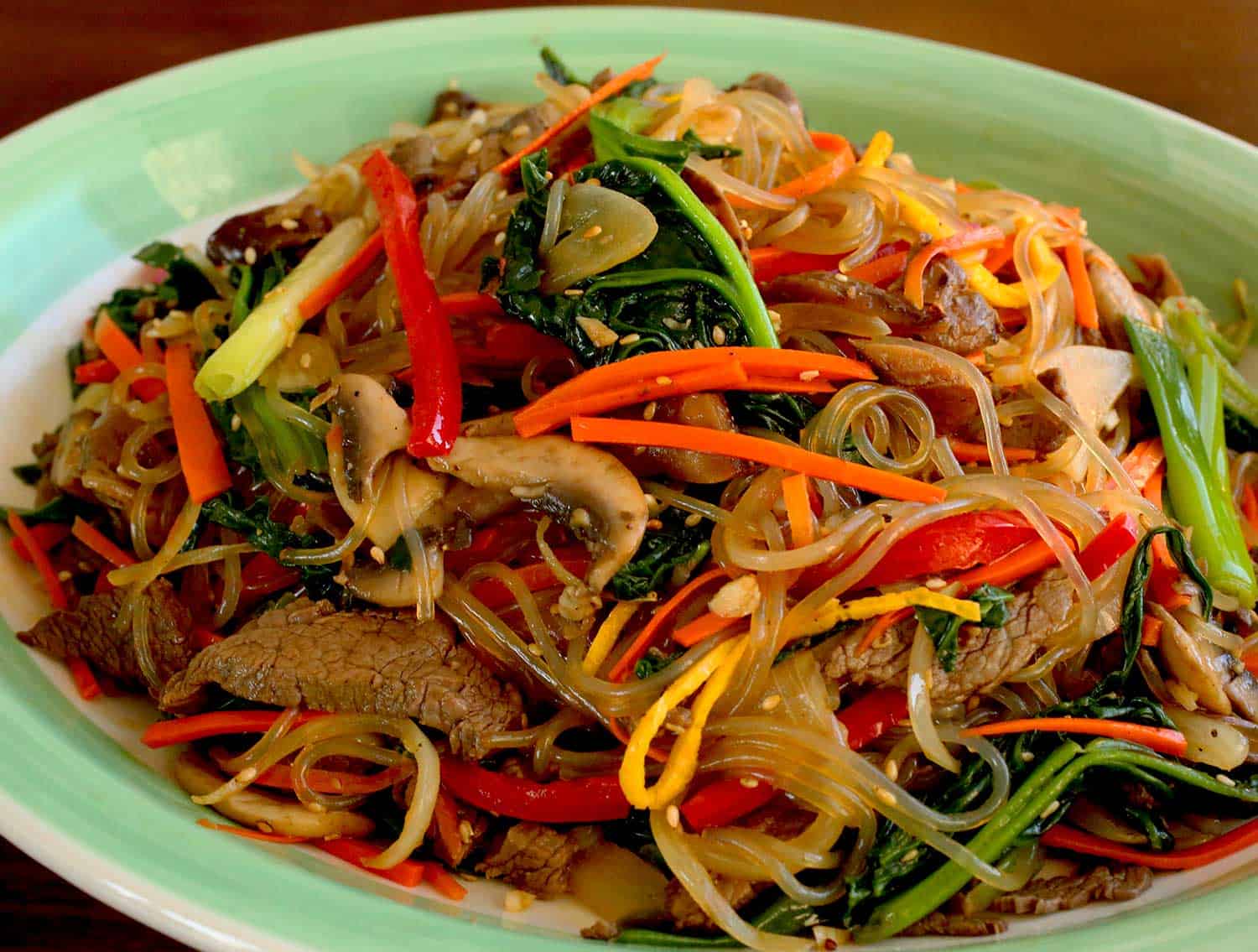
Korean japchae is festive, a colorful array of vegetables, egg, meat, and noodles that combine in a joyous celebration. This version is lighter, cleaner, and more refined than the hot and greasy ones many restaurants serve.
- kosher salt
- 2 large eggs
- freshly ground black pepper
- 1 tablespoon granulated sugar
- for the noodles:
- 1 small clove garlic minced
- 1/2 teaspoon toasted sesame oil
- 2 medium cloves garlic minced
- for the spinach:
- 1 tablespoon (15ml) vegetable oil
- toasted sesame oil for drizzling
- for the mushrooms and pork:
- 6 ear mushrooms (about 5g)
- 3 1/2 ounces shiitake mushrooms (100g about 5 medium shiitakes), stems discarded and caps sliced 1/4 i
- 3 1/2 ounces (100g) lean boneless, skinless pork shoulder, cut
- 2 tablespoons (30ml) yangjo ganjang (korean wheat-based soy sau
- 2 teaspoons (10ml) soju
- generous pinch minced peeled fresh ginger
- for the jidan (egg garnish):
- vegetable oil for greasing the pan
- for the carrot and onion:
- 2 teaspoons (10ml) vegetable oil
- 1 small (5-ounce; 140g) yellow onion, thinly sliced pole
- 1 small (3-ounce; 90g) carrot, cut into julienne
- 3 ounces curly spinach (90g about 3 loosely packed cups)
- 1/2 teaspoon ground roasted sesame seeds
- 5 1/4 ounces (150g) dangmyeon (korean sweet potato glass noodle see note)
- 1 tablespoon (15ml) yangjo ganjang (korean wheat-based soy sau
- 1 teaspoon brown or granulated sugar
- 2 teaspoons ground roasted sesame seeds
- Carbohydrate 0.62450328121719 g
- Cholesterol 106.450781249408 mg
- Fat 3.32008726540023 g
- Fiber 0.0323203114271164 g
- Protein 3.24803945310142 g
- Saturated Fat 1.01102261705641 g
- Serving Size 1 1 Serving (82g)
- Sodium 55.1783374990886 mg
- Sugar 0.592182969790073 g
- Trans Fat 0.474442929661127 g
- Calories 45 calories
Step-by-step
- For the Mushrooms and Pork: In a medium bowl, cover wood ear mushrooms generously with cold water and let stand until fully rehydrated and softened, about 1 hour. Drain, then tear wood ear mushrooms into smaller strips. Combine wood ear mushrooms in a small bowl with shiitake mushrooms, pork, soy sauce, garlic, sugar, soju, ginger, and a few grindings of black pepper. Mix thoroughly, then let marinate 20 minutes.
- In a large skillet, heat oil over medium-high heat until shimmering. Add pork and mushrooms and cook, stirring, until pork is cooked through and mushrooms are just starting to lightly brown. Transfer to a plate.
- Meanwhile, for the Jidan (Egg Garnish): Separate egg yolks and whites, passing each component separately through a clean fine-mesh strainer into its own small bowl. (You can use the same strainer for whites and yolks, but wash it between uses.) Very gently mix the contents of each bowl until incorporated, but avoid beating, as you don't want to incorporate air.
- Warm a mint-condition 8-inch nonstick skillet over medium-low heat. Using an oiled paper towel, lightly wipe oil all over the surface of the skillet. Scrape yolk into skillet, spreading it around to form a thin, even round. Gently cook until yolk is mostly set, about 1 minute, making sure to manage the heat so that the yolk cooks without browning on the bottom.
- Using a flexible rubber spatula, gently lift yolk round and slide a chopstick underneath until you can pick the round up. Lay yolk round down on its other side and continue cooking until fully set but not browned, about 30 seconds. Transfer yolk round to a work surface to cool.
- Wipe out skillet, then repeat procedure with egg whites, lightly oiling the pan first with the towel, then making a round of egg whites, being careful to prevent browning.
- When the yolk and egg-white rounds have cooled, carefully slice into thin slivers using a very sharp knife. Set aside.
- For the Carrot and Onion: In a large skillet, heat oil over medium heat until shimmering. Add onion and carrot, season with salt, and cook, stirring frequently, until just tender, about 4 minutes. Transfer to a plate.
- For the Spinach: In a large pot of salted boiling water, cook spinach until tender, about 1 minute. Using a spider or other wire strainer, remove spinach, allowing excess water to drain off, and transfer to a bowl. (Reserve boiling water for noodles.) Squeeze out any excess water from spinach. Toss spinach with minced garlic, sesame oil, and ground sesame seeds, mixing well to evenly coat. Set aside.
- For the Noodles: Add noodles to the boiling water and cook until tender but still chewy (roughly 6 minutes, though this will depend on the brand of noodles you buy). Drain into a colander and rinse noodles with cold running water. Allow to drain well.
- Transfer noodles to a large serving or mixing bowl. If the noodle strands are very long, snip them a few times, using kitchen shears, to shorten them to a more manageable length (but be careful not to make the lengths too short).
- In a small bowl, stir together soy sauce and sugar, then add this soy sauce mixture to the noodles, tossing well to coat. Add pork and mushrooms, carrot and onion, and slivered eggs. Add ground sesame seeds. Drizzle with sesame oil, then toss until thoroughly mixed. Taste and adjust seasoning if desired.
- Add spinach and toss once more to combine. Serve japchae warm or at room temperature.
My Japchae Journey: A Culinary Adventure
As a busy working mom, finding time to cook delicious and healthy meals can feel like a Herculean task. But sometimes, the simplest dishes offer the most rewarding flavors and a much-needed escape from the daily grind. That’s where Japchae comes in. This vibrant Korean noodle dish became my go-to weeknight meal, a balance of satisfying flavors and surprisingly manageable preparation.
My initial foray into Japchae started with a picture; a vibrant, colorful bowl of noodles, glistening with sesame oil and brimming with a medley of vegetables and tender pork. The image sparked a culinary curiosity that I had to explore. The recipe I found seemed daunting at first – a long list of ingredients and a method that involved multiple steps. But after the first attempt, I was hooked. The beautiful interplay of textures and tastes was a revelation. The soft, chewy glass noodles, the crisp vegetables, the savory pork – it all came together in perfect harmony. It was a culinary adventure I was happy to embark on, despite the initial intimidation.
Over time, Japchae evolved from a special occasion dish into a comforting staple. I started to experiment with different vegetables, substituting what was readily available at the local farmer's market. Sometimes it's a medley of bright bell peppers and crisp broccoli; other times, it's a simpler combination of carrots and spinach. The beauty of this dish lies in its versatility. The basic recipe remains the same, a well-tested foundation upon which I can build my own creative variations. The essence of Japchae remains: the sweet and savory sauce that coats the noodles, bringing together all the components into a delightful dance of flavors.
The process itself is a therapeutic one. The rhythmic chopping of vegetables, the careful layering of flavors, and the satisfying sizzle of the ingredients in the pan – it's a meditative experience that helps me de-stress after a long day. And the result? A wholesome and delicious meal that nourishes not only my body but also my soul. It's become more than just a dish; it’s a small piece of my weekly routine that brings me joy and connects me to the rich tapestry of Korean culinary tradition.
Beyond the Recipe: A Taste of Korea
Japchae isn't just a dish; it's a story. It speaks of gatherings and celebrations, of the rich cultural heritage of Korea, and of the simple pleasure of sharing a meal with loved ones. The recipe itself is a testament to the ingenuity and resourcefulness of Korean cuisine, making the most of readily available ingredients to create something truly extraordinary. The balance of textures and flavors is a testament to the thoughtful consideration of each element. The chewy glass noodles provide a satisfying base, complemented by the delicate sweetness of the carrots, the subtle bitterness of the spinach, and the savory richness of the pork.
Each ingredient plays a crucial role, creating a symphony of tastes that is both comforting and exciting. The sesame oil adds a nutty depth, while the soy sauce provides a salty savoriness. Even the simple addition of a sprinkle of sesame seeds elevates the dish to a whole new level. The presentation is just as important; a vibrant colorful array of ingredients, artfully arranged, makes the dish as much a visual feast as a culinary one. It’s this attention to detail that makes Japchae so special. It's not just about nourishment; it’s about creating a sensory experience that elevates the ordinary to the extraordinary.
The preparation, while requiring several steps, is not overly complicated. It’s a process that allows for mindfulness and creativity. I often find myself lost in the rhythmic chopping, the careful measuring, and the gentle stirring, as if each movement is a brushstroke on a culinary canvas. The time spent preparing Japchae is a time for reflection, for connecting with the ingredients, and for appreciating the beauty of the culinary arts. And the final product? A stunning and satisfying meal that is worth every minute of effort.
Japchae: A Legacy of Flavor
More than just a recipe, Japchae represents a legacy. It's a dish passed down through generations, carrying with it the stories and traditions of Korean families. It's a dish that evokes a sense of nostalgia, of home, and of shared experiences. The ingredients themselves are often symbolic, representing various aspects of life and culture. For me, making Japchae isn't simply about following a set of instructions; it's about connecting with a rich culinary tradition and creating something meaningful and delicious. The process allows me to channel my creative energy, to experiment with flavors and textures, and to personalize the dish in a way that reflects my own tastes and preferences.
Whether it's a simple weeknight meal or a celebratory feast, Japchae remains a constant source of culinary inspiration. It's a dish that allows me to explore my creativity, to connect with my cultural heritage (even in a small way), and to share the joy of cooking with my family and friends. In the end, it's more than just food; it’s a culinary journey, a testament to the power of simple ingredients to create something truly extraordinary. And that, for me, is the true magic of Japchae.



