Egg Foo Yong
This recipe can have various meats, fish, shellfish, or other vegetables added if desired. The original recipe called for shrimp, but I have modified it to be vegetarian or include other variations. As a vegetarian, this is a must-have on my Chinese dinner menu. It's easy to make and takes very little time—almost as easy as scrambling eggs.
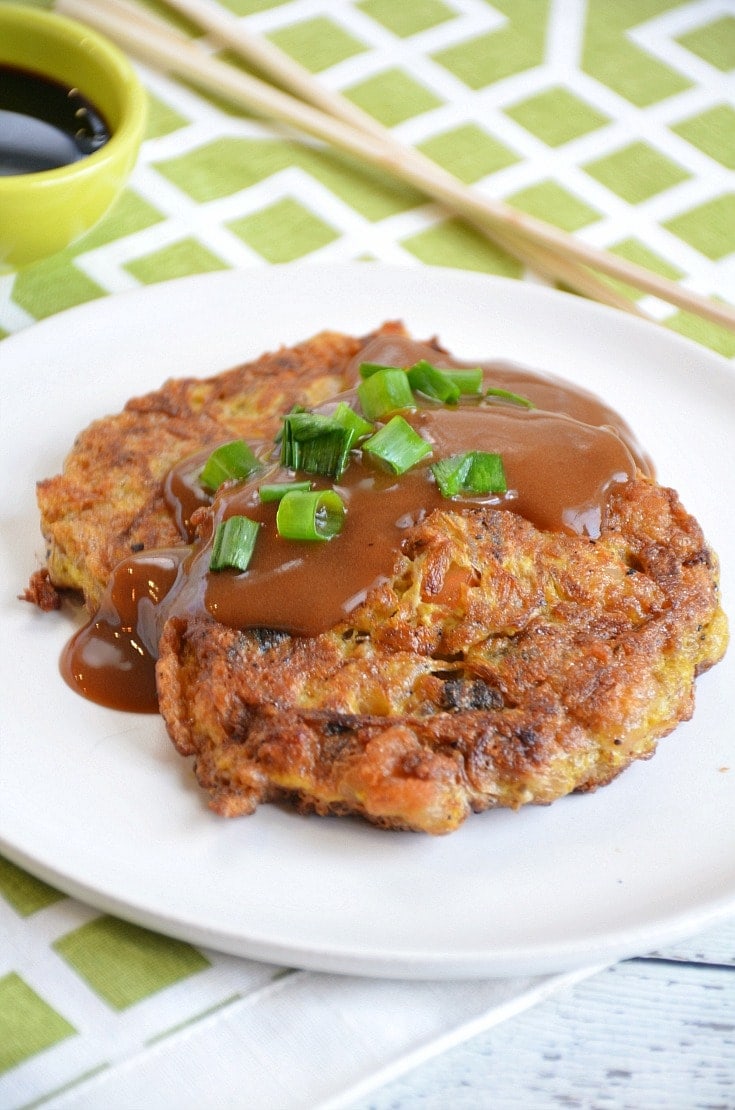
This recipe can have various meats, fish, shellfish, or other vegetables added if desired. The original recipe called for shrimp, but I have modified it to be vegetarian or include other variations. As a vegetarian, this is a must-have on my Chinese dinner menu. It's easy to make and takes very little time—almost as easy as scrambling eggs.
- Carbohydrate 4.77475833333333 g
- Cholesterol 530.55 mg
- Fat 19.2570191666667 g
- Fiber 0.314666667828957 g
- Protein 17.85245 g
- Saturated Fat 4.52373222995833 g
- Serving Size 1 1 Serving (213g)
- Sodium 304.482864583333 mg
- Sugar 4.46009166550438 g
- Trans Fat 2.22475147959167 g
- Calories 262 calories
Step-by-step
- Prepare Ahead:
- Rinse bresh bean sprouts in a pot of cold water and discard any husks that float to the surface. Drain and pat them dry.
- Have the bean sprouts, mushrooms, eggs, any other meat, fish, or vegetables (prepared) that you wish to add within easy reach. Also have the oil and the stock, soy sauce, and cornstarch mixture handy.
- To Cook:
- In a small saucepan, bring the stock to a boil. Add the soy sauce, salt, and cornstarch mixture. Reduce the heat and cook for 2 minutes until the sauce is thick and clear. Keep warm over low heat.
- Set a 12 inch wok or 8 inch skillet over high heat for 30 seconds. Pour in 1 tablespoon of oil, swirl it about and heat for another 30 seconds, turning the heat down if the oil begins to smoke. Cook any chopped meat, fish, shrimp, etc, until cooked through. Transfer them to a plate to cool.
- Break eggs into a bowl and beat them with a fork or whisk until they are well combined. Add the bean sprouts, mushrooms, and any other meat, fish, or vegetables that you may have prepared and want to add. Set the wok or skillet again over high heat for 30 seconds. Add 1 tablespoon oil, swirl it about, reduce the heat to low, then pour in about 1/4 cup of the egg mixture. Let it cook undisturbed for 1 minute, or until lightly browned. Turn the pancake over and cook for another minute. Transfer the pancake to a heatproof platter and cover with foil to keep warm.
- Following the same procedure, make 5 more pancakes with the remaining egg mixture. Add about 1 teaspoon of oil to the wok or skillet for each new pancake and stack them on the platter as you proceed. Serve with sauce poured over each pancake. Althought it is not classic, some Chinese cooks garnish this dish with green peas.
Egg foo yong requires precise portion control because beating more than three eggs at once introduces too much air, yielding a spongy pancake rather than a crisp-edged round with a tender center. When multiplying quantities for larger gatherings, mix the eggs in separate three-egg increments rather than scaling the base mixture in a single bowl. This segmentation ensures the bean sprouts and mushrooms distribute evenly without sinking to the bottom of a heavy-duty mixing bowl.
Maintaining a consistent cooking temperature across multiple batches demands frequent adjustments to the heat source. A 12-inch cast-iron skillet or carbon-steel wok retains heat effectively, but adding cold egg batter drops the surface temperature rapidly; allow the pan to recover its high heat for thirty seconds between individual pours. While traditional preparations utilize a wok, an 8-inch flat-bottomed skillet provides adequate surface area if roundness is prioritized over traditional wok contours.
Dietary adaptations alter protein ratios significantly without compromising structural integrity. Substituting chicken stock with mushroom broth or vegetable stock maintains the savory depth of the thickening cornstarch sauce while keeping the dish entirely meatless.



