Cranberry Merry Christmas Sipper
If you are looking for an extra special holiday drink recipe this year, you have to try this martini! It's called the Cranberry Merry Christmas Sipper and this outstanding mixed drink won over the judges in our recent Holiday Drink recipe contest. A blend of cranberry juice, ginger ale and gin, this martini is sure to bring merriment to any holiday party. Beefeater gin is one of my favorites, especially in this drink, because it makes me feel like I am being transported to London, living inside of a Charles Dickens novel! The cocktail is garnished with whole cranberries and a sprig of fresh rosemary. It looks like you snipped a branch from a Christmas tree! The recipe calls for the glasses to be rimmed with white sanding sugar, but our winner suggests using red or green sugar as well. I think the colors really make the drink festive and fun!
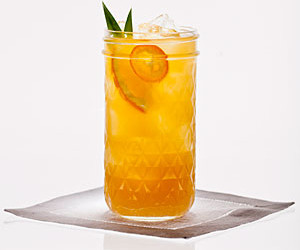
If you are looking for an extra special holiday drink recipe this year, you have to try this martini! It's called the Cranberry Merry Christmas Sipper and this outstanding mixed drink won over the judges in our recent Holiday Drink recipe contest. A blend of cranberry juice, ginger ale and gin, this martini is sure to bring merriment to any holiday party. Beefeater gin is one of my favorites, especially in this drink, because it makes me feel like I am being transported to London, living inside of a Charles Dickens novel! The cocktail is garnished with whole cranberries and a sprig of fresh rosemary. It looks like you snipped a branch from a Christmas tree! The recipe calls for the glasses to be rimmed with white sanding sugar, but our winner suggests using red or green sugar as well. I think the colors really make the drink festive and fun!
- Carbohydrate 17.0034903721381 g
- Cholesterol 0 mg
- Fat 0.113679631027742 g
- Fiber 0.152874694808165 g
- Protein 0.243703683405806 g
- Saturated Fat 0.0250278110716129 g
- Serving Size 1 1 Recipe (227g)
- Sodium 9.81618301529032 mg
- Sugar 16.8506156773299 g
- Trans Fat 0.021863692474 g
- Calories 197 calories
Step-by-step
- Pour a thin layer of sugar into a shallow dish.
- Rub the rim of a cocktail glass with the lime.
- Discard lime wedge.
- Dip rim in sugar.
- Pour the ginger ale, juice and gin into the glass.
- Stir gently.
- Garnish with the cranberries and rosemary sprig.
Botanical Foundations of London Dry Gin
Distillers achieve the distinct flavor profile of London dry gin through a mandatory redistillation process where neutral alcohol vapor passes through a botanical basket containing juniper berries, coriander seeds, citrus peels, and angelica root. Master distillers monitor the distillation cuts carefully, discarding the initial heads and final tails fractions to capture only the purest heart of the run, which typically emerges from the still around 80 percent alcohol by volume before being diluted down to bottling strength.Carbonation Retention and Glass Preparation
Serving cold beverages requires attention to thermal transfer, meaning glassware should ideally spend ten minutes in a freezer before application to prevent ambient room heat from warming the liquid and accelerating the degassing of carbon dioxide. Rimming the glass requires precise sugar distribution; pouring exactly two tablespoons of sanding sugar into a shallow dish creates a uniform bed that coats only the outer perimeter of the glass without blocking the drinking surface.


