Morning Glory Muffins
Note: The original recipe called for 2/3 cup vegetable oil and 1/4 cup orange juice. I reduced the vegetable oil to 1/3 cup and added extra juice to use 3/4 cup + 2 tbsp juice. You can leave it as it was in the original recipe if you don't mind the amount of oil.
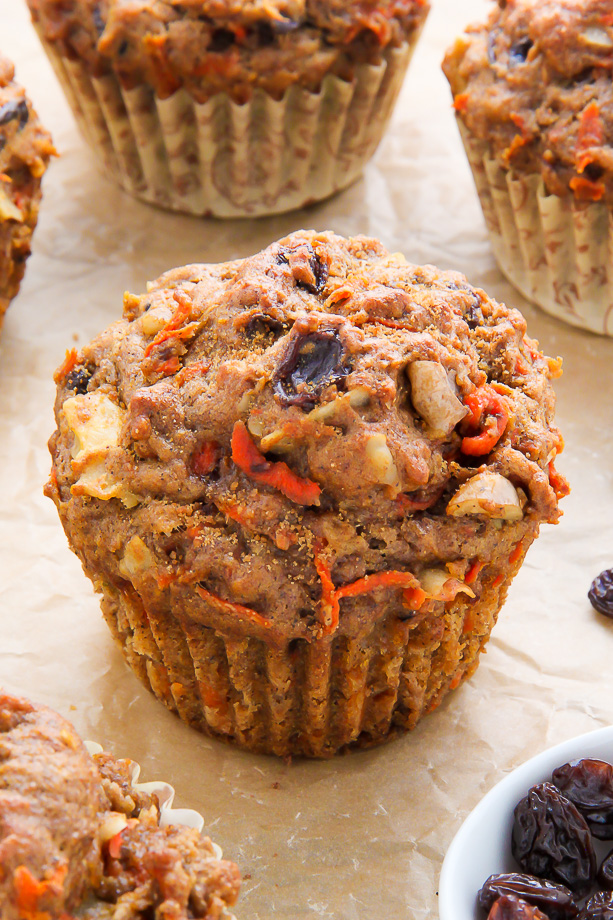
Note: The original recipe called for 2/3 cup vegetable oil and 1/4 cup orange juice. I reduced the vegetable oil to 1/3 cup and added extra juice to use 3/4 cup + 2 tbsp juice. You can leave it as it was in the original recipe if you don't mind the amount of oil.
- 1/2 teaspoon salt
- 2 teaspoons baking soda
- 3 large eggs
- 1/2 teaspoon ground ginger
- 2 teaspoons vanilla extract
- 2 teaspoons cinnamon
- 1/3 cup vegetable oil
- 1/2 cup chopped walnuts
- 2 cups whole wheat flour
- 2/3 cup brown sugar
- 3/4 cup dried apricot chopped (or any other dried fruit)
- 7 ounces carrots peeled and grated
- 1 large tart apple peeled, cored, and grated
- 1/2 cup unsweetened shredded coconut
- 1/3 cup wheat germ
- 3/4 cup + 2 tbsp orange juice
- Carbohydrate 545.844521857527 g
- Cholesterol 3172.5 mg
- Fat 242.70974678808 g
- Fiber 86.5697555312742 g
- Protein 167.94413895381 g
- Saturated Fat 95.408926426099 g
- Serving Size 1 1 recipe (2022g)
- Sodium 3827.91352990633 mg
- Sugar 459.274766326253 g
- Trans Fat 23.46588471479 g
- Calories 4810 calories
Step-by-step
- Preheat the oven to 375F. Lightly grease a 12-cup muffin tin, or line it with papers.
- In a large bowl, whisk together the flour, sugar, baking soda, spices, and salt. Stir in the carrots, apple, coconut, nuts, and wheat germ. In a separate bowl, beat together the eggs, oil, vanilla, and juice. Add to the flour mixture, and stir until evenly moistened. Stir in the dried apricots. Divide the batter among the prepared pans.
- Bake for 25 to 28 minutes, until nicely domed and a cake tester inserted in the center comes out clean. Remove from the oven, let cool for 5 minutes in their pan on a rack, then turn out of pans to finish cooling.
Swapping half of the vegetable oil for orange juice alters the fundamental moisture profile of the batter. Fat coats flour proteins to inhibit gluten development, keeping crumb tender. Reducing that oil risks a dry texture unless compensated by the acidic juice. Acid activates the baking soda. Carbon dioxide gas expands within the protein matrix, lifting the dense mass of carrots, apples, and wheat germ.
Grated produce releases water during baking. Too much liquid creates a soggy interior before the starch gelatinizes. Whisk the dry ingredients thoroughly to distribute the leavening agents evenly. Combine wet and dry components just until moistened. Overmixing develops gluten networks, producing tough results rather than a light, domed structure.
Bake at 375 degrees Fahrenheit. Judge doneness visually and texturally without a probe by checking for firm, springy domes. Insert a cake tester into the central cavity. It must emerge clean without wet crumbs attached. Let the baked items rest in the pan for five minutes. Residual heat finishes setting the fragile crumb structure before transfer to a wire rack.



