Cherry Cranberry Sauce
Cherries give tart cranberries a slightly sweet flavor. I serve it alongside turkey, pork and ham.
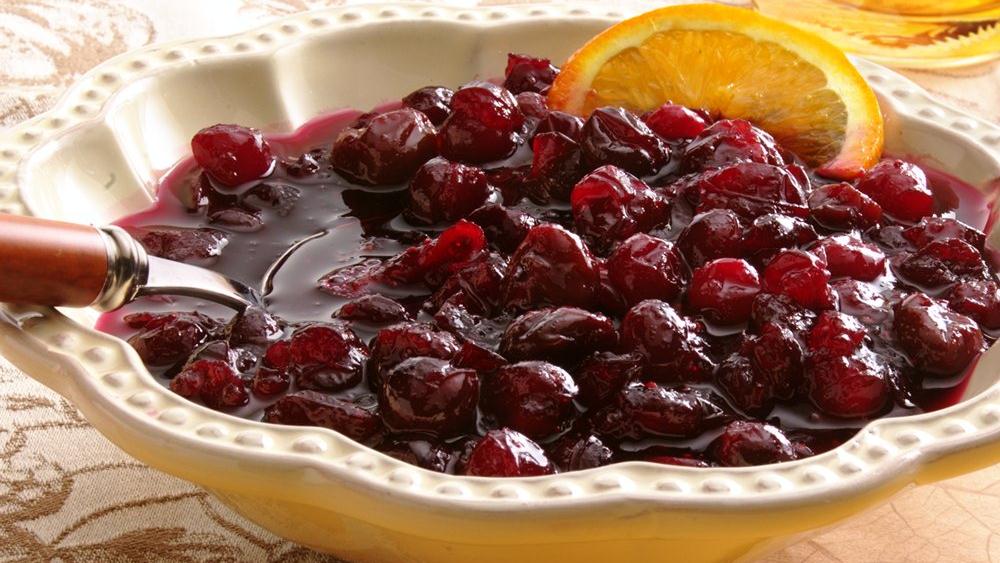
Cherries give tart cranberries a slightly sweet flavor. I serve it alongside turkey, pork and ham.
- Carbohydrate 72.0808571428571 g
- Cholesterol 0 mg
- Fat 0.0832 g
- Fiber 2.94399993896484 g
- Protein 0.2496 g
- Saturated Fat 0.00704 g
- Serving Size 1 1 Serving (141g)
- Sodium 1.66089285714286 mg
- Sugar 69.1368572038923 g
- Trans Fat 0.02944 g
- Calories 278 calories
Step-by-step
- 1 1/2 cups water
- 1 1/2 cups sugar
- 4 cups frozen cranberries
- 1 can (14.5 oz) pitted tart cherries drained
Standard recipes rarely account for the wildly erratic sugar levels in commercially frozen fruit, meaning blind adherence to a measurement often results in cloying sweetness or aggressive sourness. Dissolving the equal parts water and sugar completely over medium heat before introducing the fruit creates a dense syrup that coats the berries evenly, driving heat transfer efficiently through the cell walls as pectin begins to activate. Maintaining a gentle simmer rather than a violent boil prevents the volatile aromatics in the cherries from evaporating prematurely while ensuring the frozen cranberries thaw uniformly without scorching against the bottom of the saucepan.
Temperature control dictates the ultimate viscosity of the finished condiment because fruit sauces thicken significantly as they cool down from the stove. Pulling the pot off the heat the exact moment the cranberries split open and release their natural starches prevents the mixture from turning into a stiff paste, leaving enough liquid to form a glossy glaze. Pouring the hot liquid into a shallow glass dish speeds up the drop in temperature, halting the cooking process within fifteen minutes and preserving the bright crimson hue that heat degradation ruins over prolonged exposure.
Stinting on quality canned tart cherries introduces unwanted metallic notes if the packing liquid is not completely drained through a fine-mesh sieve prior to mixing. Swapping out the water for an equal volume of dry white wine or pomegranate juice adds distinct tannin structures, though adjusting the sugar down by two tablespoons becomes necessary to compensate for the introduced acidity. Thoroughly chilling the mixture for at least two hours allows the fruit flavors to marry completely while the pectin sets the final gel structure.
Leftover portions store safely in an airtight glass container in the refrigerator for up to seven days, where the residual sugars act as a natural preservative. Repurposing extra sauce involves whisking it with olive oil and Dijon mustard for a sharp vinaigrette or folding it straight into plain Greek yogurt for a morning tartness boost.



