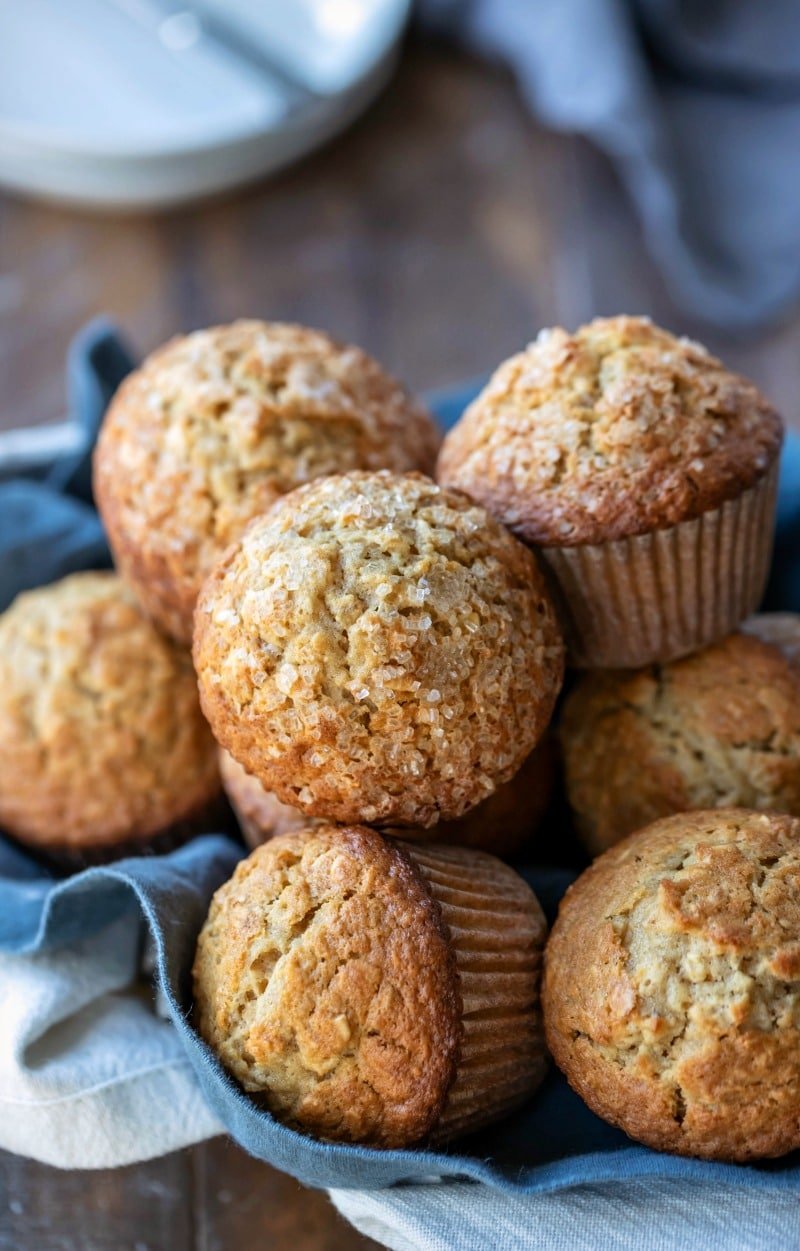
These have the great taste of oats.
- Carbohydrate 28.7863666666667 g
- Cholesterol 21.6305715 mg
- Fat 6.41895625 g
- Fiber 0.404516672638555 g
- Protein 2.54096666666667 g
- Saturated Fat 2.55770591875 g
- Serving Size 1 1 muffin (62g)
- Sodium 115.460666666667 mg
- Sugar 28.3818499940281 g
- Trans Fat 0.370177641666668 g
- Calories 181 calories
Step-by-step
- Soak oatmeal in buttermilk 1 hour; add egg and beat well.
- Add sugar and mix.
- Add cooled shortening.
- Add flour sifted with salt, baking powder and soda.
- Bake in greased muffin pans in hot oven (400 degrees) 15 to 20 minutes.
Soaking rolled oats in buttermilk for a full hour hydrates the grain fully, softening the cellulose walls so the final crumb remains tender rather than chewy. Acidity in the buttermilk also reacts directly with the baking soda, creating carbon dioxide bubbles that give these dense grains the lift they require inside a batter.
Assessing doneness requires observing the physical characteristics of the batter rather than relying on an internal temperature probe. Pressing a fingertip lightly against the center crown should result in the surface springing back immediately without leaving an indentation. Pulling the pan from the 400 degree oven must happen precisely when edges shrink slightly away from the metal walls.
Overmixing the dry components after the liquid components join will develop excess gluten networks, yielding tough and rubbery results. Folding flour mixtures just until hydrated preserves pockets of air trapped by the buttermilk and egg emulsion.
Storing leftovers in an airtight container at room temperature maintains moisture for up to forty-eight hours without refrigeration.



