Kotleti
Mom's Russian "Hamburgers" Kotleti for lunch, kotleti for dinner, kotleti of beef, of pork, of fish, of chicken—even kotleti of minced carrots or beets. The entire USSR pretty much lived on these cheap, delicious fried patties, and when comrades didn't make them from scratch, they bought them at stores. Back in Moscow, Mom and I harbored a secret passion for the proletarian, six-kopek variety produced by the meat-processing plant named after Stalin's food supply commissar, Anastas Mikoyan. Inspired by his 1936 trip to America, Mikoyan wanted to copy Yankee burgers in Russia, but somehow the bun got lost in the shuffle and the country got hooked on mass-produced kotleti instead. Deliciously greasy, petite, and with a heavy industrial breading that fried up to a wicked crunch, Mikoyan factory patties could be scarfed down by the dozen. Wild with nostalgia, Mom and I tried a million times to recreate them at home, but no luck: some manufactured treats just can't be duplicated. So we always reverted back to Mom's (far more noble) homemade version. Every ex-Soviet cook has a special trick for making juicy, savory patties. Some add crushed ice, others tuck in pats of butter or mix in a whipped egg white. My mother likes her kotleti Odessa-style (garlicky!), and adds mayo as binding instead of the usual egg, with delightful results. The same formula works with ground turkey or chicken or fish. Buckwheat kasha makes a nostalgic Russian accompaniment. Ditto thin potato batons slowly pan-fried with onions in lots of butter or oil. I love cold kotleti for lunch the next day, with some dense dark bread, hot mustard, and a good crunchy dill pickle.
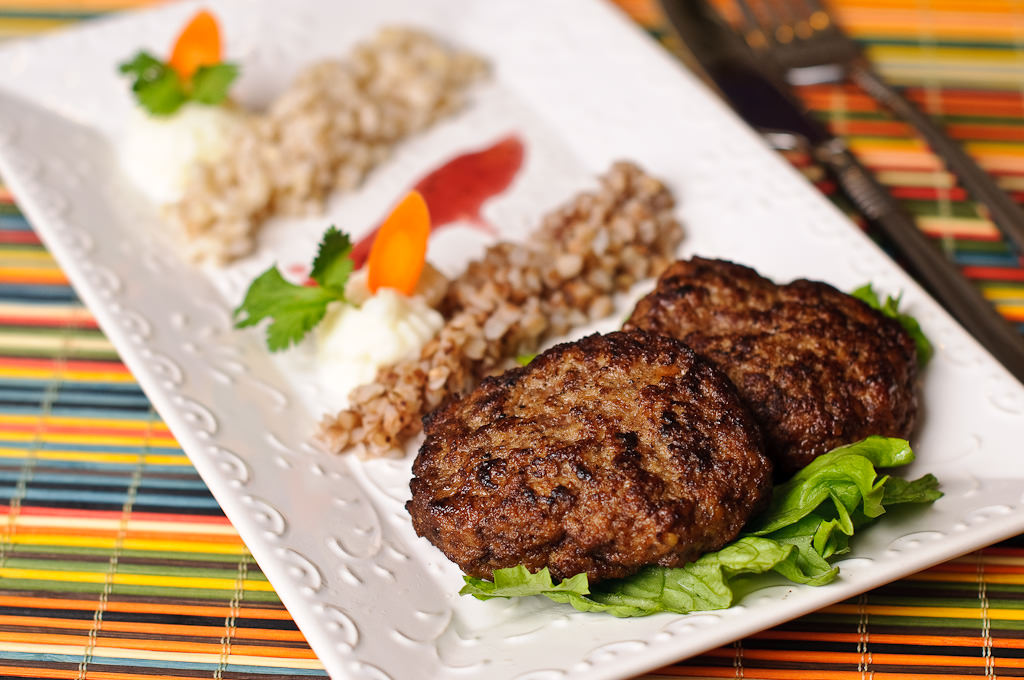
Mom's Russian "Hamburgers" Kotleti for lunch, kotleti for dinner, kotleti of beef, of pork, of fish, of chicken—even kotleti of minced carrots or beets. The entire USSR pretty much lived on these cheap, delicious fried patties, and when comrades didn't make them from scratch, they bought them at stores. Back in Moscow, Mom and I harbored a secret passion for the proletarian, six-kopek variety produced by the meat-processing plant named after Stalin's food supply commissar, Anastas Mikoyan. Inspired by his 1936 trip to America, Mikoyan wanted to copy Yankee burgers in Russia, but somehow the bun got lost in the shuffle and the country got hooked on mass-produced kotleti instead. Deliciously greasy, petite, and with a heavy industrial breading that fried up to a wicked crunch, Mikoyan factory patties could be scarfed down by the dozen. Wild with nostalgia, Mom and I tried a million times to recreate them at home, but no luck: some manufactured treats just can't be duplicated. So we always reverted back to Mom's (far more noble) homemade version. Every ex-Soviet cook has a special trick for making juicy, savory patties. Some add crushed ice, others tuck in pats of butter or mix in a whipped egg white. My mother likes her kotleti Odessa-style (garlicky!), and adds mayo as binding instead of the usual egg, with delightful results. The same formula works with ground turkey or chicken or fish. Buckwheat kasha makes a nostalgic Russian accompaniment. Ditto thin potato batons slowly pan-fried with onions in lots of butter or oil. I love cold kotleti for lunch the next day, with some dense dark bread, hot mustard, and a good crunchy dill pickle.
- 1 teaspoon kosher salt
- 1 1/2 pounds freshly ground beef chuck (or a mixture of beef and pork)
- 2 slices stale white bread, crusts removed, soaked for 5 minutes in water and squeezed
- 1 small onion, grated
- 2 medium garlic cloves, crushed in a press
- 2 tablespoons ï¬nely chopped dill or parsley
- 2 1/2 tablespoons full-fat mayonnaise
- 1/2 teaspoon freshly ground black pepper, or more to taste
- 2 to 3 cups ï¬ne dried bread crumbs for coating
- canola oil and unsalted butter, for frying
- Carbohydrate 58 g(19%)
- Cholesterol 156 mg(52%)
- Fat 58 g(89%)
- Fiber 4 g(16%)
- Protein 48 g(96%)
- Saturated Fat 18 g(89%)
- Sodium 759 mg(32%)
- Calories 940
Step-by-step
- In a mixing bowl, combine the first eight ingredients and blend well into a homogenous mixture. Cover with plastic wrap and refrigerate for at least 30 minutes.
- With wet hands, shape the mixture into oval patties approximately 3 1/2 inches long. Spread bread crumbs on a large plate or a sheet of wax paper. Coat patties in crumbs, flattening them out slightly and pressing down for the crumbs to adhere.
- In a large skillet heat 2 tablespoons of the oil with a pat of butter until sizzling. Working in batches, fry the kotleti over medium-high heat until golden-brown, about 4 minutes per side. Cover the pan, reduce the heat to low, and fry for another 2 to 3 minutes to cook through. Transfer to a plate lined with paper towels. Repeat with the rest of the patties. Serve at once.
A Taste of Home: My Mother's Kotleti
The aroma of sizzling kotleti always takes me back to my childhood in Moscow. These weren't just patties; they were a symbol of comfort, a taste of home, a reminder of simpler times. My mother, a master in the kitchen, made them with a love and precision that no factory could ever replicate. While mass-produced kotleti flooded the Soviet Union, often greasy and heavily breaded, Mom’s version was a revelation – juicy, flavorful, and infused with the warmth of her Odessa-style garlicky twist. She used mayonnaise as a binder, a clever substitution for eggs, creating a patty that was both tender and satisfying.
The beauty of kotleti lies in their versatility. While the classic recipe uses ground beef, Mom showed me how to adapt it to ground turkey, chicken, or even fish. Each iteration maintained the essence of the dish, that unique blend of savory meat, fragrant herbs, and a perfectly crispy crust. The secret, I've come to learn, is in the preparation. Allowing the meat mixture to rest in the refrigerator before shaping the patties is crucial for developing the best flavor and texture. And then, of course, there’s the art of frying – getting that perfect golden brown crust while ensuring the inside is cooked through.
I remember countless evenings spent in the kitchen with Mom, the air thick with the scent of garlic, dill, and frying oil. We'd often serve the kotleti with simple sides – buckwheat kasha, a hearty Russian porridge, or pan-fried potato batons with onions, crispy and golden brown. But my favorite way to enjoy them is the next day, cold, on a slice of dark bread, with a dollop of hot mustard and a crunchy dill pickle. The textures and flavors complement each other so beautifully; the creamy texture of the cold kotleti against the sharpness of the mustard and the satisfying crunch of the pickle.
More than just a recipe, kotleti represent a legacy. They represent a connection to my roots, to the rich culinary traditions of my family, and to the simple pleasures of home-cooked meals. They're a testament to the ingenuity and resourcefulness of Soviet-era cooks, who transformed simple ingredients into culinary masterpieces. Each bite is a story, a memory, a journey back to a time filled with love, family, and the comforting taste of Mom's kotleti.
Beyond the Recipe: The kotleti experience extends beyond the pan. The act of making them, the shared moments of creating something delicious together, is equally important. It’s about gathering around the kitchen table, sharing stories, and creating memories. It's a tradition I intend to continue, to pass down to my own family, so that they, too, can savor the taste of home, embodied in every golden-brown bite of Mom’s kotleti.
Adapting the Recipe: The beauty of kotleti lies in their adaptability. Feel free to experiment with different types of ground meat, or even explore vegetarian options with lentils or vegetables. The basic process remains the same, allowing for creative exploration of flavors and textures. For example, the addition of grated carrots or zucchini can add a welcome sweetness and moisture. The use of different herbs, spices, or even the inclusion of a flavorful cheese can also drastically change the taste, allowing you to create your own unique version of this classic dish. Don't be afraid to experiment and discover your own perfect kotleti recipe.
Serving Suggestions: Beyond the classic accompaniments of buckwheat kasha and potato batons, you can explore a myriad of other sides that complement the rich flavor of kotleti. Consider serving them with creamy mashed potatoes, a simple green salad, or even a vibrant vegetable stew. The possibilities are endless. It’s about finding the right balance of flavors and textures that suit your palate and elevate the dining experience.
A Culinary Legacy: As the years go by, I’ve realized that Mom’s kotleti recipe represents so much more than a simple dish. It symbolizes family, tradition, and the lasting power of culinary heritage. It serves as a reminder of simpler times, filled with the comfort of home-cooked meals and shared moments around the dinner table. This recipe isn't just about following instructions; it’s about carrying on a legacy, keeping the flame of tradition burning brightly, one delicious kotleti at a time.



