Atkins Friendly Scrambled Egg Bake in Muffin Tin
Breakfast dish loaded with protein. It can be made in a heart-shaped mini tart pan, muffin tin, or mini muffin tin. It can be frozen and reheated in the microwave. Ingredients can be adjusted for healthier options, or egg beaters can be substituted for eggs.
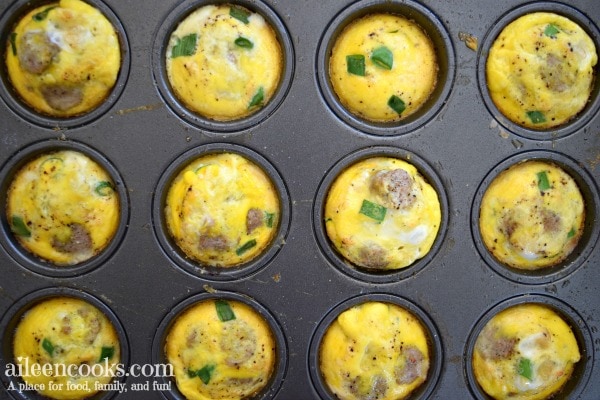
Breakfast dish loaded with protein. It can be made in a heart-shaped mini tart pan, muffin tin, or mini muffin tin. It can be frozen and reheated in the microwave. Ingredients can be adjusted for healthier options, or egg beaters can be substituted for eggs.
- Carbohydrate 20.0099 g
- Cholesterol 4472.72 mg
- Fat 228.773 g
- Fiber 0.125999994277954 g
- Protein 172.9576 g
- Saturated Fat 81.41101 g
- Serving Size 1 1 Serving (1343g)
- Sodium 4696.39 mg
- Sugar 19.883900005722 g
- Trans Fat 30.02109 g
- Calories 2838 calories
Step-by-step
- Spray a muffin tin with baking spray, or butter the tin.
- Pre heat oven at 350 degrees.
- Crack eggs and add them to a mixing bowl.
- Beat eggs and add salt and pepper to taste.
- Mix in chesse, bacon, and roasted garlic.
- Mix together completely.
- Fill the tins with the mixture three fourths of the way full.
- Bake 25 minutes.
- Check often.
- Use spactula to get "muffins" out.
- Let cool before eating, you could burn yourself.
Ingredient measurements alone do not explain how whole eggs transform when baked in individual compartments rather than cooked in a wide skillet. Baking eggs inside metal cavities relies on conductive heat transfer from the pan walls, setting the exterior proteins rapidly while the center cooks through gentle convection inside the enclosed oven chamber. Individual egg bakes trace their lineage back to classic French oeufs en cocotte, where bakers used small ramekins to achieve delicate, uniform consolidation without the browning associated with direct pan frying. Adapting that technique into a standard muffin tin replaces ceramic ramekins with carbon steel or aluminum, which conducts thermal energy much faster and alters the cooking dynamics entirely.
Mastering Individual Egg Bakes
Greasing the baking vessel thoroughly is essential because egg proteins bond tenaciously to unlubricated metal surfaces during extended thermal exposure. Fill each individual compartment roughly three-quarters of the full depth to allow room for the mixture to expand slightly as trapped air warms and escapes. Operating the oven at a moderate 350 degrees Fahrenheit prevents the outer edges from turning rubbery before the interior dairy and egg structure solidifies. Monitor the progress closely starting around the 20-minute mark to prevent over-baking, which forces moisture out of the curd network and creates an undesirable porous texture.
- If the tops appear shiny and wet in the exact center, return the pan to the heat for two more minutes.
- Insert a thin spatula carefully around the perimeter of each cup once cooled to release the suction created during baking.
- Allow the portions to rest for at least five minutes in the tin so internal steam redistributes evenly.



