Roasted Zucchini in My Tiny Toaster Oven
A great weeknight side dish for two in the summer that doesn't heat up my kitchen. A friend brought me a giant zucchini from her garden. I cut it in half, but you could use two smaller large ones, size up your toaster oven pan, and roast away.
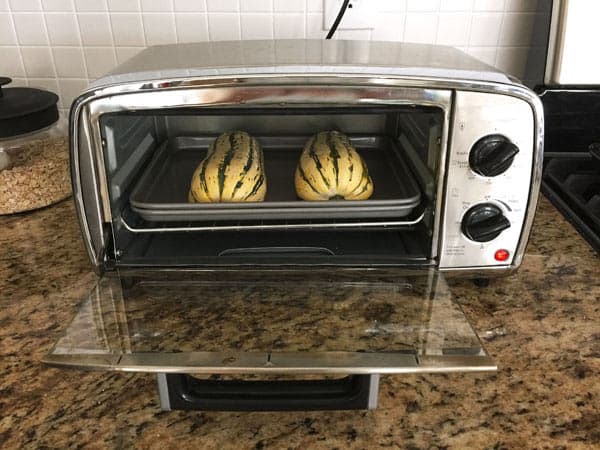
A great weeknight side dish for two in the summer that doesn't heat up my kitchen. A friend brought me a giant zucchini from her garden. I cut it in half, but you could use two smaller large ones, size up your toaster oven pan, and roast away.
- Carbohydrate 11.614 g
- Cholesterol 0 mg
- Fat 20.6678 g
- Fiber 2.78100005269051 g
- Protein 3.1511 g
- Saturated Fat 2.886865 g
- Serving Size 1 1 Serving (251g)
- Sodium 99.896 mg
- Sugar 8.8329999473095 g
- Trans Fat 0.671275000000003 g
- Calories 233 calories
Step-by-step
- cut the zucchini into wedges, like a pizza
- put in bowl and put into a bowl and pour 1/2 of the olive oil and salt /pepper on to taste, if it looks dry, add some more olive oil
- put in toaster oven on 450 degrees for 20 minutes
Zucchini contains approximately ninety-five percent water, meaning moisture control dictates whether the vegetable roasts or steams in the high heat of a compact oven. Cutting the pieces uniformly into wedges ensures equal heat penetration, while tossing them with extra virgin olive oil creates a lipid barrier that traps internal moisture and promotes surface browning. Roasting at 450 degrees Fahrenheit forces rapid evaporation without completely desiccating the interior flesh.
Thermal Management in Compact Cavities
Small countertop appliances lack the heavy-duty convection airflow and thermal mass of standard ranges, making overcrowding the pan fatal to achieving proper color. Spacing the wedges out on the baking sheet allows hot air to circulate freely around each piece, preventing pools of released water from accumulating underneath. Adding thinly sliced onions and finely chopped garlic requires monitoring, as small aromatics burn quickly at 450 degrees before the thickest parts of the squash fully soften.
Storage and Secondary Use
Leftovers stored in an airtight container remain safe for up to three days in a refrigerator operating below 40 degrees Fahrenheit. Reheating roasted summer squash in a dry skillet over medium-low heat for five minutes helps restore textural contrast better than microwaving, which renders the cell walls soggy.



