Touchdown Dip
I regularly make this dip and take it to work to eat with fruit as a snack. It is so good.
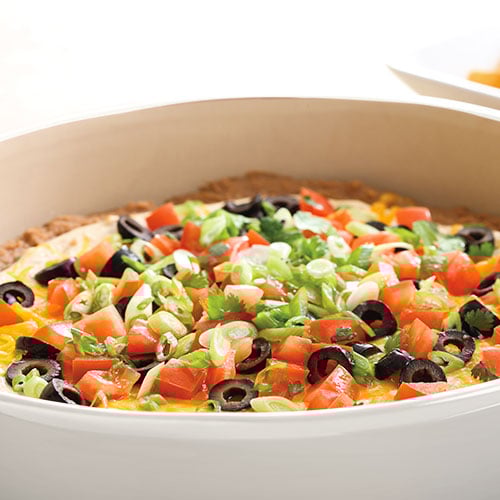
I regularly make this dip and take it to work to eat with fruit as a snack. It is so good.
- Carbohydrate 159.08338 g
- Cholesterol 457.345 mg
- Fat 69.13816 g
- Fiber 1.02100000623614 g
- Protein 16.02687 g
- Saturated Fat 39.336283 g
- Serving Size 1 1 cup (395g)
- Sodium 1041.7565 mg
- Sugar 158.062379993764 g
- Trans Fat 7.76217399999999 g
- Calories 1303 calories
Step-by-step
- In a medium bowl, combine cream cheese, marshmallow creme, and grated orange peel.
- Gradually stir in enough orange juice to make a mixture of dipping consistency.
- Cover and refrigerate for at least 1 hour to blend flavors.
- Just before serving, cut cake into bite-sized cubes.
- Spoon dip into a small serving bowl.
- Serve cake and fruit as dippers.
Combining high-fat dairy with sticky sugar solutions requires precise mechanical incorporation to prevent phase separation. Cream cheese contains a dairy protein network suspended in water by milk fat globules. When introduced to pure sucrose and corn syrup found in marshmallow creme, the high osmotic pressure tends to draw moisture out of the cheese curds, creating a grainy texture if mixed too rapidly. Gradual introduction of liquid breaks this tension.
Orange juice provides crucial citric acid and water molecules that hydrate the sugar polymers while lowering the overall pH slightly. This mild acidity cuts through the dense sweetness of the marshmallow without destabilizing the emulsion. Micro-planed orange peel introduces essential oils containing limonene, which dissolve into the fat phase and amplify the citrus perception across the palate. Allowing the combined mixture to rest in a refrigerator for at least 60 minutes permits the dairy solids to fully hydrate and bond with the invert sugars.
Temperature control dictates the final viscosity of the spread. Softening the cream cheese to exactly 65 degrees Fahrenheit ensures complete homogenization during the initial blending phase without melting the butterfat crystals needed for structural integrity. Over-beating the mixture incorporates excess air, which weakens the emulsion and results in a weeping dip upon standing. Serving the accompaniment alongside dense pound cake and fresh fruit provides contrasting cellular structures that absorb the rich coating evenly.



