Homemade Mexican Rice
Alex's culinary class made this and it was SO GOOD! She brought me leftovers, and I added 2 cans of chicken breast and a can of black beans. Spread it all in a casserole dish with cheese and crunched up tortilla chips on top. Put it in the oven to melt the cheese. We dished it up and put salsa & sour cream on top, then ate it with tortilla chips -- so good.
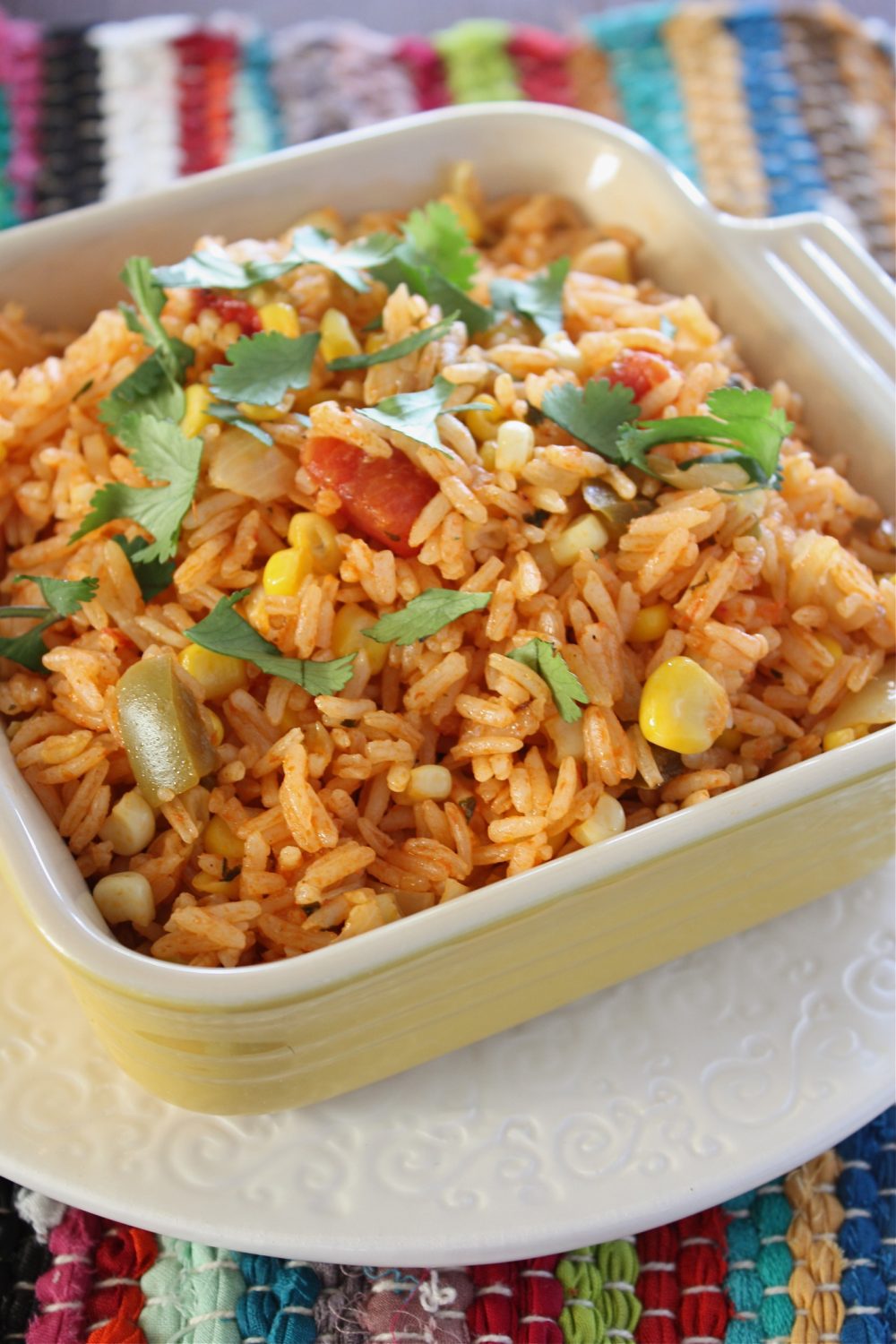
Alex's culinary class made this and it was SO GOOD! She brought me leftovers, and I added 2 cans of chicken breast and a can of black beans. Spread it all in a casserole dish with cheese and crunched up tortilla chips on top. Put it in the oven to melt the cheese. We dished it up and put salsa & sour cream on top, then ate it with tortilla chips -- so good.
- 1/2 teaspoon salt
- 1 cup water
- 1 teaspoon chili powder
- 1/8 teaspoon black pepper
- 1/2 cup onion chopped
- 1/2 cup celery chopped
- 3/4 cup green bell peppers chopped
- 14.5 ounce can diced tomatoes
- 3/4 cup long grain rice
- dash ground red pepper or bottled hot pepper sauce
- fresh red serrano chili pepper (optional)
- fresh cilantro (optional)
- Carbohydrate 76.0967972244094 g
- Cholesterol 0 mg
- Fat 1.24478472873251 g
- Fiber 12.5991315154779 g
- Protein 8.90277637813608 g
- Saturated Fat 0.400469926644482 g
- Serving Size 1 1 Serving (736g)
- Sodium 73.800258023039 mg
- Sugar 63.4976657089315 g
- Trans Fat 0.246139227776127 g
- Calories 333 calories
Step-by-step
- In a medium saucepan combine the water, bell pepper, onion, celery, and salt. Bring to a boil and reduce heat. Simmer, covered, for 5 minutes.
- Stir in the UNDRAINED tomatoes, rice, chili powder, black pepper, and ground red pepper (or hot pepper sauce). Return to a boil and reduce heat. Simmer, covered, for about 20 minutes, or until the rice is tender and the liquid is absorbed. If desired, garnish with serrano chili pepper and cilantro.
Standard steamed white rice relies on a precise two-to-one liquid ratio, but this stovetop style behaves differently because diced tomatoes release their own water as they break down. Simmering the aromatics like onions, celery, and bell peppers in just one cup of water for five minutes softens their cell walls before the grains go into the saucepan, preventing crunchy bits in the final dish. Long grain white varieties require strict adherence to covered low-heat absorption to prevent the starches from gelatinizing into a gummy paste.
Maintaining the lid tightly sealed during the twenty-minute simmering window traps steam essential for even heat distribution across every grain. Lifting the cover prematurely lets moisture escape, leaving the center of the grains chalky while the bottom scorches against the metal. Incorporating undrained canned tomatoes directly into the starches requires measuring total liquid volume carefully, since excess moisture destroys the distinct separation of each grain.
Many cooks ruin this side by stirring constantly, which abrades the outer starches and releases amylose into the cooking liquid. Stir the mixture only once when combining the spices and tomatoes, then leave the pan completely alone until the twenty minutes expire. Adding chili powder and black pepper at the beginning allows fat-soluble compounds in the spices to bloom in the residual moisture, deepening the overall profile.
Fresh garnishes such as chopped cilantro and sliced serrano peppers should be applied immediately before serving to preserve their volatile aromatics and crisp bite. Leftovers can be stored in an airtight container in the refrigerator for up to three days, though the starches will continue to absorb ambient moisture over that storage window. Reheat chilled portions with a tablespoon of water added to restore proper hydration without burning the bottom layer.



